Commercial Roofing in Technology Park Atlanta, Peachtree Corners, GA
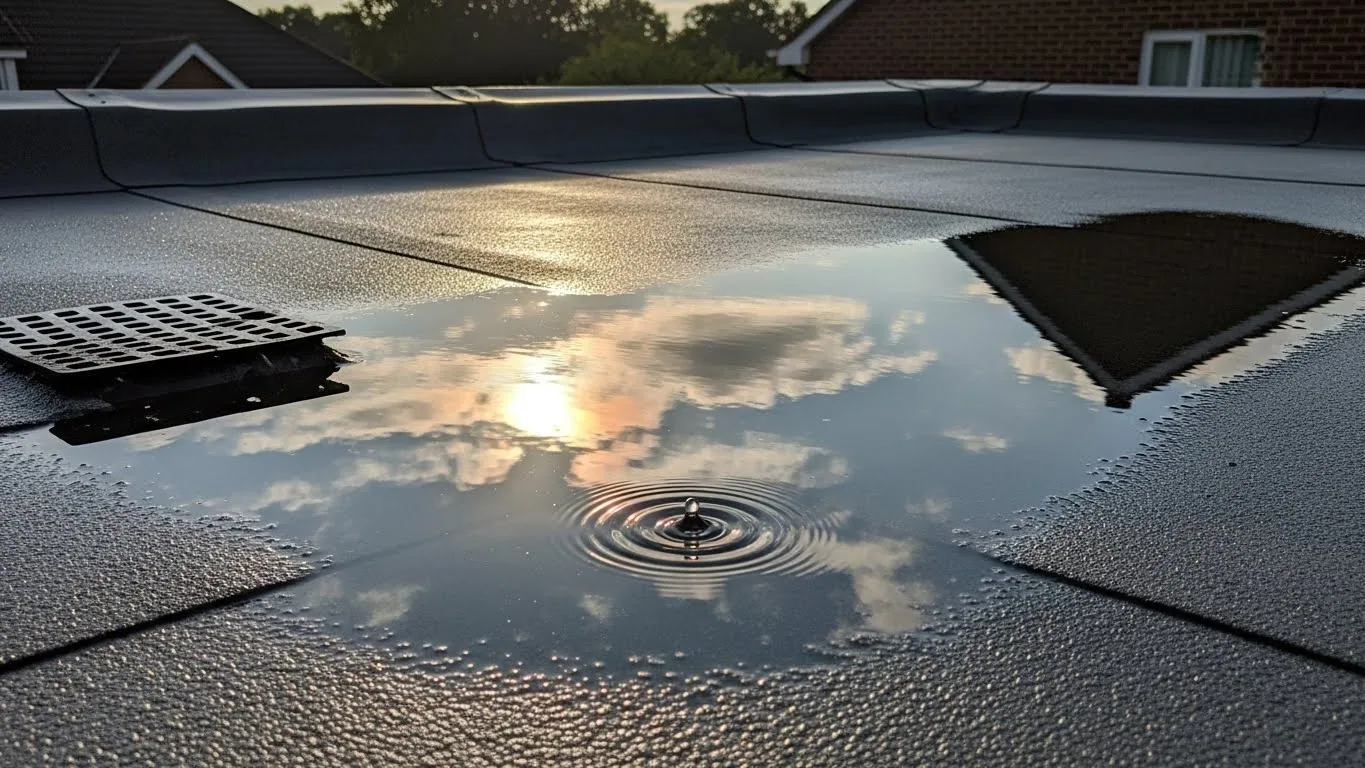
A shallow depression can hold rain against a seam until the edge softens. We check the low area, membrane lap, and drain path before deciding whether the repair stays local. Technology Park Atlanta is a 500-acre low-rise office and technology campus in Peachtree Corners. The city describes it as a regional business hub, with a planned multi-use trail connecting offices to nearby retail and residential areas.
A campus that spans many buildings needs property-level records. We identify the building, roof assembly, access contact, and work zone before making a recommendation. The Peachtree Corners roof assessment can address the wider city, while this visit remains focused on Technology Park's employment campus.
Find where the low area sends water
Water retained at a seam can reflect a blocked drain, an insulation low, or a damaged lap. We inspect the outlet, overflow, membrane condition, and surrounding surface. A depression does not identify the cause on its own. We record its location, depth when present, and whether the drain path remains open. If the membrane is sound but water persists, slope correction may need separate pricing.
Atlanta climate normals show hot, humid summers, frequent warm-season rainfall, and a July normal high close to 90 degrees Fahrenheit. Rain can reveal an outlet problem that a dry walk misses; heat can stress flashing and seams. We inspect for loose edges, open welds, softened material, and signs of trapped moisture. A ponding-water inspection can distinguish a blocked outlet from a broad drainage correction.
The park includes low-rise office and technology buildings, but that description does not tell us the roof construction. We review available drawings and repair records, then confirm visible layers in the field. If material remains concealed, a test opening can identify it before we select a repair product. We note where evidence ends, rather than assigning one building's assembly to the campus.
Coordinate work across a multi-building property
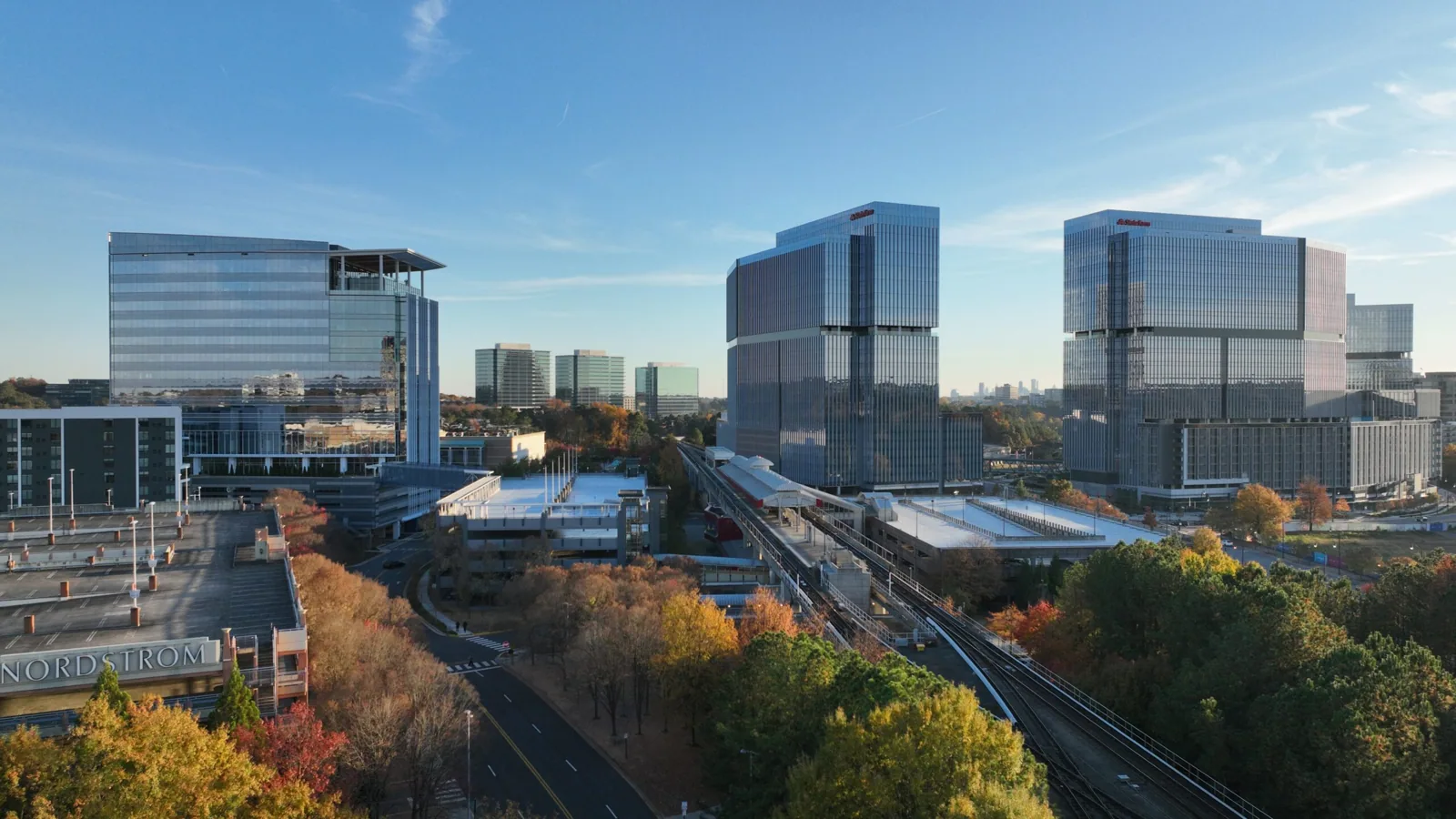
Technology Park Atlanta covers a broad campus, with a planned trail connecting offices to nearby retail and residential uses. That connection makes site access and pedestrian movement useful items to confirm. We ask the property contact about current trail conditions, deliveries, lift zones, roof hatches, and fire lanes. The roofing scope names an approved staging point rather than assuming the campus plan grants access to a path.
A portfolio route can group inspections by building, but reports must remain separated. We assign each roof its own zone labels and photograph references. One building may show a drain concern; another may have a loose edge or intact surface. A multi-building roof program can coordinate schedules and approvals without averaging conditions across the campus.
The city describes technology, engineering, healthcare, and life-science employers in this business hub. Those sectors can have different work controls, but no industry label establishes the hours or equipment at a particular site. We confirm active operations, shutdown needs, noise restrictions, and interior protection with the manager. A phased campus roof plan can sequence work so each shift ends with a protected area.
Choose a detail that fits the installed assembly
Drain repairs begin at the bowl and membrane connection. A thermoplastic roof may need a prepared welded detail, while rubber, asphalt-based, coated, and metal systems need another method. We identify the surface before choosing a product. If the drain flange is loose or corroded, that condition may require metal work alongside membrane repair.
Moisture below the surface changes the repair boundary. We document exposed insulation and substrate, then specify removal only as far as needed to reach sound material. Any concealed deck condition becomes a separate allowance for approval. A drain and overflow repair can state which outlet, flange, and adjoining field material are included.
Recurring ponding across a roof may justify tapered insulation, outlet changes, recovery, or replacement. We check deck condition, roof height, existing layers, equipment curbs, and drainage before comparing those options. A roof renewal plan should show how the new assembly handles drains, transitions, and staging, not just the surface membrane.
Protect each opened area before weather shifts
Rain can interrupt cleaning, primer, welding, and membrane installation. We break the scope into work zones with a clear dry-in point. If an outlet or low area must be opened, the proposal states what cover will protect it between shifts. Before returning, we check that the surface is dry and suitable for permanent installation.
The Atlanta region sits within the National Weather Service's north and central Georgia severe-weather coverage. After a reported storm, we compare the owner's roof-zone notes with visible conditions such as displaced edge metal, punctures, or opened flashing. A regional outlook helps explain timing; the site inspection establishes whether a repair is warranted.
Cost and duration depend on drain count, area of ponding, material type, access equipment, travel between roofs, preparation, and any wet insulation or deck repair. Trail or parking conditions can affect staging only when they are confirmed at the site. We list those constraints and any concealed-condition allowance before work begins. For a reported leak, a roof-water visit can map the interior report to its roof zone before broader campus drainage changes are considered.
Keep a distinct record for every roof
Closeout photos should show the drain, low area, membrane tie-in, and nearby flashing. We note the building, roof zone, material installed, and limits of approved work. If the assembly was opened, we record the layers found and the restoration. Any roof area not inspected stays listed as unconfirmed rather than inheriting the condition of a neighboring building.
Citywide Peachtree Corners roof planning can help coordinate assets while preserving each building's records. The planned campus trail connects offices with retail and residential areas, so the property contact should confirm current delivery and pedestrian arrangements before equipment is staged. Campus ownership or management may span several addresses, yet roof findings still belong to their individual structures. We keep building names, roof-plan revisions, inspection dates, repair status, and access approvals in separate files. An arrival sequence can coordinate crews without carrying a key instruction or staging note from one property to another. That distinction matters when operating hours and equipment clearances differ. A scheduled roof maintenance visit can revisit the drain and seam after rainfall.
For a campus estimate, share the building roster, available roof plans, drainage notes, repair history, and site access instructions. We will inspect the selected structures, document observed conditions, and separate confirmed scope from any concealed issue needing approval.
Related Roofing Work
Assess a Technology Park roof
Send the building list, roof plans, drainage locations, repair history, and access rules. We will inspect named zones, document confirmed conditions, and compare local repairs with broader options.
Questions About Technology Park Atlanta, Peachtree Corners
Can one visit include several Technology Park roofs?
We can group buildings on one route, then issue separate photos, assembly notes, and findings for each roof. A drain problem at one property does not establish the condition next door. Provide roof plans, contacts, and entry instructions for every stop.
What does the planned trail change for a roofing project?
The trail connects office areas with nearby retail and residential uses, so current pedestrian movement and staging should be confirmed. We ask the property contact about any active trail work or restricted route. The roof plan then names the approved delivery path and barriers needed near the work area.
Can a roof depression be fixed without replacing the membrane?
Often, if the membrane and substrate are sound and the cause is a limited obstruction or detail. We inspect the outlet and surrounding slope first. If water remains because of insulation or deck geometry, correction may require a larger scope than patching the surface.
How are hidden layers handled in a repair estimate?
We state confirmed removal and restoration separately from an allowance for layers not yet exposed. If an opening reveals wet insulation or unsound deck, we photograph it and seek approval before adding work. The closeout record shows exactly where the roof was opened and restored.
Commercial Roofing Across Roswell and North Fulton
Roof Repair, Replacement and Maintenance for Every Kind of Commercial Building
From Historic Roswell and Canton Street to the Holcomb Bridge Road corridor, GA 400 and the North Point area, we inspect, repair and replace low-slope and metal roofs on offices, retail centers, medical buildings, schools and warehouses.