KEE Commercial Roofing in Roswell, GA
A separated KEE seam near a drain can expose the repair boundary. The surface may be loose at the weld, or water may have softened the board below it. We inspect the lap, membrane, drain detail, and nearby insulation before choosing work. Roswell's hot, humid summers and frequent rain test seams and flashing transitions. We document the actual condition rather than treating the membrane name as a repair specification.
KEE is a PVC-alloy single-ply membrane. Its seams are heat-welded, and repairs need compatible membrane and accessories. We identify the installed sheet and inspect its surface before selecting a patch. A PVC roofing assembly or TPO roof system uses different material details. The comparison matters when prior records are incomplete or several roof zones have been repaired with different products.
Identify the KEE sheet and weld
We inspect seams for edge lift, contamination, incomplete fusion, and stress near penetrations. A probe or test weld can help determine whether the membrane accepts repair preparation. We record the test location and surrounding conditions. At a roof drain, we check the clamping ring, membrane cut, and water path. At a curb, we examine vertical flashing and corners for movement or separation.
Existing patches can change how the surface responds. We note coating, sealant, dirt, and material that may interfere with a new weld. If the sheet is brittle or degraded, we extend the repair to a stable tie-in. If the surface remains sound, a local repair may be enough. The repair boundary follows the condition we can confirm, not the whole roof area.
Roswell's warm-season rain can carry water beneath a loose lap before it appears inside. We compare leak dates and interior reports with nearby seams, curbs, and drains. A stain may help guide the route, but it does not define the opening. A leak tracing inspection can follow the path when the entry point remains uncertain.
Make a compatible welded repair
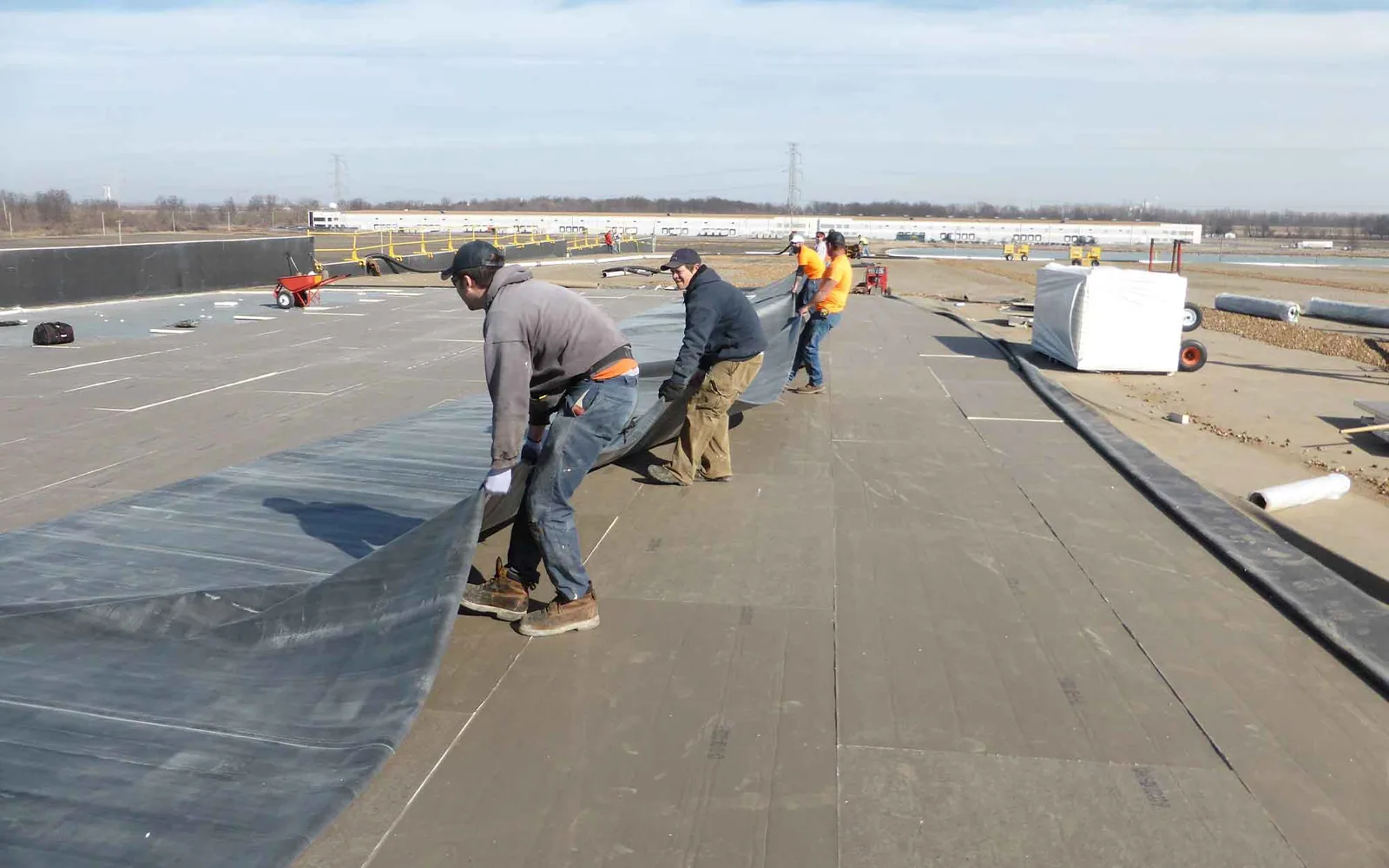
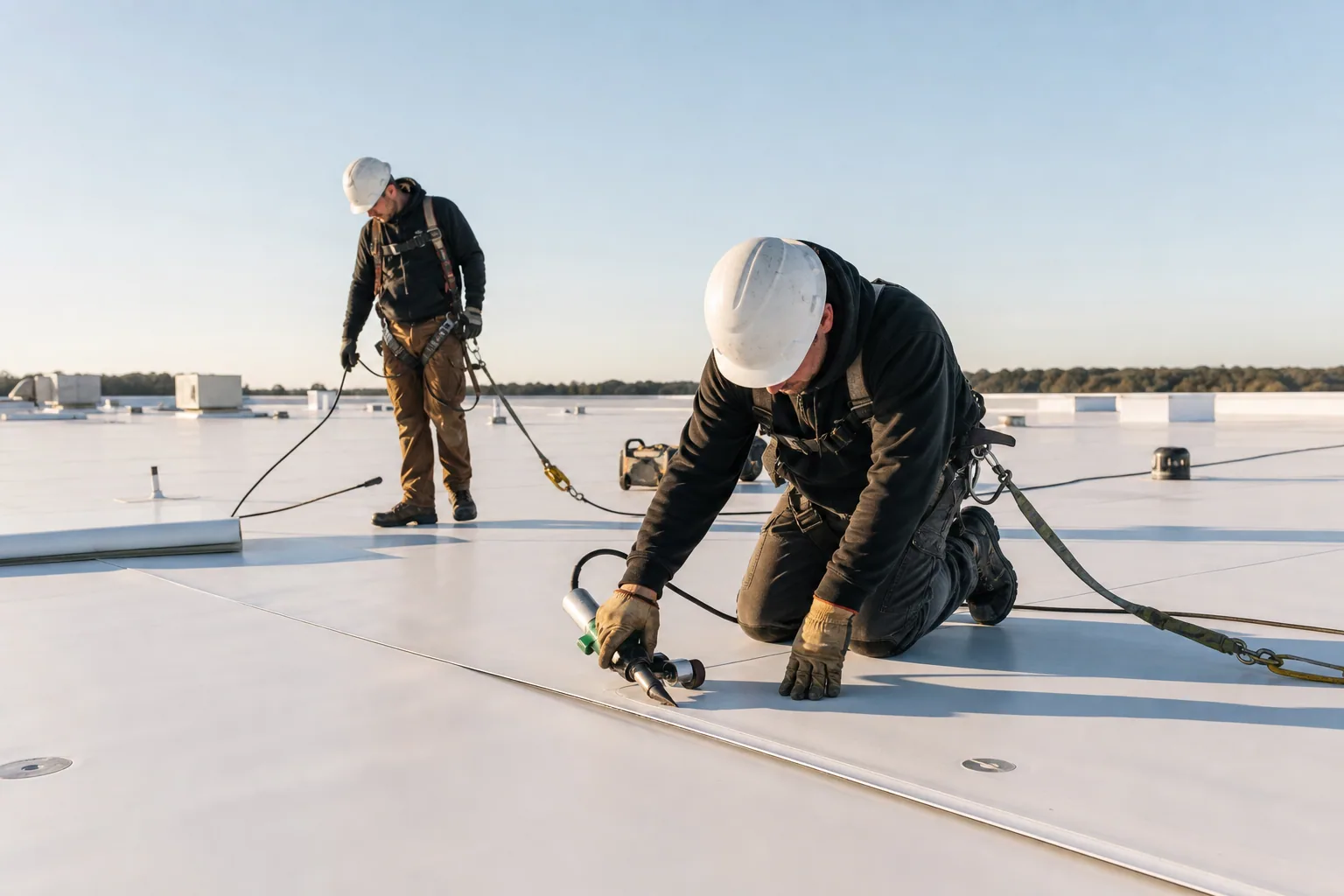
We clean and prepare the KEE surface before welding compatible membrane. The patch extends beyond the damaged area to sound material. After the seam cools, we inspect the weld edge and record its location. A repair over loose residue or damp insulation can fail to connect properly. If moisture reaches the board, we open to a dry boundary when authorized and replace unsound material before completing the tie-in.
Flashing needs shaped material at pipes, curbs, and equipment supports. We inspect boot collars, corners, fasteners, and terminations, then match the repair to the membrane. At a drain, the patch must preserve clamping and leave the bowl clear. A curb or penetration flashing repair can address a damaged vertical detail while retaining sound KEE in the field.
Some low-slope roofs combine sections from different installation or repair periods. We mark each material change and keep repairs separated by assembly. PVC and KEE may look similar, but the surface and formulation are not interchangeable by appearance. A roof inspection can map field, transition, and curb conditions before larger repair work is approved.
Review drainage and attachment
KEE performance depends on more than a field seam. We inspect insulation, cover board, attachment, perimeter securement, drains, and equipment interfaces. A pulled sheet may point to an attachment issue, while a low area may hold water against an otherwise sound weld. We check those conditions before recommending a membrane patch or broader assembly work.
Roswell's humid summers and frequent rainfall can keep drainage details under repeated stress. We inspect primary drains, overflows, scuppers, and nearby laps for ponding marks and loose flashing. When the outlet or slope contributes to the defect, a drainage correction review can define that separate work. Coating over a low point does not change the route water takes across the roof.
Holcomb Bridge Road connects Roswell's commercial districts to the GA 400 interchange. A roof visit near that corridor may require specific loading or access planning. We ask the property contact for roof hatch instructions, escort rules, equipment paths, and operating hours. Site logistics affect the visit sequence; system identification and field findings control the roofing recommendation.
Scope test areas and concealed layers
If a test opening finds wet insulation or an unstable deck, we photograph the layers before removing them. The asset manager approves additional removal beyond the initial repair limit. We state the allowance and the condition that would trigger it. A dry, sound substrate receives the new KEE tie-in. An uncertain neighboring area stays identified as untested rather than included by assumption.
Weather and surface condition set the work window. We need a dry surface for preparation and welding. Open work is divided by zone and protected before a rain hold. If showers approach, the crew secures the edge, keeps drains open, and returns when the substrate is ready. The sequence identifies which details will close before the weather break.
Cost and timing reflect seam length, flashing count, test locations, access, membrane condition, and the amount of wet board or deck work. The proposal separates confirmed repair from concealed allowances. For a broader roof decision, a recover evaluation can compare retained KEE with selective removal, subject to condition, code, and drainage requirements.
Retain the KEE repair history
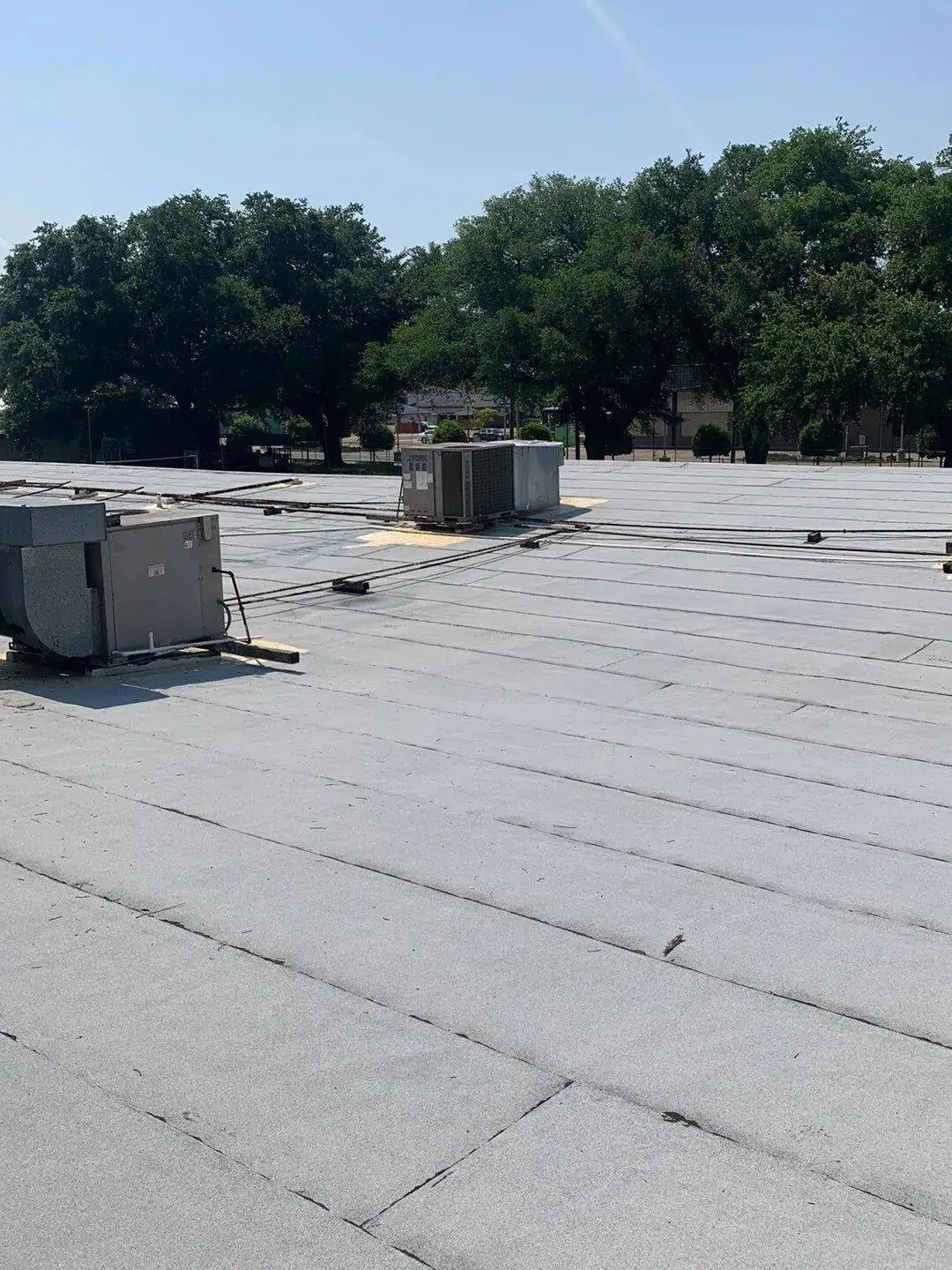
Closeout photos show the test weld, repaired seam, flashing, and adjacent roof detail. The record lists the KEE material used, work location, layers exposed, and any condition left open. We note areas that could not be reached and any allowance that was not used. These details let a later visit compare the same membrane zone with the repair record.
Future checks can focus on weld edges, drains, curbs, and equipment transitions. A roof condition report can preserve those locations alongside other findings without combining separate assemblies. Near the Roswell Town Center corridor, property-specific access notes can also help plan later inspections.
Request a KEE roof assessment for a named building and zone. Send roof plans, material records, leak dates, prior repairs, access instructions, and any test results. We will inspect the sheet and connected details, then state what is confirmed and what still needs approval.
Related Roofing Work
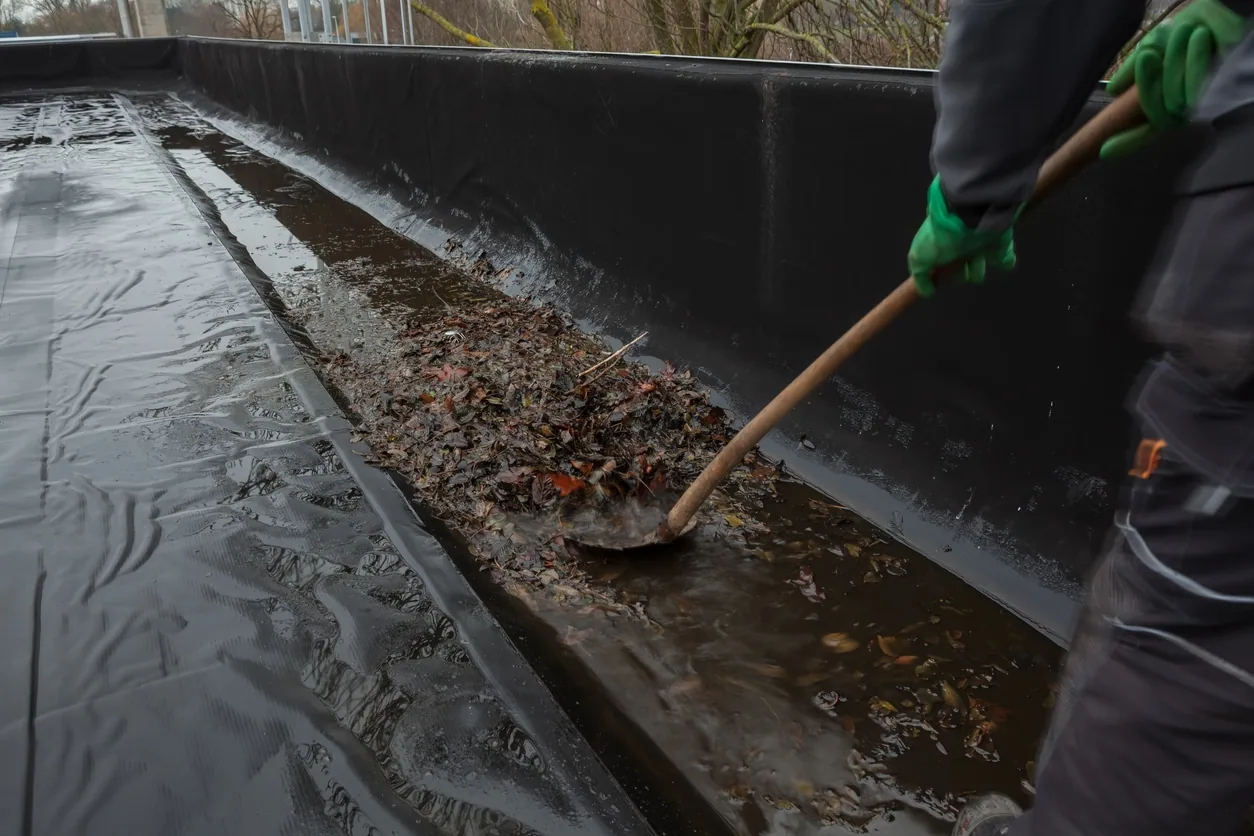
Confirm the membrane before repair
Name the building and roof zone. Send roof plans, material records, leak dates, previous patches, access details, and test results to focus the KEE inspection.
Questions About KEE Commercial Roofing
How do you confirm a roof is KEE?
We review available system records, surface markings, seams, flashing details, and field condition. KEE and PVC may look similar, so appearance alone does not establish the exact membrane. If the material is uncertain, we identify a suitable test before specifying a weld or patch. The report notes what supports the system identification.
Can you weld a new patch over an older KEE repair?
The older repair needs inspection first. We check adhesion, contamination, surface condition, and whether compatible material remains available. A test weld can show if the area accepts preparation. If the patch is loose or brittle, we remove it to sound KEE and extend the tie-in to stable membrane.
What can make a KEE seam pull apart?
Edge lift can relate to weld quality, contamination, movement, or a substrate that has lost support. We inspect adjacent seams, attachment, insulation, and nearby transitions before assigning the repair boundary. If a test opening shows wet or soft material, we document it and obtain approval for any added removal.
Does a KEE roof need different maintenance?
Maintenance should match the installed system and its condition. We check weld edges, penetrations, drains, patches, and perimeter details, then record changes by zone. The visit follows the roof's actual exposure and repair history. We do not transfer inspection findings from a nearby PVC or TPO roof to the KEE assembly.
Commercial Roofing Across Roswell and North Fulton
Roof Repair, Replacement and Maintenance for Every Kind of Commercial Building
From Historic Roswell and Canton Street to the Holcomb Bridge Road corridor, GA 400 and the North Point area, we inspect, repair and replace low-slope and metal roofs on offices, retail centers, medical buildings, schools and warehouses.