Manufacturing Plant Roofing in Roswell, GA
A failed curb corner beside a process exhaust can let water reach both the roof layers and equipment below. We check the flashing, termination, nearby seam and substrate before setting the repair boundary. A plant roof needs a work plan that accounts for equipment service clearances and production windows. Roswell's humid summer heat and frequent rain test laps and penetrations repeatedly. The condition report separates the visible defect from concealed damage that opening the assembly may reveal.
Use does not identify the roof system. We inspect the actual membrane, metal panels, drains, insulation and deck before specifying a repair. Roswell's growth plan identifies economic areas and infrastructure priorities, while North Fulton employers span technology and advanced manufacturing. This context does not define a particular building's assembly. A Roswell plant roof inspection is tied to the facility and its roof zones.
Inspect around heat, exhaust and vibration
Process equipment can concentrate heat, vibration, exhaust or service traffic at roof level. We inspect the membrane around curbs, supports and penetrations for splits, loose flashing, abrasion, open laps and residue that can affect adhesion. We also check whether nearby service paths have damaged protective surfacing. A visible mark is recorded with its location and adjacent details so the plant engineer can connect the roof finding to equipment operations.
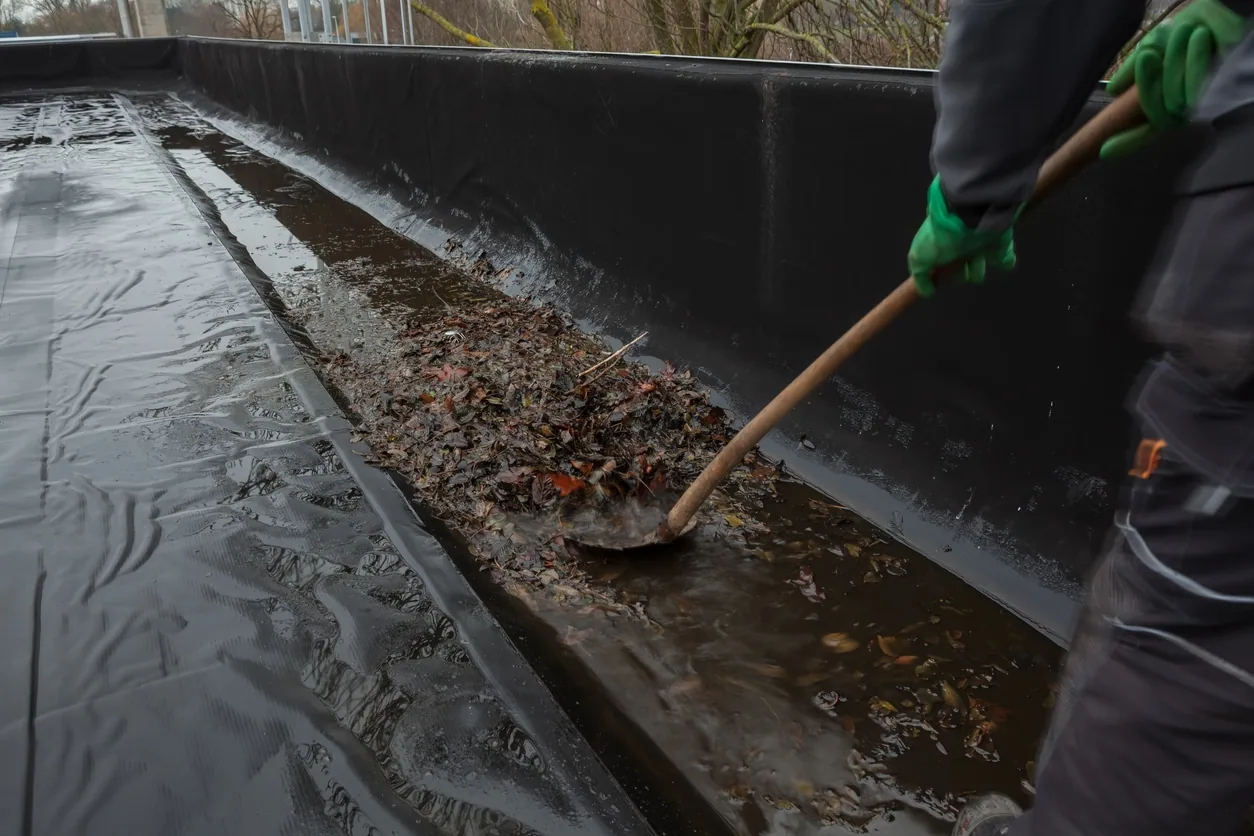
At a drain, we look for debris, ponding, loose strainers and a softened surface. Water can collect where equipment screens or piping obstruct a path. We map the primary drain and overflow, then note whether the slope directs water toward them. Warm-season rain makes drainage restrictions important, but a puddle does not establish a membrane failure. Our drainage inspection records the water path and separates corrective work from membrane repair.
North Fulton includes Roswell, Alpharetta, Milton and Johns Creek, with employment districts connected by GA 400. Johns Creek identifies healthcare, life sciences and innovation among its target industries and reports new medical-device manufacturing investment. Those industry facts make production schedules and access limits worth confirming with each property contact. It does not tell us what equipment is on a given roof. We request the facility's hazard controls, hot-work rules and shutdown requirements before planning access.
Protect the production schedule
Before mobilization, we confirm which production areas sit below each roof zone, what equipment must remain online and who can approve a shutdown. Plant staff identify intake locations, exhaust discharge, crane paths, hazardous areas and required permits. We set a roof access route that avoids production traffic and define where materials and debris can be staged. A work plan that omits these controls can create operational conflicts even when the roof detail is straightforward.
For replacement, crews remove only the approved section and close it with a secure tie-in at each shift end. If opening the assembly reveals wet insulation or an unsound deck, we photograph and measure the condition. Work pauses at a stable boundary while the designated contact reviews the additional scope. This keeps removal from extending into a production-sensitive zone without approval. Phased occupied-building reroofing can set daily work limits and protection around operating areas.
Alpharetta's Windward district sits on the GA 400 north Fulton growth corridor and combines employment areas with retail and residential neighborhoods. For a plant near this connected commercial area, deliveries and crew arrivals still depend on the facility's gate and staging rules. We confirm those details directly, along with emergency access, lift placement and material routes. District context helps plan travel and site coordination, but it does not replace a site walk.
Choose a scope the assembly can support
A repair should terminate on clean, attached and compatible material. We identify the existing membrane and check the lap, substrate, attachment and nearby patch history. If the surface is brittle or failures repeat across multiple zones, a local repair may not address the broader condition. Moisture scanning or test cuts can answer whether wet insulation extends past the visible opening. We specify the question each test is meant to resolve.
TPO, PVC, EPDM, modified bitumen, built-up, standing seam metal and coating systems each have different repair details. We do not select a system from plant use alone. At metal panels, we inspect fasteners, seams, ridge details and penetrations. A retrofit option requires review of structure, attachment and clearance. For membrane assemblies, compatibility includes primer, patch material, weld or adhesive, and the prepared substrate. A repair scope identifies the method and boundary instead of calling for broad work without evidence.
Where removal is justified, the proposal describes insulation, cover board, membrane, edge details, drains and equipment transitions. A replacement comparison can be set beside repair or coating restoration where the existing assembly supports those choices. Cost and schedule vary with layers, deck condition, access, equipment shutdowns, material lead time and the size of each approved zone. We list confirmed quantities separately from any allowance for concealed damage.
Set workable installation and storm limits
Hot, humid days and frequent rain affect surface preparation, adhesives, coatings and open-roof duration. We check the substrate before closing an assembly and pause when moisture or temperature prevents reliable installation. Each open zone has temporary protection, drain access and a tie-in that can close securely.
North Georgia storm cells can bring hail, tornadic activity and damaging gusts. A regional report does not establish damage at this plant. We inspect for lifted edge metal, punctures, displaced flashing or hail fractures. Emergency calls are answered at any hour, weekends and holidays included, when an opening threatens operations.
Timing depends on zone size, access permits, production windows, staging, weather and equipment coordination. The schedule identifies noisy work, hot work or a possible shutdown. If an opened area reveals additional damage, we secure it and provide a measured scope for review.

Record the work for maintenance and capital review
Closeout photos show seams, terminations, drains, curb details and tie-ins. We identify the roof zone, materials, approved changes and remaining concealed conditions. The record includes maintenance items such as a drain that needs clearing or a detail to revisit after rain.
A roof asset record can tie each plant's history to its plans and approvals. A warehouse roof scope may address similar membrane or dock issues, while production equipment and shutdown needs make this plant's scope distinct. Cold-storage roof coordination adds temperature controls.
Request an inspection or comparison for a named plant and roof zone. Send roof plans, leak reports, equipment restrictions, shutdown rules, access permits and production windows. We will document conditions, identify needed tests and separate approved work from concealed-condition allowances.
Related Roofing Work
Coordinate a plant roof inspection
Name the roof zone and send plans, leak history, equipment restrictions, hot-work rules, access permits and production windows. We will document findings and define approvals for concealed conditions.
Questions About Manufacturing Plant Roofing
Can production continue during a roof repair?
Many localized repairs can be sequenced while production continues, provided access, hot-work rules, exhaust controls and protection are agreed in advance. Work near an intake, process line or equipment service area may require a restricted window or shutdown. We map each roof zone to the production area below and confirm the decision with the plant contact before mobilizing.
How should we handle a leak near process equipment?
Protect equipment and affected work areas first, then report the interior location and any operational restrictions. We trace roof seams, curbs, penetrations and drainage above the report, and record what is accessible. The stain may be offset from the entry point. If moisture could affect insulation or deck, we identify the test or opening needed before pricing a larger repair.
What can change the approved scope after tear-off begins?
Wet insulation, deteriorated deck or incompatible retained layers can change the repair limit. The crew photographs and measures the exposed condition, then secures the work at a stable boundary. The designated approver reviews the added work and cost before removal continues. A written allowance should state its trigger and how measured quantities will be priced.
Which records help compare plant roof bids?
Provide roof plans, assembly records, prior repairs, leak locations, equipment schedules, access rules and production windows. Compare proposals by roof zone, removal limits, system components, drainage, equipment coordination, temporary protection and closeout. Each should identify shutdown assumptions and the approval path for concealed conditions. We can use those records to make the scope more specific.
Commercial Roofing Across Roswell and North Fulton
Roof Repair, Replacement and Maintenance for Every Kind of Commercial Building
From Historic Roswell and Canton Street to the Holcomb Bridge Road corridor, GA 400 and the North Point area, we inspect, repair and replace low-slope and metal roofs on offices, retail centers, medical buildings, schools and warehouses.