Commercial Roofing in Woodstock, GA
A lifted edge can let wind-driven rain cross the termination and reach insulation below. We check the metal attachment, membrane turn-up, corner joints, and the nearest drain before limiting the repair. Woodstock distinguishes its downtown district from general commercial areas serving regional and highway-oriented development. That difference changes the access questions for storefronts and larger-format businesses, but it does not identify the roof system at a specific property.
The city identifies I-575 and Highway 92 as state arteries serving areas outside the downtown core. Owners with properties in both settings can compare roof needs under one budget while keeping site observations separate. A Norcross commercial roof assessment can support a separate municipal file for regional portfolios. Each Woodstock estimate remains tied to its roof zones, access, and operating conditions.
Plan access for the property setting
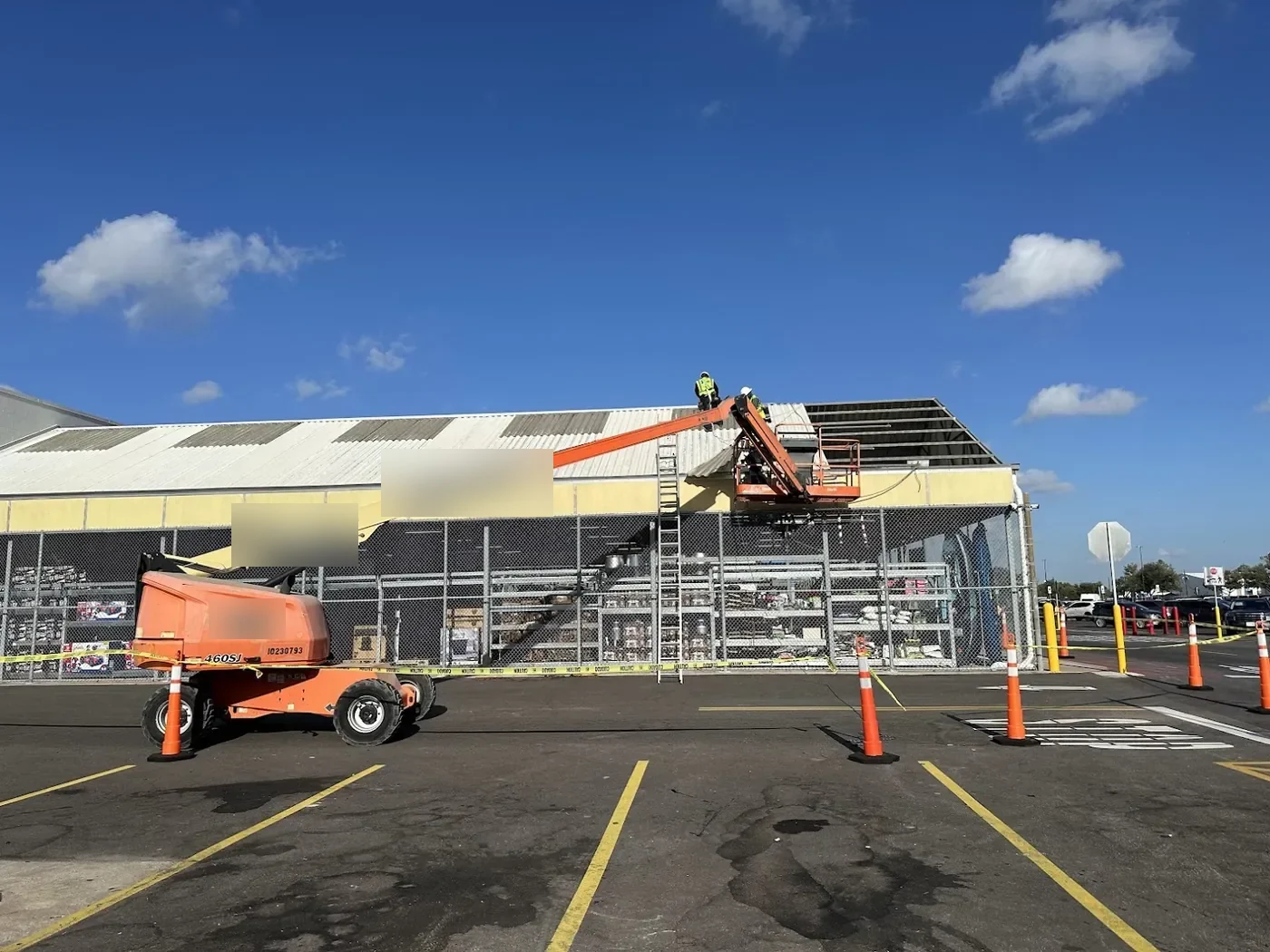
Downtown and highway commercial locations can have different delivery paths, customer access, and staging limits. We confirm the roof hatch, ladder or lift setup, loading schedule, pedestrian routes, and areas that must remain open. For a storefront, an owner may need to coordinate above active entrances. A larger-format business may have a different work perimeter or material route. We use the manager's current instructions rather than assume how the district operates.
Woodstock's zoning framework also separates downtown from general commercial districts. We treat that as planning context, then verify each property in the field. If several buildings share ownership, a route can group visits, but every report should name the structure and roof area inspected. A multi-property roof review can coordinate inspection dates and budget comparisons without carrying one building's access notes to another.
When roof work affects a public entry or shared walk, the proposal should identify barriers, delivery periods, and daily cleanup. Interior protection may also be needed under an active repair. A phased occupied-building reroof can divide an installation into manageable areas, with a dry-in point and return-to-service step for each shift.
Follow water past the first visible mark
A ceiling stain near a sales area may sit away from the actual roof opening. Water can track along a deck, insulation facer, or framing before it reaches the interior. We use the reported date and room location to inspect the roof zone above, then trace nearby laps, penetrations, wall transitions, curbs, and drains. If the path cannot be confirmed in a dry visit, the report states what remains untested.
On the roof, we document open seams, split sealant, loose edge metal, punctures, blocked outlets, and evidence of earlier repairs. Each photograph should show both the defect and its location relative to a roof plan. That allows the owner to approve a defined patch or request targeted testing. A leak tracing visit can connect interior reports to roof-level evidence without treating every stain as the same failure.
Atlanta's long-term July average high is close to 90 degrees Fahrenheit, and the warm months bring frequent showers. We check the roof's actual moisture and surface temperature before scheduling heat-sensitive materials. Those conditions affect the work window, while observed material and substrate determine the repair.
Confirm what material the repair must meet
A patch only works if it ties into a compatible surface. We sort the installed system from its seam form, fastening pattern, visible plies, and service records. A thermoplastic weld, adhered rubber field, asphalt-based layer, coated surface, or metal panel calls for its own preparation and tie-in. We verify those details before selecting a compatible patch. If a previous overlay hides the original layers, a controlled opening can answer the question before a permanent repair is priced.
Wet insulation can move the repair boundary beyond the visible seam. We document how far material must be removed to reach sound substrate and keep concealed deck conditions as a separate approval item. A written repair scope can state what will be opened, restored, and excluded. That detail helps the owner compare a limited correction with a larger area of work.
If defects recur across separate roof zones, we compare a focused repair with an added assembly or removal. The owner can weigh substrate evidence, water movement, remaining build-up, and equipment changes before selecting a capital scope. The downtown district and the areas served by I-575 and Highway 92 include distinct commercial settings, but roof decisions still depend on each assembly. A replacement assessment should explain staging and tie-ins for the actual property.
Protect exposed areas through a weather hold
Rain can interrupt welding, adhesive application, coating, or surface preparation. We split a repair into sections that can be protected before the crew leaves. The work plan names the temporary cover and the conditions needed before permanent installation resumes. A delay changes the order of work; the approved boundary stays clear unless new evidence supports an adjustment.
Cost and timing depend on roof-zone count, material, access equipment, preparation, wet insulation, and the property schedule. Downtown access restrictions or highway-side delivery arrangements should be confirmed directly with the owner. We list the assumed work hours and staging requirements rather than hiding them in a general allowance. For a repeated water path, an edge and flashing review can record the transitions that need attention.
Hot roof surfaces can narrow the suitable period for some products. We check conditions at the work area and follow manufacturer installation requirements. A forecast is useful for sequencing, but the crew still checks that each surface is dry and ready before closing the repair.
Keep district observations with each address
Closeout photos should identify the repaired seam, edge, curb, and surrounding field. We label the property, roof zone, material, and removal boundary, then list any condition left outside the approved scope. If we open the assembly, the record states what layers appeared and how the area was restored.
Woodstock's downtown district and general commercial districts serve different property contexts. Its I-575 and Highway 92 arteries support access beyond downtown, but that route information does not replace building-specific instructions. Keep roof plans, repair dates, access contacts, and equipment changes in the property's own file. A Marietta-Cobb industrial park assessment can support a separate district record for owners comparing multi-property needs.
Request a scoped comparison for the Woodstock roof zones under review. Share the building name, leak locations, available drawings, prior work, and access rules. We will document confirmed conditions, note any uninspected area, and separate immediate repair from longer-term renewal decisions.
Related Roofing Work
Assess a Woodstock commercial roof
Send roof plans, leak dates, repair records, operating hours, and access instructions. We will inspect the named zones and separate confirmed repairs from concealed conditions.
Questions About Woodstock
Does a downtown roof require a different repair method?
The district label does not identify the roof assembly. It may affect access, customer routes, and staging, so we confirm those constraints with the property contact. The repair method follows the material and condition found on that building.
How can a stain be tied to the correct roof area?
Use the room, date, and weather around the report as starting points. We inspect the roof zone above and connected details, then compare photos with a plan. If the path remains uncertain, we describe the additional test rather than widen the scope without evidence.
What should a commercial owner provide before estimating?
Roof drawings, repair history, operating hours, and entry instructions help define the visit. A marked photo of the interior report can also narrow the search area. We verify system details on site before selecting materials.
Can downtown and highway properties share one work schedule?
They can share a budget and coordinated calendar, but each site needs its own access plan and roof record. We group visits when practical, then price the confirmed work separately by building and zone.
Commercial Roofing Across Roswell and North Fulton
Roof Repair, Replacement and Maintenance for Every Kind of Commercial Building
From Historic Roswell and Canton Street to the Holcomb Bridge Road corridor, GA 400 and the North Point area, we inspect, repair and replace low-slope and metal roofs on offices, retail centers, medical buildings, schools and warehouses.