
Infrared Roof Moisture Survey in Roswell, GA
A warm patch beside a roof drain can direct a moisture check, but it does not prove the insulation is wet. Infrared scanning records surface temperature patterns that may correspond with retained moisture under suitable conditions. We map those patterns by roof zone, compare them with visible details, and identify where a core cut or hands-on inspection can confirm the assembly. In Roswell, humid summers and recurring rain make drainage and flashing context part of the survey plan.
The survey answers a specific question: where should the next test occur, and what evidence supports that location? It does not replace physical verification. We record scan conditions, roof type where known, visible defects, and recommended test points. A hands-on roof inspection can check seams, curbs, drains, and the substrate alongside the thermal review.
Set conditions for a useful scan
Infrared readings depend on conditions before and during collection. Surface temperature changes with sun exposure, cloud cover, wind, recent rain, roof color, insulation, and the underlying assembly. We review weather and roof access before scanning and note the conditions that could affect interpretation. If recent rain, standing water, or changing cloud cover limits a reliable comparison, we adjust the timing or explain the limitation.
We identify roof sections and visible features before interpreting thermal patterns. Drains, curbs, seams, equipment, parapets, and shaded areas can have different surface behavior. A roof plan helps align the scan with known zones, while field references help when drawings are incomplete. For a large or hard-to-access roof, drone imagery may help map visible features, but it does not replace the thermal collection or physical test.
Roswell's commercial properties include offices, healthcare, schools, retail, civic buildings, and light industrial uses. Their roof materials and insulation systems vary. We record what can be identified and avoid interpreting one building's assembly as another's. If the roof system is unknown, we state that uncertainty because it affects how a temperature difference should be assessed.
Warm-season rainfall can leave moisture or ponding in low areas. We note drain locations and surface conditions so a thermal difference is not read in isolation. A scan taken after rain may require a different interpretation or a later visit. The report states whether observed patterns need confirmation before any removal or replacement decision.
Read patterns with roof details
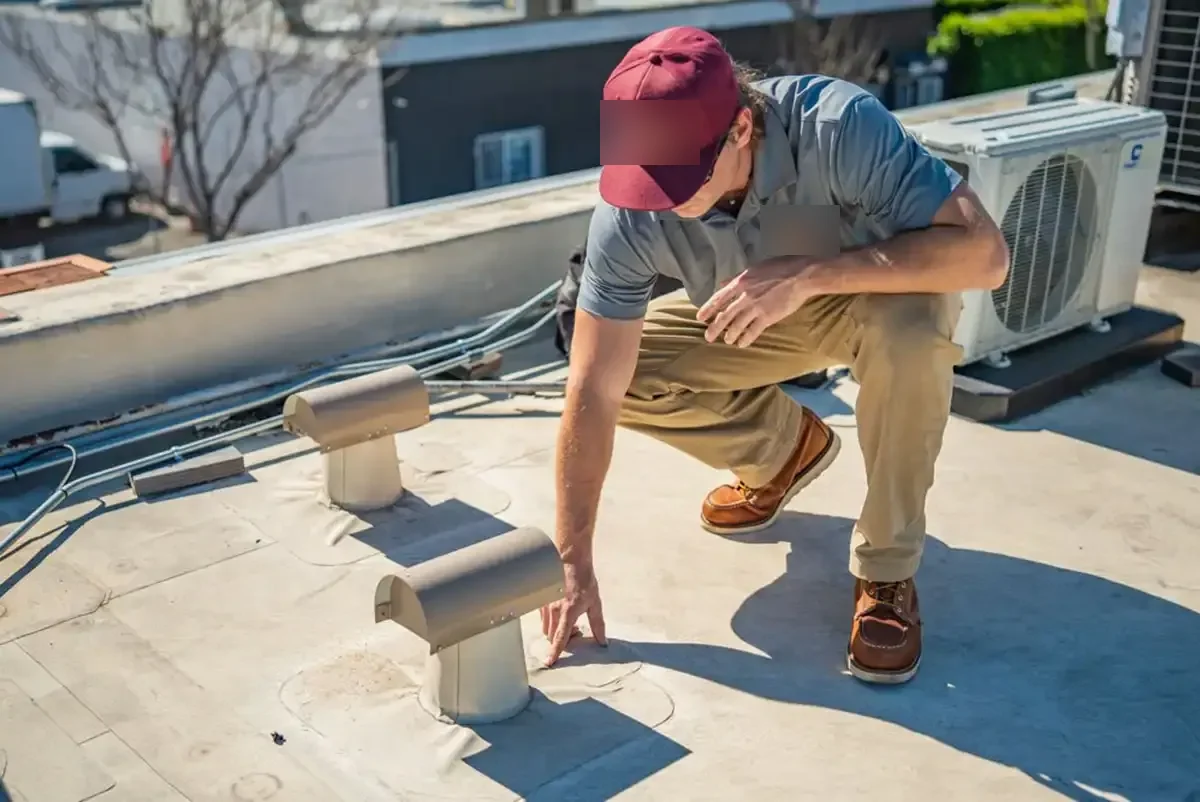
A thermal pattern is a lead for investigation. We compare it with visible membrane conditions, drainage, repair history, and interior evidence. A temperature difference may come from a material change, shade, equipment, wet insulation, or a roof feature. We outline candidate areas and describe why each merits attention. The report does not label every anomaly as moisture without a confirming test.
After mapping, we select representative test locations with the asset manager. Core cuts can confirm the materials and condition at a specific point. We record the location, layers observed, moisture evidence, and repair of the opening with compatible roofing materials. One core sample speaks for its test point; it does not establish the condition of the entire adjoining roof zone. Additional checks may be needed if the pattern changes across an area.
When moisture is confirmed, we mark the boundary supported by the test locations and visible evidence. If wet insulation reaches a seam, curb, or drain, the repair limit may extend to sound material beyond the first anomaly. We separate confirmed wet material from untested areas and present an allowance if opening the assembly could reveal more. This gives the owner a decision point before repair or replacement proceeds.
Healthcare campuses and medical offices are part of North Fulton's property mix. Office and technology employers also cluster near Perimeter Center, Alpharetta, and Johns Creek. At occupied buildings there, we coordinate test locations and roof access with the facility contact. The roof survey should identify restricted zones, equipment clearances, and any interior spaces that require protection during a core cut.
Turn test points into a scope
The survey report lists the scan date, weather conditions, roof areas covered, visible features, thermal patterns selected for follow-up, and each verification result. Images use the same roof-zone references as the site plan where possible. We distinguish areas with confirmed moisture from readings that remain untested, along with any portion that could not be scanned or safely accessed.
Repair options depend on the assembly and the extent confirmed. A local opening may be dried and patched if adjacent material is sound. Wet insulation can require removal and replacement to a defined boundary. If moisture appears in several separated zones or the membrane has broad failure, we compare a qualified recover with full replacement after checking layer count, substrate, drainage, and code requirements.
Survey timing and cost depend on roof area, complexity, access, recent weather, test count, and repair of each test cut. We identify which core cuts are included and how added testing would be approved. Where the scan cannot distinguish a roof feature from a moisture pattern, we note that limitation rather than assigning a repair. A roof condition report can place the findings beside repairs and maintenance priorities.
Roswell's Holcomb Bridge Road and GA 400 network serves a varied commercial building base. Survey access and staging must be confirmed for each property. If the building is in the Roswell commercial area, send roof plans, prior leak records, known repairs, access rules, and operating windows to focus the visit. The scan plan should name the roof zones and the question each test is intended to resolve.
Keep confirmation tied to the map
After testing, we mark each core location and photograph the layers observed. The cut is repaired using compatible materials, and the report identifies the repair. A later repair crew can use the test map to avoid treating an untested area as confirmed. If another pattern appears during work, the asset manager can authorize a new test or revised boundary based on the additional evidence.
Infrared mapping can also support future comparisons when the capture conditions and roof sections are recorded. A later scan should be interpreted with its own weather and surface context. If water returns at a known area, a leak investigation can trace the roof opening rather than relying on a prior thermal pattern alone. Maintenance records can note repaired test cuts and follow-up zones.
Request a moisture survey for a named building and roof area. Share the roof plan, material records, recent weather or leak history, prior repair locations, access requirements, and the decision the survey needs to support. We will define scan coverage, identify candidate test points, and separate measured patterns from confirmed moisture.
Related Roofing Work
Map moisture questions by roof zone
Request a survey for a named building and roof area. Send roof plans, material records, leak history, previous repairs, access requirements, and the decision the test should support.
Questions About Infrared Roof Moisture Survey
Does an infrared survey confirm wet insulation?
No. Infrared scanning identifies temperature patterns that may indicate areas for further investigation. We compare them with visible conditions and verify selected points with core cuts or another suitable method. The report labels each finding as a pattern, confirmed condition, or unresolved area. That distinction prevents a thermal reading from becoming an unsupported removal scope.
When should the roof be scanned after rain?
Sun, cloud, wind, and recent precipitation affect when patterns separate. Scanning too soon after rain or during changing conditions can make readings harder to interpret. We review the forecast and surface conditions before collection, then record any limitation. If useful separation is not available, rescheduling or adding physical tests may be the better next step.
How many core cuts will the survey include?
We propose test locations after reviewing the scan and visible roof details. Test count reflects roof size, pattern variation, access, and the decision being evaluated. Each cut confirms the materials and condition at that point only. If additional locations are needed to define a repair boundary, we present them for approval and map each result.
Can a thermal survey tell whether the whole roof needs replacement?
A survey can help locate possible wet areas. Replacement also requires review of membrane condition, layer count, deck, drainage, and the extent of confirmed damage. We combine the test map with a hands-on roof review and repair history. The recommendation states which zones were tested and separates confirmed removal from areas that remain unverified.
Commercial Roofing Across Roswell and North Fulton
Roof Repair, Replacement and Maintenance for Every Kind of Commercial Building
From Historic Roswell and Canton Street to the Holcomb Bridge Road corridor, GA 400 and the North Point area, we inspect, repair and replace low-slope and metal roofs on offices, retail centers, medical buildings, schools and warehouses.