Commercial Roof Repair in Roswell, GA
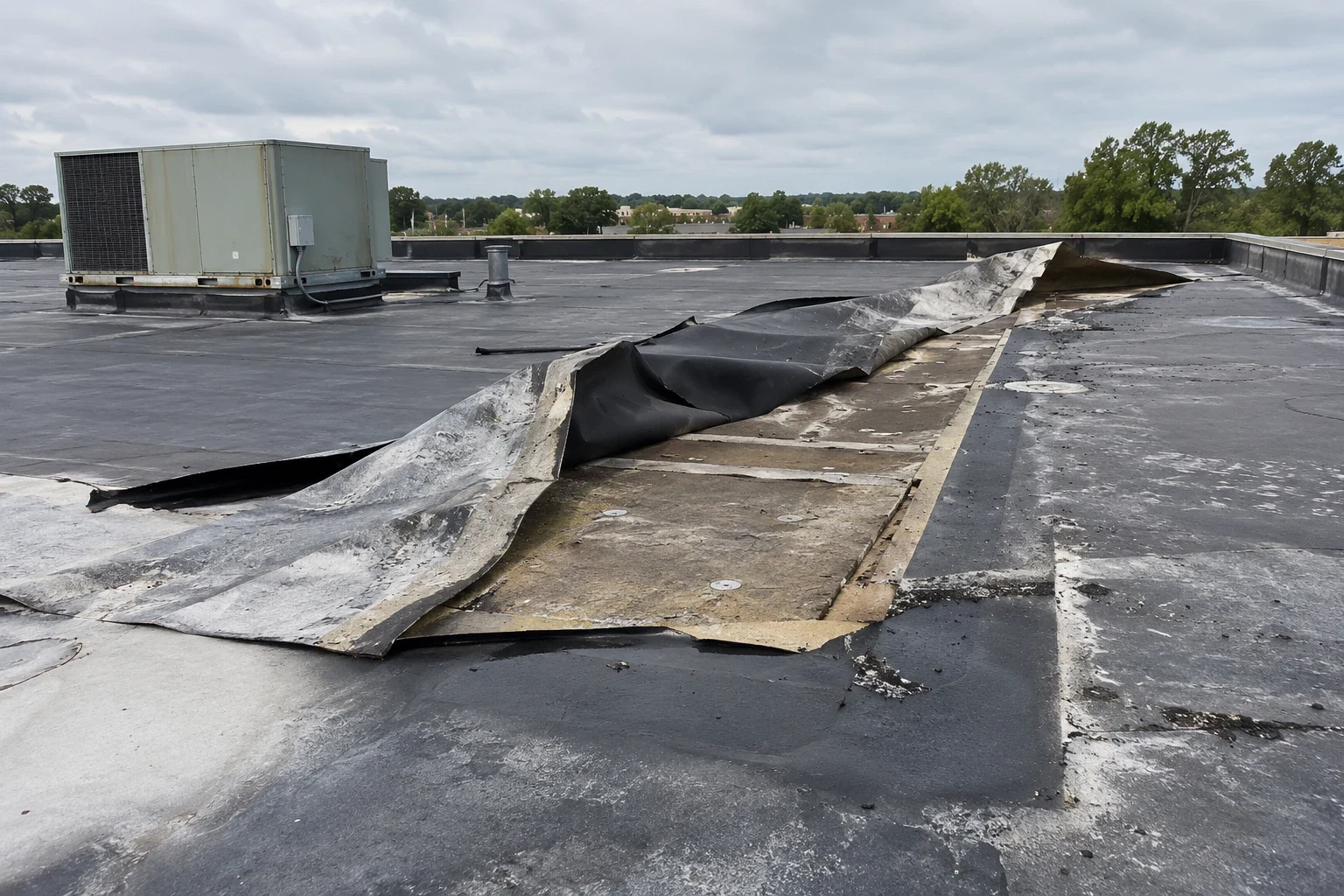
A lifted curb flashing opens a repair beyond the visible edge. Water can travel under the membrane, reach wet insulation, and appear far from the entry point. We check the curb, adjacent seam, substrate, and drain path before marking the repair boundary. Roswell's warm-season rain can expose weak laps and blocked drainage in quick succession, so the scope should identify both the defect and the detail that lets water move through the assembly.
Planned repair keeps the work focused on confirmed conditions. We photograph the roof zone, note the membrane type where it can be identified, and match materials to the existing assembly. For an active interior leak, a leak tracing visit may need to come first. If failures are widespread, we compare repair with replacement using condition evidence rather than age alone.
Map the defect and its water path
We begin at the visible defect and follow connected details. At a seam, that means checking the lap, nearby patch edges, surface contamination, and membrane movement. At a penetration, we check the boot or flashing, termination, curb corners, and the substrate around it. At a drain, we look for debris, standing water, loose clamping components, and insulation that may have softened around the bowl.
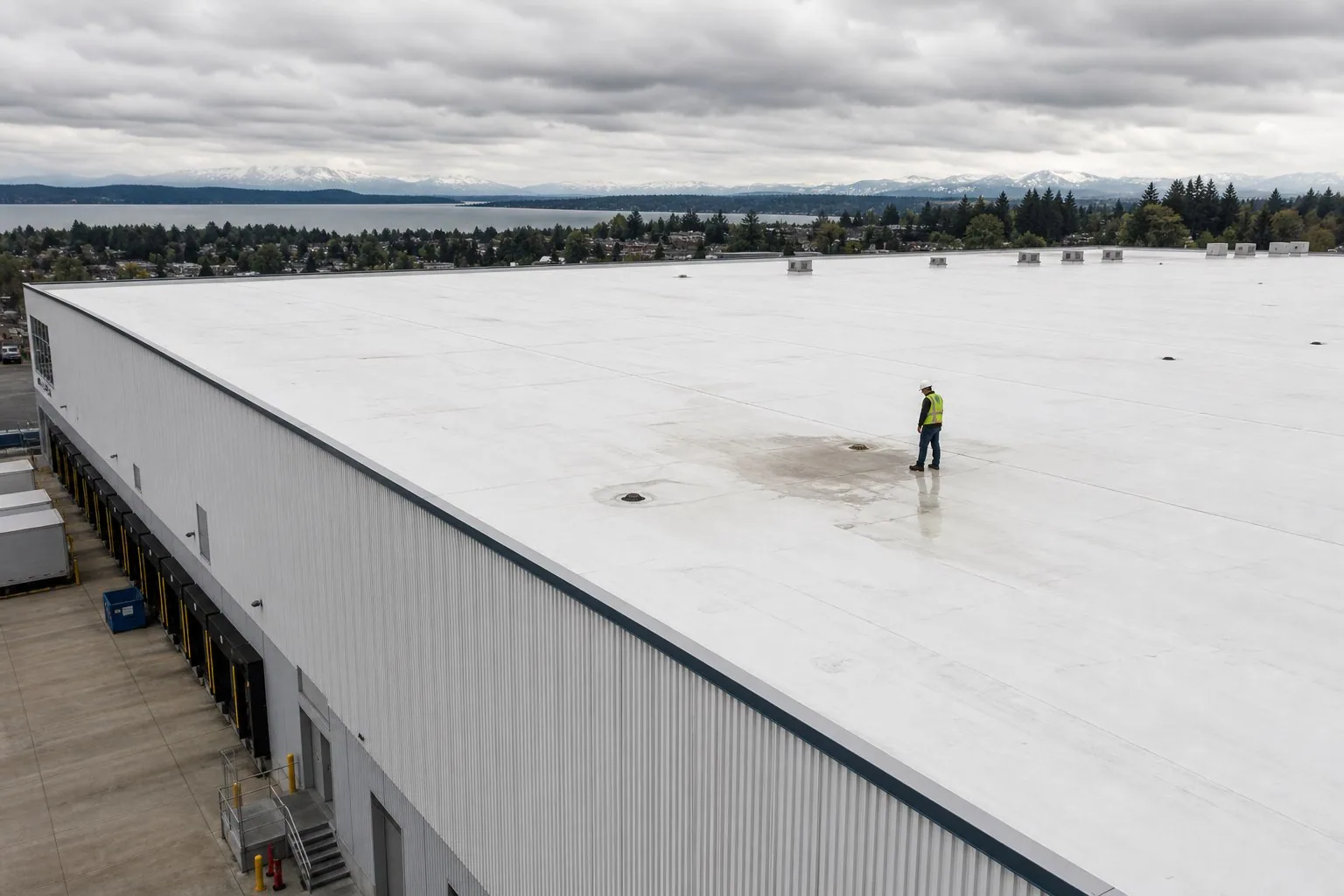
Each finding gets a location and condition note. A roof plan is useful, but clear field references work when plans are not available. We mark the roof zone, photograph the defect at useful scale, and record nearby equipment or transitions that help locate it later. On properties near Roswell's Holcomb Bridge Road corridor, access routes and roof sections may vary by building. The repair record stays tied to the actual property, not an assumed building type.
Atlanta climate normals show hot, humid summers and frequent warm-season rainfall. Heat cycling can stress exposed laps and flashing edges, while repeated rain reveals drainage weaknesses. We inspect both the failed detail and the path below it. If water appears indoors, its location is evidence, not a reliable map of the roof opening. We use the roof condition and interior observations together to set the repair limit.
Severe thunderstorms, damaging wind, hail, and tornadoes occur across north and central Georgia, but a weather report does not establish damage to a particular roof. We record visible evidence such as displaced metal, fractured membrane, or loosened flashing. Where a specific defect is confirmed, wind damage repair can be scoped to that condition without broadening the work beyond what the inspection supports.
Choose a repair that fits the assembly
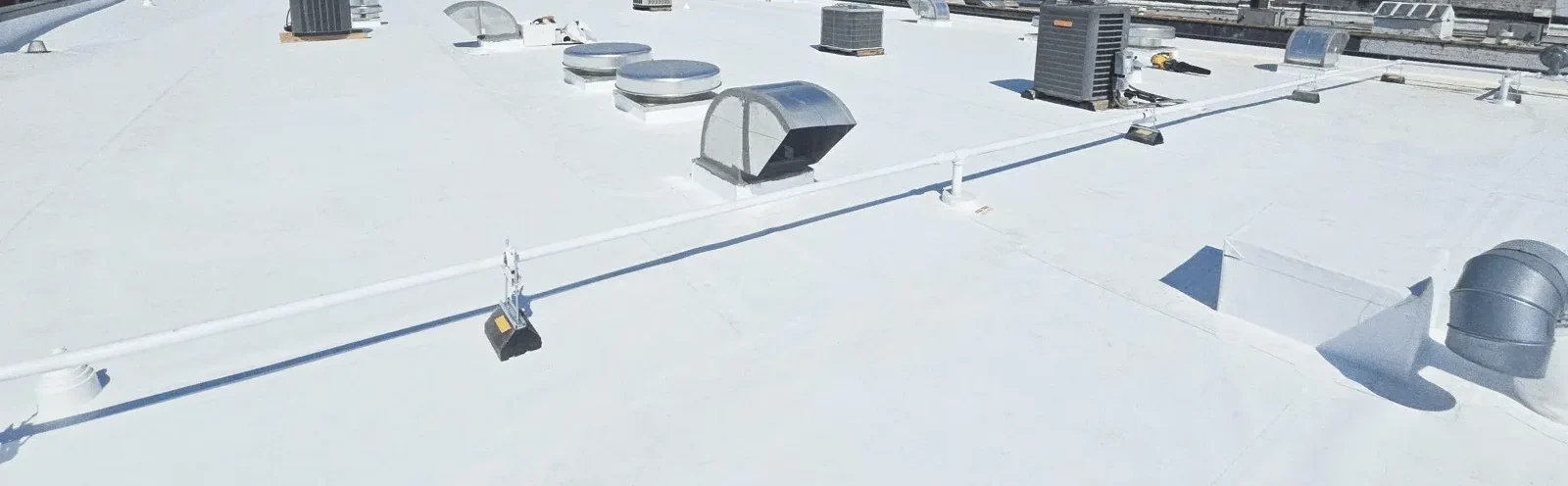
A patch needs clean, sound membrane around the defect. We remove loose material, prepare the surface, and install a repair compatible with the existing roof. A patch over a damp or contaminated area can lose adhesion. If insulation is wet, the repair may need to extend to dry material and include a tie-in at the edge of the opened zone. The proposal describes that boundary and any concealed condition that could change it.
Seam repairs require attention to lap condition and membrane type. We identify whether the seam can be cleaned and welded, needs a cover strip, or has failed because adjacent material has become brittle or detached. For TPO or PVC, weldable membrane must be prepared and joined according to the system's requirements. EPDM and other assemblies use different details. We do not treat membrane names as interchangeable when selecting patch materials.
Flashing repairs often involve several planes. A curb corner, wall transition, or pipe boot must shed water without leaving an open termination. We check fasteners, counterflashing, sealant condition, and nearby movement joints. If edge metal has separated, a perimeter metal repair may be part of the scope. The repair record shows where the new detail ties into sound existing material.
Drainage repairs can be small but consequential. We remove debris, clear the drain throat where accessible, inspect the overflow, and identify low areas that keep water at seams. A blocked drain is not corrected by sealing the nearest lap. If slope or insulation is part of the issue, we scope that correction separately from the immediate repair.
Control scope, timing and access
Repair timing depends on roof access, surface preparation, material compatibility, weather, and whether the defect exposes wet insulation or damaged deck. We plan a dry work window and identify any temporary protection needed before the permanent repair. A weather hold can change the visit sequence. The proposal should state the planned repair, the condition that would expand it, and who can approve an added allowance.
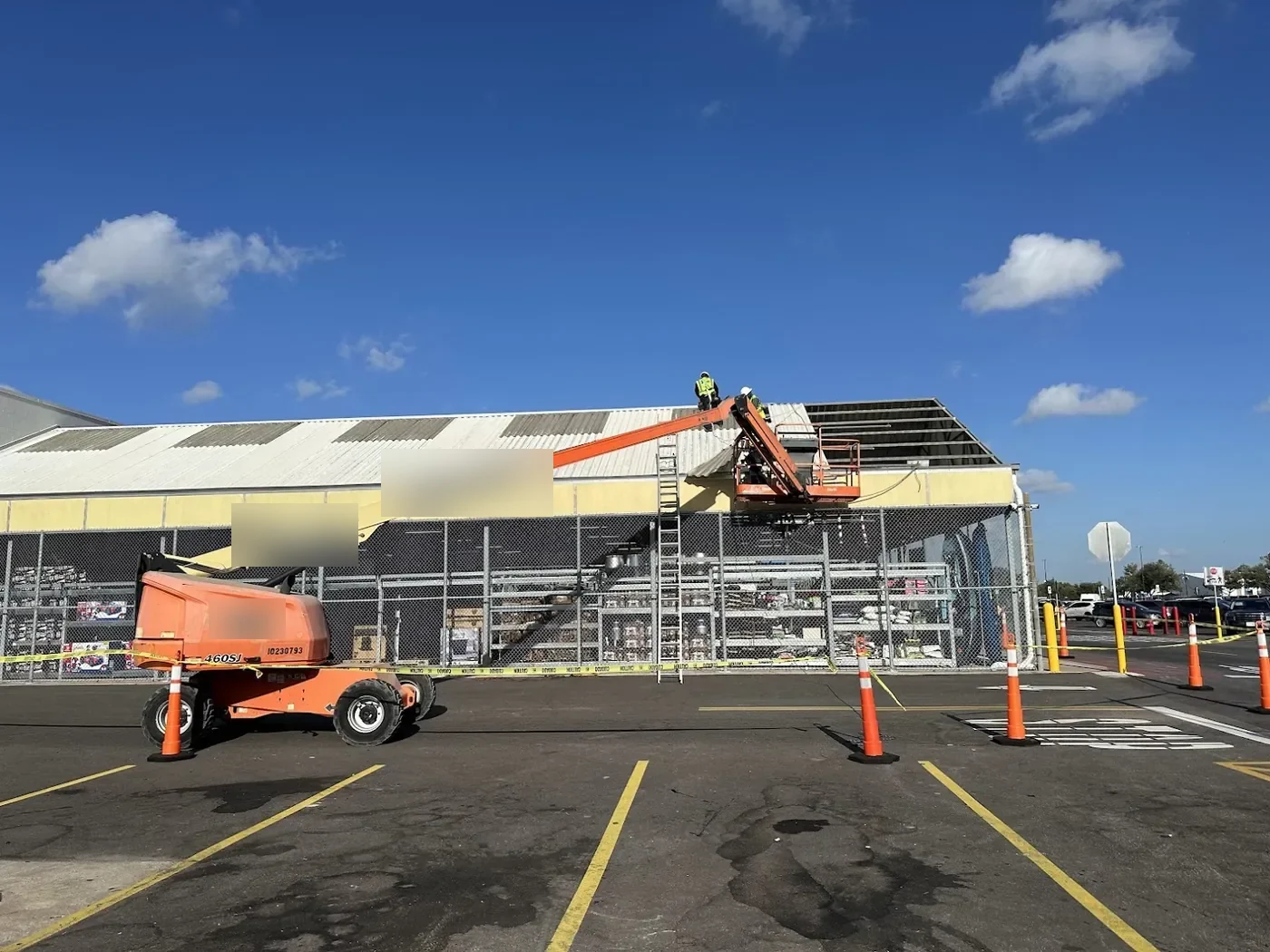
Occupied offices, clinics, schools, and retail buildings need coordination below the work area. We confirm access rules, restricted hours, rooftop equipment needs, and interior locations where occupants have reported water. If work could affect an entry or loading area, we identify the access route before setting materials. For buildings in Roswell's commercial corridors, site conditions matter more than the corridor name when planning staging.
Repair costs vary with the number of defects, access, surface preparation, membrane type, flashing components, and the amount of wet or unsound material. We separate confirmed repair from optional improvement. Repeated patches may point to a larger condition, but the pattern must be documented. A roof condition report can organize repair priorities across multiple zones without combining unrelated defects into one allowance.
Roswell commercial properties include historic central business sites, neighborhood retail corridors, offices, healthcare, schools, civic facilities, and light industrial uses along GA 400 and Holcomb Bridge Road. Roof access varies. Share roof plans, prior repair records, and known leak dates before the visit.
Mark the repair boundary
After installation, we photograph the repaired lap, curb, penetration, drain, or edge detail and note the material used. The closeout record identifies the roof zone, repair extent, and any remaining condition that needs observation. If the repair required opening the assembly, we record the substrate and insulation found before they were covered. This gives the next inspector a point of comparison after rain.
Follow-up should match the defect. A repaired seam can be checked for edge lift. A drain correction can be reviewed after a rainfall. A patch near a curb can be revisited if interior moisture returns. We can add confirmed repair locations to a preventive maintenance visit and distinguish them from new findings. The record should also retain any excluded zone that was not included in the approved scope.
Request a scoped repair for a named roof zone. Share leak dates, interior observations, prior repairs, roof access rules, and any assembly records. We will inspect the affected details, map the water path we can confirm, and price confirmed work separately from concealed conditions or larger corrective options.
Related Roofing Work
Scope a repair by roof zone
Request an inspection for a named roof zone. Send leak dates, interior observations, roof plans, prior repair records, access rules, and operating hours to focus the visit and set approval limits.
Questions About Commercial Roof Repair
How do you keep a small patch from hiding a larger defect?
We inspect the membrane around the opening, adjacent seams, penetrations, insulation, and drainage before setting the repair edge. If the material outside the visible defect is loose, wet, or unsound, the boundary moves to a stable tie-in. Photographs and notes show what was confirmed. Any hidden condition that requires more removal is presented for approval before the scope expands.
Can one repair material work on every commercial membrane?
The existing roof type and surface condition determine which patch method can bond or weld correctly. TPO, PVC, EPDM, modified bitumen, metal, and coating systems use different repair details. We identify the assembly where possible and select compatible materials. If records are absent, a small test or opening may be needed before finalizing a repair specification.
What information helps prioritize repairs across several buildings?
A roof plan, leak history, previous repair records, access requirements, and photos help us compare defects by location and consequence. We report each condition separately and mark which areas need immediate repair, monitoring, or broader investigation. For a North Fulton portfolio, the same record format can support comparison while preserving each building's distinct assembly and operating limits.
Should a roof be repaired after every severe storm?
A storm should prompt attention when there is a reported leak or visible damage, but the event alone does not define the repair. We inspect edges, seams, flashings, and penetrations for specific impacts, then document what is confirmed. If no damage is observed, the record can still note the inspected zones and any maintenance item that needs follow-up.
Commercial Roofing Across Roswell and North Fulton
Roof Repair, Replacement and Maintenance for Every Kind of Commercial Building
From Historic Roswell and Canton Street to the Holcomb Bridge Road corridor, GA 400 and the North Point area, we inspect, repair and replace low-slope and metal roofs on offices, retail centers, medical buildings, schools and warehouses.