Commercial Roofing in Historic Roswell District, Roswell, GA
A failed wall termination can pull flashing loose before the roof surface looks worn. We trace the joint, check the substrate, and define how much material must move. In the Historic Roswell District, that repair boundary sits within a broader exterior review context. The Downtown Roswell district sits within the larger preservation area. The district covers 640 acres, and the Historic Preservation Commission reviews exterior changes, new construction, demolition, and relocation. Roof planning should identify both the water detail and any visible change that could need review.
Commercial and civic buildings in the district require roof decisions based on observed assembly, not presumed age or construction. We photograph the existing edge, parapet, curb, and adjoining elevations before proposing work. A citywide Roswell roof assessment can set a consistent condition record while preserving district-specific approval steps.
Separate water entry from visible change
At a parapet, we check coping joints, cleats, fasteners, membrane turn-up, wall flashing, and the condition of the material behind the termination. Water may travel under the cap or enter where the roof membrane meets the wall. We look for open laps, movement, staining, and loose attachment. The field record should show which detail failed and whether the repair stays within concealed roof layers or alters a visible profile.
Historic review does not replace roof inspection. A leak can originate at a drain, curb, pipe penetration, or seam away from the exterior wall. We follow the water path that evidence supports, then identify what a repair would remove or expose. If a detail cannot be confirmed from the surface, a test opening may help. We mark that step separately so the owner can weigh its information value and restoration needs.
Atlanta climate normals show a hot, humid summer pattern, frequent warm-season rainfall, and a July normal high near 90 degrees Fahrenheit. Repeated wetting can expose poor drainage and weak flashing transitions. That market context helps plan dry work windows; it does not establish a defect on any individual property. A condition report with marked roof zones keeps observed defects distinct from possible concealed conditions.
Coordinate roof scope and exterior review
The Historic Preservation Commission reviews exterior changes along with new construction, demolition, and relocation inside the local district. A roof repair may remain below the visible profile, while a new edge condition or material can change what appears from the street. We identify the proposed work area, materials, profile, and finish before mobilization. The owner can then determine the applicable review path with the appropriate city contact before scheduling visible alterations.
For repair decisions, we compare compatible patching, localized flashing replacement, and broader membrane work. A concealed repair can still affect a historic exterior if it changes coping dimensions, drainage outlets, or roof edge geometry. We note those interfaces in the scope. The roofing recommendation describes the assembly and water-control detail; any review determination remains a separate approval step.
Replacement discussions should document more than the top membrane. We record layers where known, roof height, insulation, deck condition, drains, equipment curbs, and transition details. Historic status does not tell us which system is installed or whether the deck is sound. If replacement is justified, a roof replacement plan can define removal, temporary protection, perimeter work, and visible finish decisions before a crew is scheduled.
Choose details that fit the existing roof
Repair materials must suit the confirmed assembly. TPO and PVC may accept welded membrane details after cleaning and preparation. EPDM, modified bitumen, built-up, metal, and coated roofs use distinct methods. We identify the existing surface where possible, test adhesion when needed, and inspect nearby transitions for prior patches. When a roof has several layers or unknown repairs, a limited opening may reveal the actual tie-in surface before permanent material is selected.
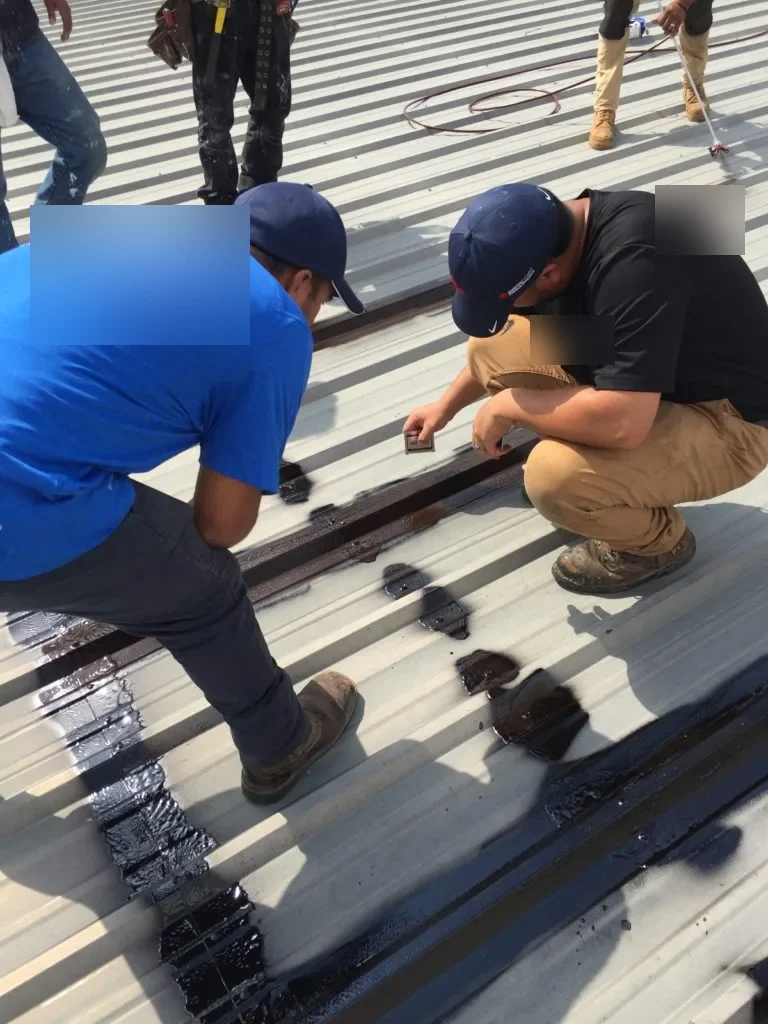
Coatings need a stable, prepared substrate and compatible existing surface. They do not correct wet insulation, loose flashings, or failing edge attachment by themselves. We check adhesion, drainage, seam condition, and the planned termination. The proposal states repair work before coating and identifies roof areas that should remain excluded. A coating option review can compare surface preparation and detailing against a membrane repair or replacement path.
When visible metal or membrane profiles may change, include those components in the initial comparison. A separate scope created after field work can disrupt schedules and complicate material selection. We can show a base roof repair, a visible edge alternative, and any allowance tied to concealed conditions. The owner sees which decision controls performance and which affects the district's exterior presentation.
Hold the work to clear limits
Timing depends on review steps, material lead time, weather, roof access, and the amount of preparation. Warm-season rain across the Atlanta region can interrupt cleaning, priming, welding, or coating. We identify the dry-weather tasks, the protection needed if conditions shift, and the points where the property must release access. If a review decision affects a visible detail, that determination should precede work on that detail.
Occupied buildings may have staff, visitors, deliveries, or adjacent public activity to consider. We confirm roof hatch location, staging limits, pedestrian paths, noise windows, and any area that must remain open. Historic context makes a photo record useful before work as well as after it. The comparison can show whether coping, flashing, or drainage components returned to the approved condition.
Cost follows material quantity, substrate preparation, edge metal, access constraints, weather protection, and the extent of any concealed deterioration. We separate confirmed roof work from a condition that would require added removal. If the repair exposes unsound backing or wet insulation, the owner receives photographs and a priced decision before the scope changes. For an active opening, focused leak tracing and repair can address water entry while a longer exterior decision proceeds.
Record the finished edge and repair limit
Closeout documentation identifies the roof zone, material installed, visible profile, and repair extent. Photographs should include the repaired joint and nearby transitions so a later inspection can compare the same details. We record any concealed layer observed during an opening and note work excluded from the approval. A clear record supports building maintenance without suggesting that uninspected areas share the same condition.
Follow-up should match the work. A new coping joint can be checked for attachment and sealant condition. A membrane tie-in can be reviewed for lifting. Drainage can be observed after a rainfall. We can place those items on a scheduled roof maintenance visit and keep them separate from unrelated findings at the property.
Request a roof inspection for a named building in the Historic Roswell District. Provide available roof drawings, prior repair notes, leak locations, exterior review records, access requirements, and any planned façade work. We will identify observed defects, note visible scope interfaces, and present repair or replacement choices with concealed-condition allowances kept separate.
Related Roofing Work
Scope a district roof repair
Share roof plans, leak locations, exterior review records, prior repairs, and access limits. We will document the failure point and separate roof work from visible changes that need a review decision.
Questions About Historic Roswell District
Can the roof membrane be repaired without changing the exterior appearance?
Often the repair can stay within the existing profile, but the actual assembly and failure point decide that. We inspect the wall transition, coping, membrane turn-up, and fasteners, then show the proposed visible components. If the scope changes an exterior element, the owner can confirm the applicable review process before that portion is scheduled.
Does Historic District status establish what roof system a building has?
No. District designation describes the exterior review context, not concealed roof construction. We identify the visible material and use available plans or a test opening to confirm layers. Recommendations stay tied to what was observed, with unknown substrate or insulation listed separately until it can be checked.
What should be photographed before exterior roof work?
Capture the affected elevation, coping, wall flashing, roof membrane, and nearby drainage before removal. We also photograph open layers during the work and the completed tie-in. Together, those views show the prior condition, the repair boundary, and the final profile for maintenance and any needed review record.
How does rain affect scheduling in the district?
Atlanta's climate normals include frequent warm-season rain, so surface preparation and adhesion work need a suitable dry window. We identify which tasks can proceed safely and what temporary protection is needed if weather changes. A forecast delay can shift installation without changing the documented repair limit.
Commercial Roofing Across Roswell and North Fulton
Roof Repair, Replacement and Maintenance for Every Kind of Commercial Building
From Historic Roswell and Canton Street to the Holcomb Bridge Road corridor, GA 400 and the North Point area, we inspect, repair and replace low-slope and metal roofs on offices, retail centers, medical buildings, schools and warehouses.