Office Building Roofing in Roswell, GA
A lifted flashing at a rooftop unit can send water beneath the membrane and into a tenant suite. We inspect the curb, adjacent seams, insulation and drain path before defining the repair boundary. Office work also needs a clear route for roof access, deliveries and interior protection. Roswell's hot, humid summers and frequent rain put flashing transitions to work repeatedly. A condition record ties each finding to a roof zone and keeps confirmed repairs distinct from suspected concealed damage.
Office buildings may have different membrane types, equipment layouts and tenant schedules within one property group. Roswell's commercial building base includes office properties along GA 400 and Holcomb Bridge Road, with larger office concentrations nearby in Alpharetta and Johns Creek. We inspect each roof instead of carrying a system assumption across the portfolio. An office roof inspection in Roswell can start with a leak, capital review or tenant report.
Connect ceiling reports to roof evidence
A ceiling mark can appear away from the roof entry point. We use the tenant's location and timing as clues, then inspect seams, curbs, wall transitions, drains and roof areas upslope. Photos show the defect and nearby reference points. We record access limits, prior patches and any interior conditions that affect the diagnosis. If the area above a suite is inaccessible, the report says so and identifies the information needed for another visit.
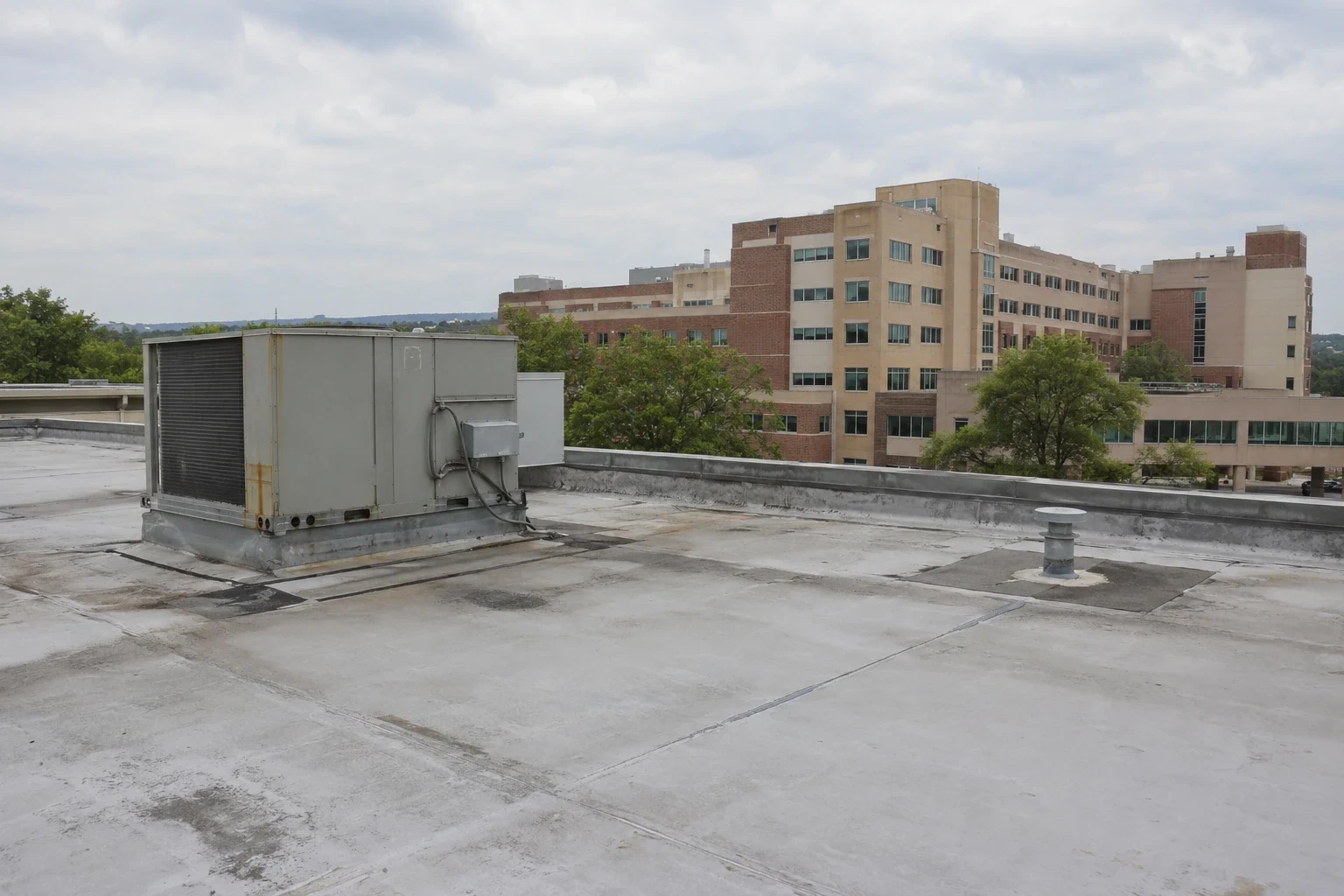
Office roofs often have packaged units, exhausts, satellite equipment, skylights and utility penetrations. We check each flashing and termination for movement, open corners, deteriorated sealant, loose fasteners and water retention. Around a drain, we inspect the strainer, bowl, overflow, slope and nearby membrane. If water is standing, we note where and whether the primary path is open. A leak tracing visit can compare the interior report with these roof findings.
Alpharetta identifies Downtown, Avalon and North Point as commercial activity centers, while Windward is a major node on the GA 400 corridor. These nearby office districts illustrate the region's connected employment geography. They do not identify a specific property condition. For a multi-site owner, we document each location's access, tenant hours and roof assembly independently so a finding from one building is not copied to another.
Schedule work around tenant use
Before repair or replacement, we ask the property manager for tenant hours, restricted suites, loading rules, roof hatch access and building contacts. The plan identifies noisy work, odors, equipment shutdowns and any interior protection required below. We confirm who can send notices and approve a changed sequence. This prevents a roof task from arriving without a contact who can coordinate the building.
For replacement, daily work zones need secure dry-in and a route for debris and material. We set staging away from drains and emergency exits, and coordinate lifts or deliveries with property staff. If concealed damage appears, the crew documents the exposed condition and secures the work while the manager reviews price and extent. An approved allowance should identify its trigger before tear-off begins. Occupied-building reroofing can be phased to keep unaffected areas operating.
The 640-acre Historic Roswell District is subject to exterior design review by the Historic Preservation Commission. For a commercial property in that district, exterior changes may require review. Roof planning should identify visible materials, rooftop screens and edge details early enough to coordinate the applicable review. The inspection does not assume what approval is needed; the owner confirms property-specific requirements before construction is scheduled.
Compare repair, recovery and replacement
A local repair can work when the membrane around the defect remains attached and compatible. We clean, prepare and tie into sound material, then photograph the completed boundary. If seams or flashings fail in several areas, we assess the overall assembly and moisture condition. Infrared scanning or test cuts can establish whether wet insulation extends beyond what is visible.
Recovery may be considered when retained layers and attachment support another system. Replacement may be needed when the substrate is wet, the assembly has repeated failures or tie-ins cannot be made reliably. We identify roof system and layer sequence from field evidence, not from office use. The proposal lists drains, edge metal, curbs, transitions, temporary protection and areas excluded from work. A recover option can be compared with replacement for the same roof zones.
System choices include TPO, PVC, EPDM, KEE, modified bitumen, built-up roofing and metal. Each needs a compatible flashing and seam method. A coating is appropriate only when the roof is dry enough and its surface can accept the material. We explain the assembly and preparation in the scope, and flag any layer that remains concealed. For a confirmed thermoplastic assembly, we inspect the TPO seam before welding; silicone coating systems need suitable adhesion and dry layers.
Set scope and timing before tenant notices
Cost depends on repair count, membrane compatibility, preparation, removal layers, access, equipment coordination and any confirmed wet insulation or deck repair. Schedule depends on roof area, delivery access, tenant hours, material lead time and weather. We separate confirmed scope from concealed-condition allowances and state who can approve added work.
Roswell's summer heat and frequent rain can restrict coating and adhesive installation. We check surface condition and forecast before opening a zone. Temporary protection, drains and tie-ins remain part of the work plan through each shift. If conditions change, the manager receives the revised area and timing.
Repairs, monitoring and tests should remain separate in the property record. An item does not become a replacement recommendation simply because it appears on a report; the condition and alternatives should be documented.
Keep each roof record useful
Closeout photos show repaired seams, curb corners, drains, terminations and transitions. We note building, roof zone, materials, completed work, approvals and remaining concealed conditions. The property manager can attach that record to tenant reports and the maintenance log.
Before handoff, we remove debris and verify drains and overflows. We list follow-up items such as an inaccessible unit curb or an area to revisit after the next storm. A medical office roof review may share tenant coordination, but clinic access and patient privacy call for distinct planning. A hospital roof plan adds campus continuity and emergency access concerns.
Request an inspection or scoped comparison for a named office building and roof zone. Send roof plans, tenant hours, leak reports, equipment restrictions, access rules and prior repair records. We will document the condition, identify the repair boundary and state which decisions depend on opening the assembly.
Related Roofing Work
Review an office roof zone
Send roof plans, tenant hours, leak reports, equipment restrictions, access rules and repair records. Name the building and zone so we can set inspection access and approval points.
Questions About Office Building Roofing
How do you narrow a leak reported from a tenant suite?
We record the room, date, weather and any ceiling or wall observations, then compare that information with roof seams, curbs, drains and transitions above. Water can travel before it appears indoors. We photograph accessible details and state where access is limited. If the source remains unclear, we can propose targeted moisture testing rather than price a broad repair.
How much notice do tenants need before roofing starts?
The schedule should identify noisy periods, odors, access changes, equipment shutdowns and any suite requiring protection. We coordinate those items with the property manager before work is assigned to a zone. Notice timing depends on building policy and the approved sequence. If weather or concealed conditions change the plan, we update the manager before moving into another area.
Does ponding mean an office roof needs replacement?
Standing water calls for a drainage and membrane review, not an automatic replacement. We check the duration and location of ponding, primary drains, overflows, slope, seams and the condition of the insulation. A blockage may need clearing; a low area or wet assembly may need a broader correction. The report separates those findings and options.
What should a roof proposal include for a multi-tenant building?
Look for named roof zones, repair or replacement details, tenant coordination, access and staging rules, dry-in steps, drainage work and a closeout record. The proposal should also identify the approval contact and method for pricing concealed damage. We can review the operating window with the property manager before confirming the sequence.
Commercial Roofing Across Roswell and North Fulton
Roof Repair, Replacement and Maintenance for Every Kind of Commercial Building
From Historic Roswell and Canton Street to the Holcomb Bridge Road corridor, GA 400 and the North Point area, we inspect, repair and replace low-slope and metal roofs on offices, retail centers, medical buildings, schools and warehouses.