
Roof Flashing Failure Repair in Roswell, GA
A curled counterflashing hem can expose the membrane termination. We check the reglet, cleat, fasteners and wall surface before setting a repair limit. Roswell's humid summers and frequent rain test these transitions. We inspect the return, adjacent roof sheet and substrate, then mark the zone for a sound tie-in. The repair boundary depends on attachment beyond the visible curl, not the hem alone. That check shows whether metal alone or adjoining membrane needs reopening.
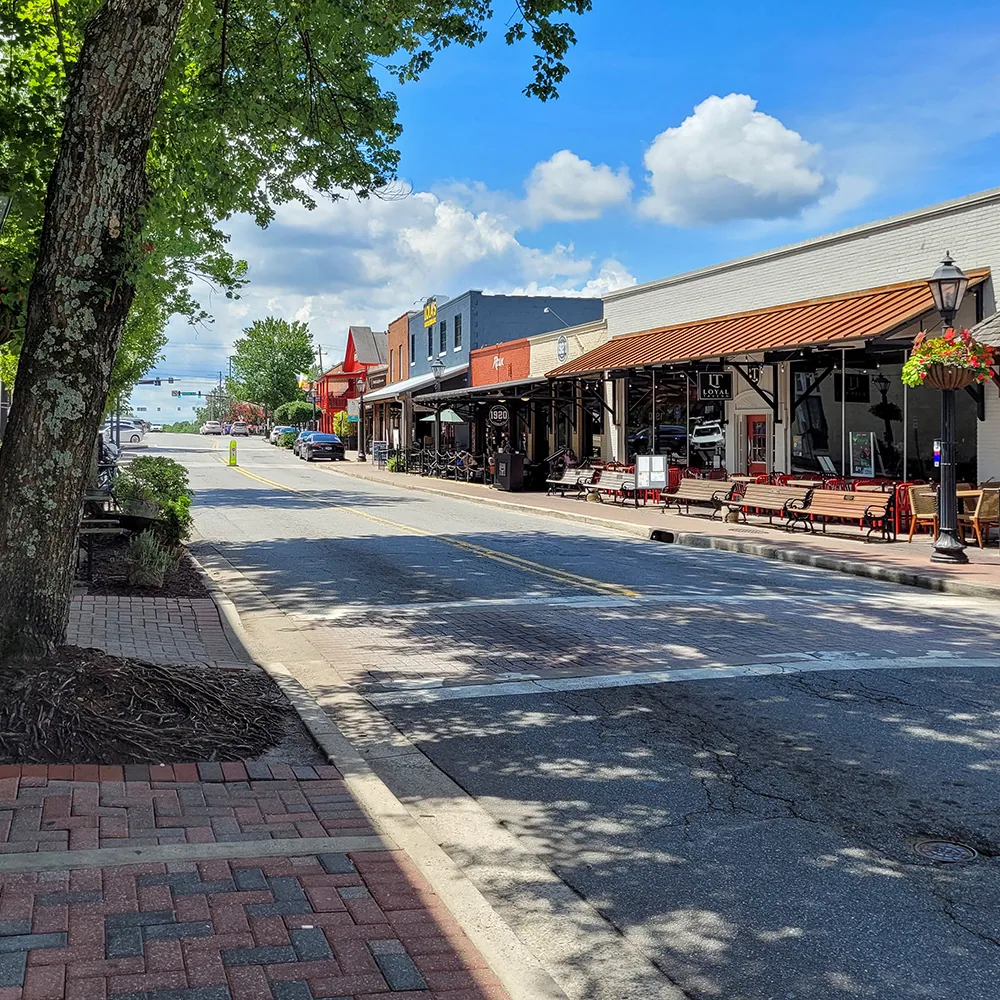
Within the 640-acre Historic Roswell District, exterior changes receive Historic Preservation Commission review. A visible flashing alteration may need owner coordination. We document the roof condition and proposed scope. A Historic Roswell roof assessment begins with the building and transition under review.
Open the transition and find its break
Flashing fails at corners, end laps, terminations, fastener lines and roof-to-wall changes. We inspect the detail instead of sealing the visible gap. Metal can pull from a cleat or split at a fold. Membrane flashing may lift at a curb or lose bond. Photos show the transition and adjacent roof field.
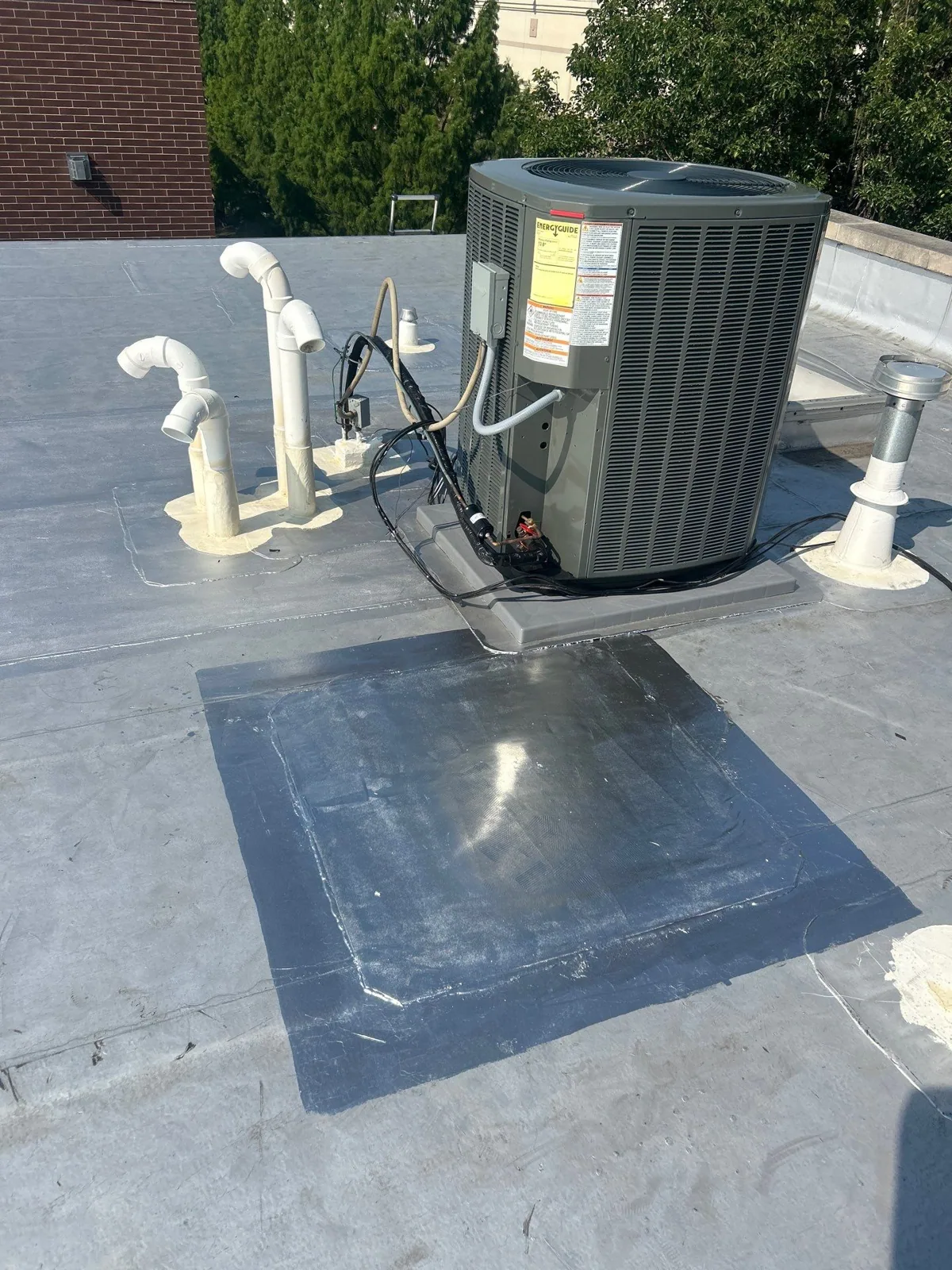
At a parapet, we check coping joints, cleats and counterflashing. At a curb, we inspect corners, base and nearby seam. A penetration boot may crack at its collar. We record loose material and whether the substrate is dry, firm or concealed. A seam failure inspection addresses an open lap extending beyond the flashing.
Roswell's commercial mix includes healthcare, civic, office and light industrial properties. Use does not identify wall construction or roof assembly. We inspect the substrate and match the repair material to it. If a detail is unreachable or covered, the report states the access limit.
Trace the path behind the metal
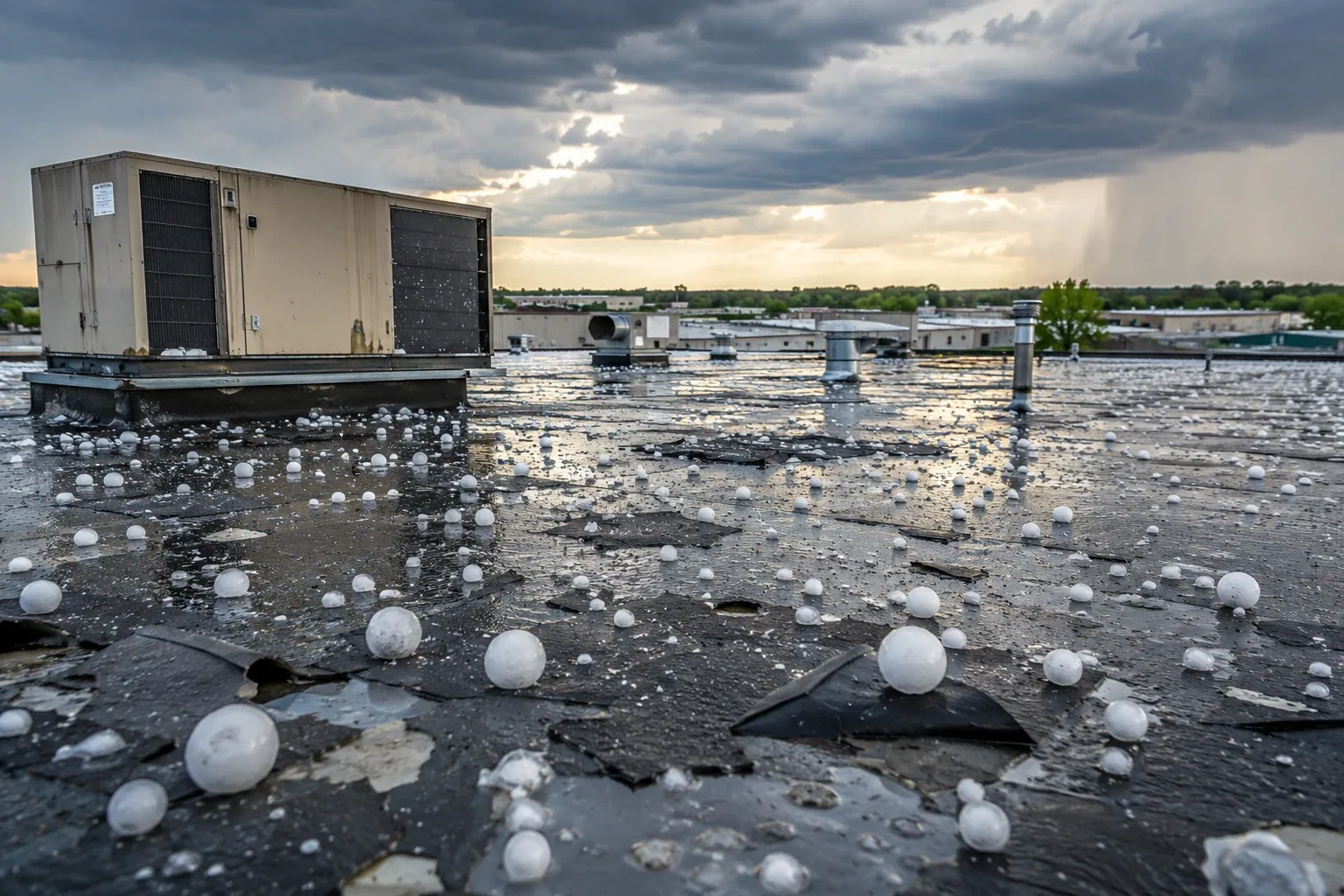
A failed counterflashing joint can send water behind a parapet and away from its entry. We compare interior reports with the roof edge, wall face, coping splice and drains. Water marks, softened material and corrosion can locate its path. Photos tie findings to a roof plan or fixed feature.
We check lap direction, termination height, fasteners and how the detail sheds water. A patch over a loose hem may detach if movement continues. Where metal meets membrane, both surfaces must support the tie-in. A coping and edge review can define the joint that needs correction. At a wall, we also check whether the termination sits behind a counterflashing return or exposed seal, then record what can be reached without removing adjacent finishes.
Atlanta climate normals show hot, humid summers and frequent rain. We check the drain path and nearby low areas while mapping a flashing transition. Infrared review or a test cut may help set the boundary if moisture extends below the surface.
Carry the new flashing to sound material
A repair starts where the existing detail remains secure. We remove loose material, prepare the substrate and extend flashing beyond the split or failed bond. Metal or membrane must work with the roof assembly and wall connection. The scope names the edge, return, curb or penetration. Concealed damage stays separate until removal confirms its extent.
Sealant cannot replace sound metal, attachment or lap geometry. If the cleat or reglet is damaged, we include it. If the wall cannot hold a new attachment, added work may be required. The proposal names materials, preparation, fasteners and termination instead of describing the task only as caulking.
Cost depends on access, height, corner count, fabrication and substrate repairs. Schedule depends on field measurements, fabrication, approvals and weather. A penetration flashing repair uses related detail checks for a roof opening. If replacement metal needs field measurement, we record the profile and attachment before ordering so the delivered piece matches the confirmed condition.
Protect the open wall transition
Rain can run behind an opened flashing line. We stage work so the joint closes with temporary protection before the crew leaves. Drains stay clear and material remains out of the water route. Adhesive work waits for suitable substrate conditions. If the wall or roof is damp, we pause before the permanent tie-in.
North and central Georgia track severe storms, damaging wind, hail and tornadoes. A weather report does not prove flashing damage. After an event, we inspect accessible joints, coping, panel edges and curbs. Emergency response runs around the clock, holidays included, when a failed transition leaves an opening.
In Historic Roswell, a visible exterior change may need owner coordination before fabrication. Our report describes existing materials and repair limits. The property owner confirms whether review applies.
Price the joint and its approval points
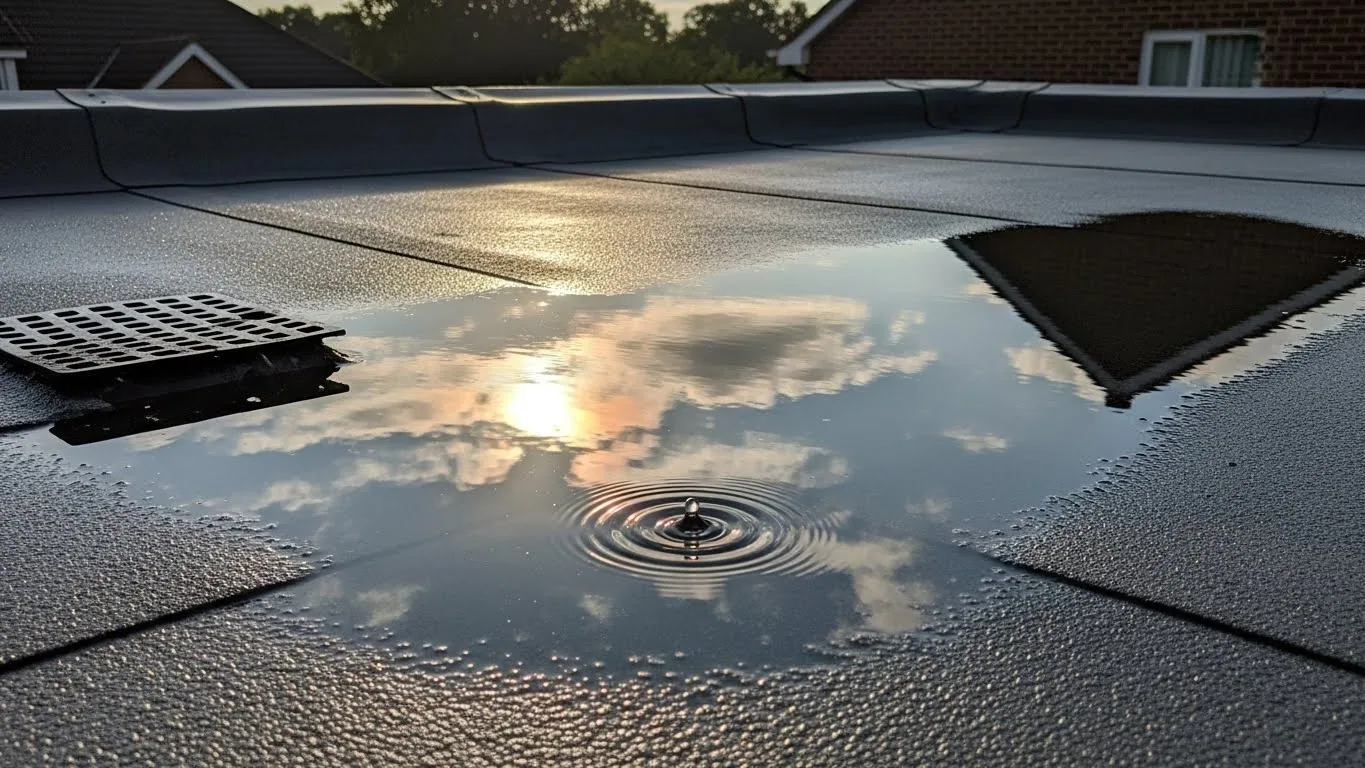
A scope names each flashing location, material, preparation, attachment and termination. It marks tie-in length and access needs. If deck, insulation or wall substrate remains concealed, an allowance states its limit and approval point.
For multiple transitions, we list curb corners, parapet runs, coping splices, penetrations and roof-to-wall joints separately. A commercial repair scope separates confirmed items from maintenance. Closeout photos show the completed detail and any area needing access or monitoring.
We compare a local flashing correction with wider membrane work only when findings support both. A heat and UV review may help assess adjacent surface aging. Each defect keeps its own evidence and limit.
Before work starts, we identify who can accept a changed metal profile, added substrate repair or temporary protection plan. If the owner requests an alternate finish or visible termination, we list that change before fabrication. This lets the approval record match the installed detail.
Document the finished connection
Final photos show the substrate, metal splice or membrane lap, fasteners and termination. We identify building, roof zone, materials, approvals and concealed limits. If fabrication or review affected timing, the record notes the approved detail and installation date. Maintenance staff can revisit the joint after rain.
Roswell has older central buildings and office or light industrial properties along its corridors. Flashing varies by wall material, assembly and additions. A roof condition report ties each transition to its property record. We list any finish detail or adjacent joint that needs another check after installation, with the observed condition and location included.
Request an inspection for a named building and flashing detail. Send plans, close-up photos, leak locations, prior repairs, access rules and preservation review information. We will map the failure and approval needs.
Related Roofing Work
Inspect a failed flashing detail
Name the building and transition. Send close-up photos, roof plans, interior leak location, prior repair records, access rules and applicable exterior review information for a documented repair scope.
Questions About Roof Flashing Failure Repair
Can failed counterflashing be fixed with sealant alone?
Sealant may close a compatible joint, but it cannot secure a loose cleat, repair a split hem or restore a weak substrate. We check attachment, lap geometry, metal condition and the wall interface. The recommended scope names the failed component and the material needed to carry water back onto the roof surface.
Why does water appear indoors below a sound-looking flashing line?
The opening may be concealed behind a return, coping splice or membrane turn-up, and water can travel before reaching the ceiling. We inspect both sides of the transition, follow adjacent roof details and compare the field evidence with the interior report. Any inaccessible section remains a stated limit.
Does Historic Roswell review every flashing repair?
Exterior changes in the district are subject to commission review, but the owner should confirm whether a particular repair qualifies. We can record existing conditions and describe the proposed metal or membrane change for that review.
How do you price concealed damage behind a wall flashing?
We price the visible repair boundary and state an allowance for a defined concealed condition if opening the detail is required. The scope identifies the approval contact and pause point. If removal shows more damage, we photograph the layers and submit revised quantities before continuing.
Commercial Roofing Across Roswell and North Fulton
Roof Repair, Replacement and Maintenance for Every Kind of Commercial Building
From Historic Roswell and Canton Street to the Holcomb Bridge Road corridor, GA 400 and the North Point area, we inspect, repair and replace low-slope and metal roofs on offices, retail centers, medical buildings, schools and warehouses.