Commercial Roof Drains and Scuppers in Roswell, GA
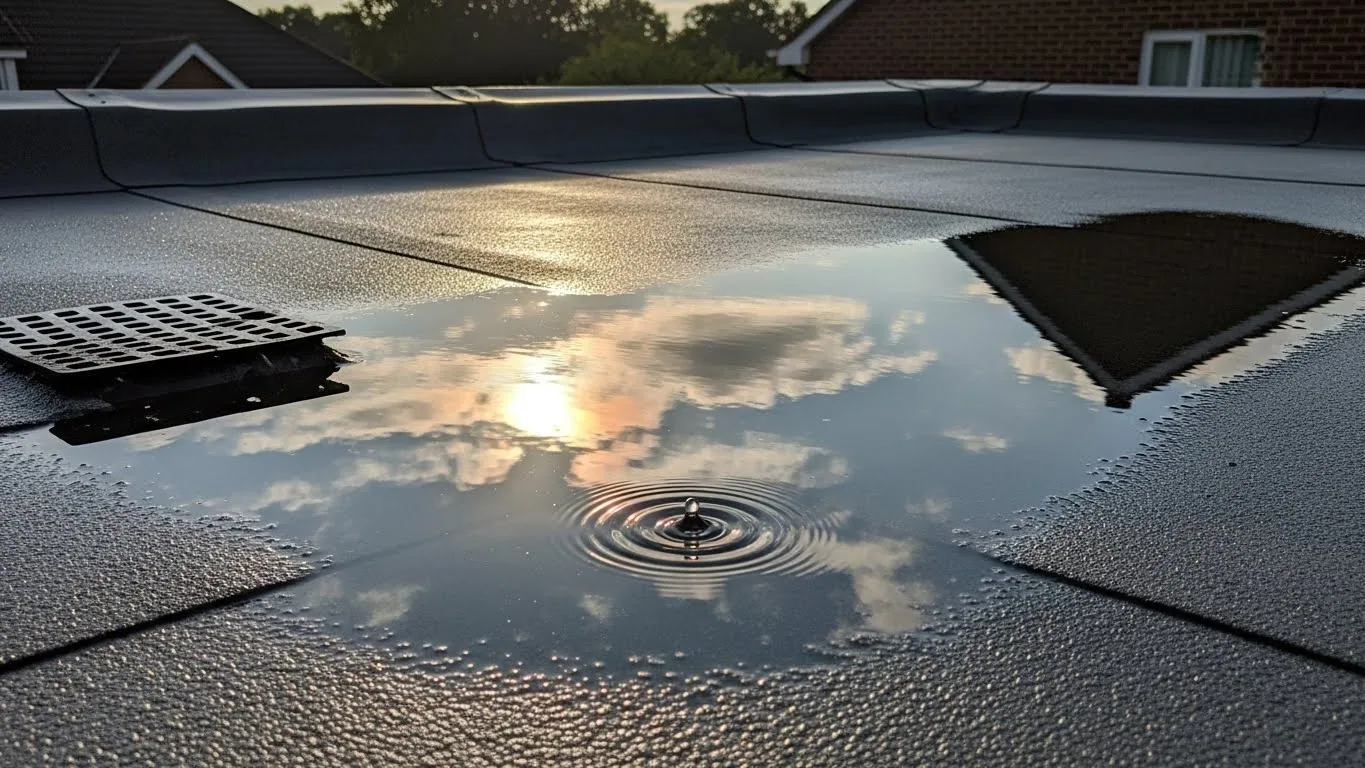
A clogged strainer leaves a dark ring of sediment around the drain bowl. That mark can point to recurring ponding, a blocked outlet, or a low roof area. We inspect the bowl, overflow, nearby membrane, and slope before selecting work. Roswell's frequent warm-season rain tests each part of that path. A clear drain is useful only when the surrounding roof can move water toward it.
Our assessment follows flow from high points through crickets and tapered areas to primary drains, scuppers, and downspouts. We note standing water, debris, loose clamping rings, and membrane stress around the outlet. Roof records and drainage changes help set the scope. A Roswell roof drainage inspection ties each finding to its actual building and roof zone.
Trace ponding to its outlet
We begin at the water mark and follow the surface toward the outlet. A sediment ring, algae trace, or debris line can show where water has remained. We compare those marks with roof slope, tapered insulation, drain placement, and nearby seams. If the low point sits away from a drain, cleaning the bowl will not correct the full path. The report names each observed low area and the evidence behind it.
At the drain, we inspect the strainer, bowl, clamping ring, flashing, and membrane around the opening. A loose ring can weaken the seal. A damaged bowl or separated flashing may let water reach the assembly. We check the overflow separately and note whether it is clear and positioned to receive water. We do not cover a drainage detail until the primary and secondary routes are understood.
Scuppers need clear throats and secure edge transitions. We remove accessible leaves or sediment, check the metal sleeve and membrane tie-in, and inspect the exterior discharge path where reachable. A downspout joint can separate or discharge against a wall. If water crosses a parapet or backs toward a door, we record the route and nearby surfaces. A ponding-water repair assessment can address low areas that persist after debris removal.
Correct the low point and detail
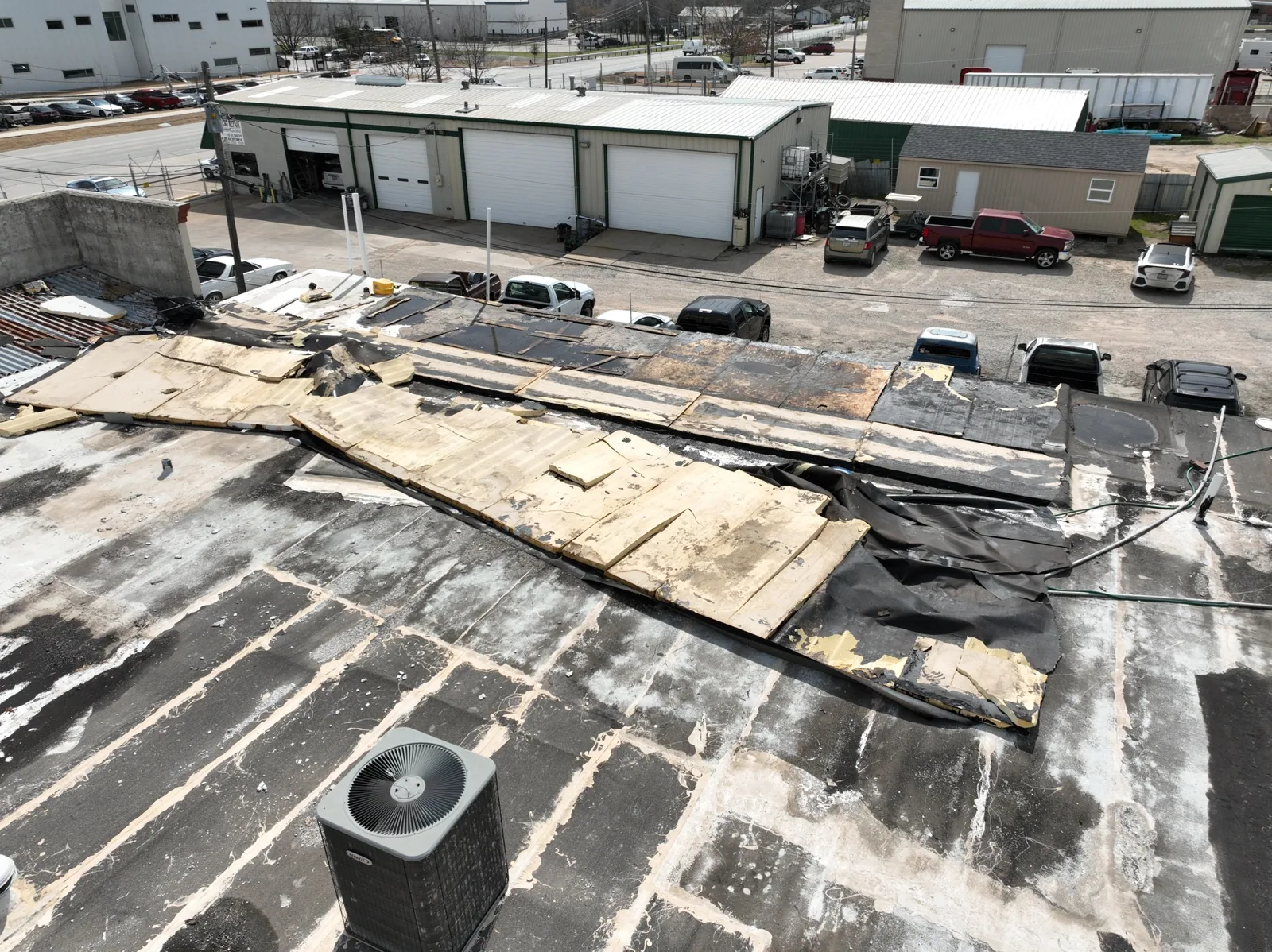
Drain work ranges from cleaning to rebuilding the surrounding assembly. We remove loose material, reset or replace approved components, and tie the membrane into sound material. If the bowl is damaged, the repair may need a new drain body or clamping parts. At a scupper, we secure the sleeve and flashing transition. We name each component in the scope so the approved work matches the observed failure.
Crickets and tapered insulation direct water across a broad roof zone. If flow stalls before reaching an outlet, we check the slope and thickness at the high and low points. Adding a cricket without checking door thresholds, curbs, and drain height can shift the problem. We map the intended direction and identify adjacent transitions before recommending tapered work. A tapered insulation scope can correct slope where the existing assembly allows it.
Warm, humid Roswell summers can leave water and debris at low spots between showers. We inspect seams beside ponding and check whether water reaches the insulation or deck. Wet material changes the repair boundary. If an opening confirms moisture, we remove material to a sound substrate and make the tie-in. The report separates drainage correction from membrane repair or insulation replacement when those items need distinct authorization.
Where the assembly is otherwise sound, a compatible restoration may address surface wear without changing the drainage geometry. Coating cannot raise a low area or clear an undersized outlet. We preserve drain bowls, overflows, and scupper throats during any adjacent work. A roof coating evaluation should include these details before the field surface is covered.
Keep water moving during work
Before opening a drain or scupper, we plan temporary water control and end-of-shift protection. Open areas receive a secure dry-in, and debris stays clear of the outlet. A forecast rain hold may change the order of work. We close the repair zone only when the substrate and tie-in are ready. The closeout record shows which outlets were worked on and what remained outside the approved boundary.
Commercial properties along GA 400 and Holcomb Bridge Road include offices, retail, healthcare, schools, civic uses, and light industry. Roof access, loading, and operating hours differ by site. We confirm where a lift or material delivery can stage and keep required entrances available. The corridor helps locate the commercial area; the property contact supplies the actual access plan and any drainage records.
Cost and timing reflect outlet count, component condition, access, membrane compatibility, slope correction, insulation, and concealed deck conditions. A blocked basket may need little work. A damaged bowl with wet insulation and membrane separation needs a broader scope. We separate confirmed work from an allowance for opening the roof. The asset manager sees what is included before approving the repair.
Check the route after rainfall
After repair, we inspect the bowl or scupper tie-in, confirm the strainer sits correctly, and photograph the surrounding membrane. When conditions allow, a later review checks whether water follows the intended path. We note remaining low areas separately from the repaired outlet. A maintenance visit can clear debris and track the same marks after a substantial rain.
Drainage work can affect seams, curbs, and edge details nearby. We inspect those transitions again and list any separate repair need. A commercial roof repair can address membrane failure at the outlet or adjacent lap. If water continues to appear inside, a broader roof inspection can compare the ceiling report with the full roof zone.
Roswell's east-west route includes Old Alabama Road and the Holcomb Bridge network. For multiple facilities, we keep each outlet map tied to its own building. A condition report can group priorities across separate roofs without assuming they share a drainage layout. Send existing roof plans and leak dates to help locate each outlet.
Request a drain or scupper assessment for a named roof zone. Share roof plans, ponding locations, leak history, access rules, and any prior drainage work. We will trace the water route and separate cleaning, repair, slope work, and concealed conditions.
Related Roofing Work
Map the roof water path
Name the roof zone and share plans, leak dates, ponding locations, prior drain work, and access rules. We will inspect outlets, flow paths, and nearby membrane transitions.
Questions About Commercial Roof Drains and Scuppers
Does clearing a drain solve standing water?
Cleaning removes an obstruction when debris is the cause. If water remains at a low point, we check slope, insulation, outlet height, and nearby seams. The recommendation identifies whether the issue is maintenance, a drain repair, tapered work, or a moisture condition requiring an opening. We do not treat the strainer as the only possible cause.
How are primary drains and overflows checked?
We inspect the primary bowl, strainer, clamping components, flashing, and nearby membrane, then check the overflow separately. We note whether each route is clear and how water approaches it. If the outlet below the roof cannot be reached, we record that limit and keep downstream plumbing outside the confirmed roof scope.
Can a cricket fix a low area near a curb?
A cricket can redirect water when the roof layout and transitions allow it. We measure the high and low points, then review drain height, curb clearance, door thresholds, and the intended flow path. If insulation is wet or the deck is unsound, those conditions need correction before new slope work closes the assembly.
What should be recorded after drainage repairs?
Keep the outlet location, repair details, before-and-after photos, and any remaining ponding mark. A follow-up after rain can show whether the revised path is working. We also list components that were inaccessible or outside the work limit, so a later visit can check them without reopening the full scope.
Commercial Roofing Across Roswell and North Fulton
Roof Repair, Replacement and Maintenance for Every Kind of Commercial Building
From Historic Roswell and Canton Street to the Holcomb Bridge Road corridor, GA 400 and the North Point area, we inspect, repair and replace low-slope and metal roofs on offices, retail centers, medical buildings, schools and warehouses.