Commercial Roof Insulation and Cover Board in Roswell, GA
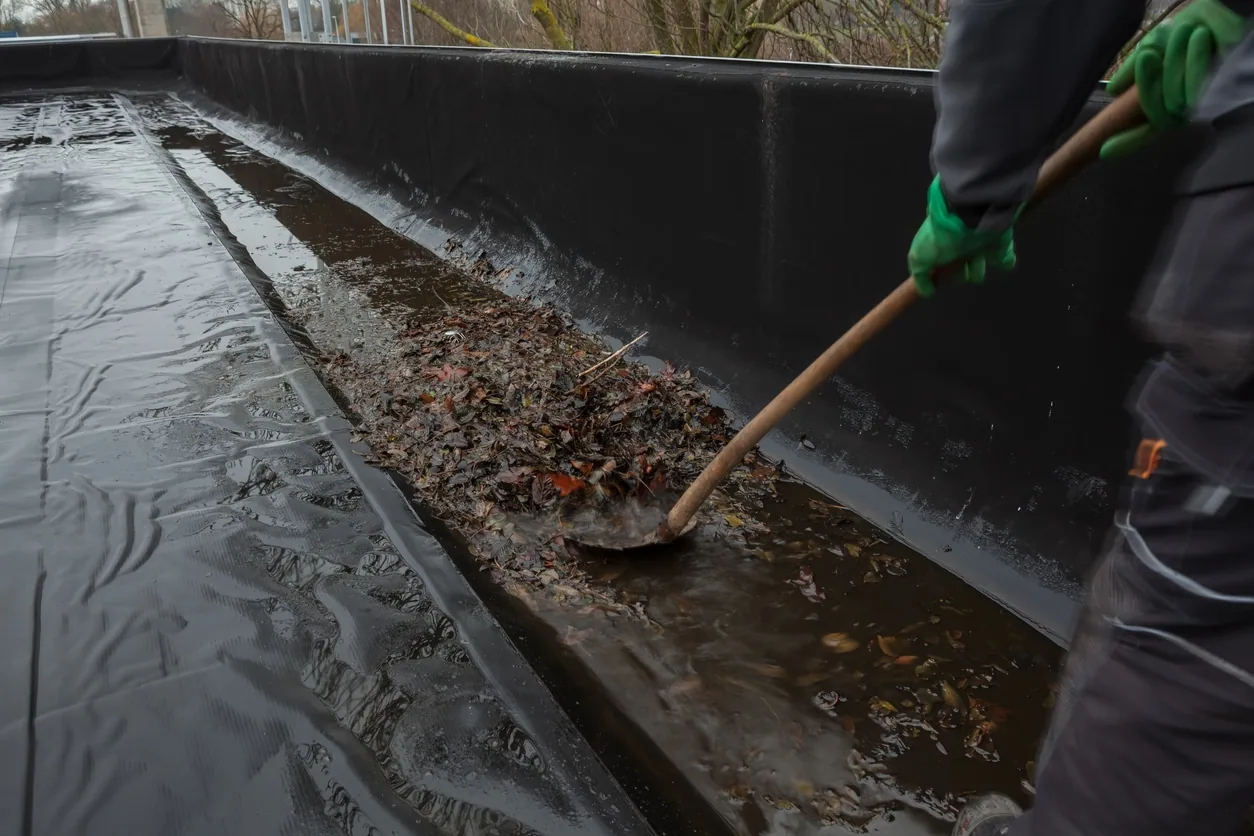
A crushed insulation edge beside a drain lowers support at the membrane. Water may hold at the depression and stress the nearby lap. We check the board, substrate, roof slope, and outlet before setting a replacement boundary. Roswell's frequent warm-season rain makes drainage part of the insulation decision. New board must create a sound surface and preserve the path to the drain.
We inspect insulation, cover board, attachment, seams, curbs, and transitions as one assembly. A roof plan helps locate slopes and changes in material, while test openings confirm concealed layers. We record what can remain and what needs removal. For a building near the Holcomb Bridge Road corridor, site access affects delivery and staging, but the actual roof condition sets the scope. On the Holcomb Bridge Road corridor, we confirm each property's roof-zone findings before staging.
Find the wet boundary
Moisture can move beneath the membrane and spread beyond a visible depression. We look for soft board, blisters, open seams, staining, and interior evidence. Selected test cuts can confirm the layers and moisture at specific locations. A reading or core represents its own point; it does not establish every adjacent area. We mark the tests, repair each opening, and state where further verification may be needed.
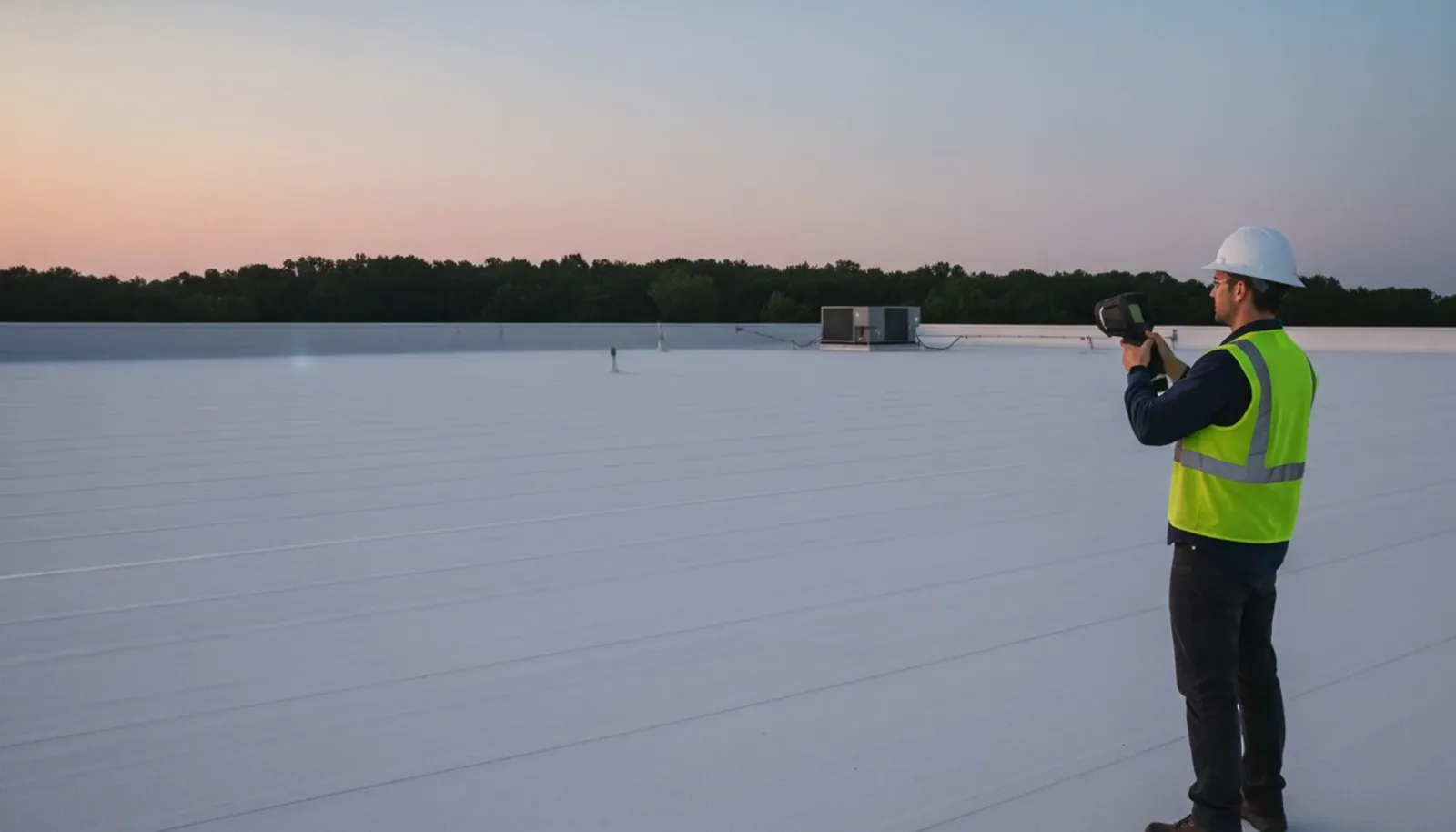
Atlanta climate normals show hot, humid summers and frequent rain. Water at a low area can wet insulation and reduce support beneath the membrane. We compare test results with slope, drain position, and surface marks. If material is wet, we remove it to a dry, stable boundary before installing new board. An infrared moisture survey may help direct openings across a large roof when conditions suit the method.
Cover board provides a surface for the roof membrane and can protect insulation from impact or concentrated service traffic. It cannot restore a wet substrate or correct loose attachment below it. We inspect joints, edges, fasteners, and the transition to existing material. The report separates a confirmed board repair from a test area or concealed condition that needs approval before removal.
Set slope before adding layers
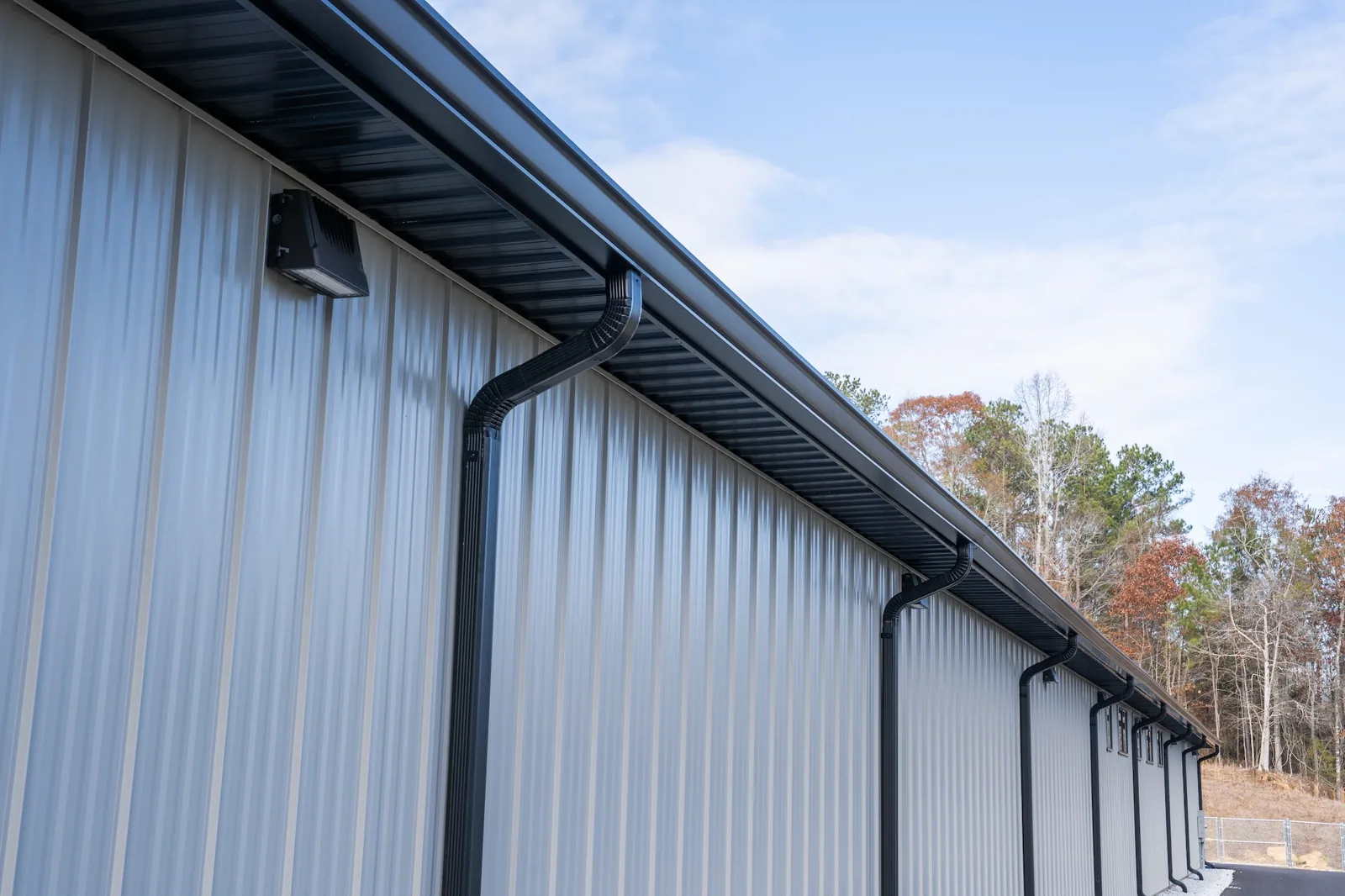
Tapered insulation directs water across the roof toward a drain, scupper, or gutter. We map high and low points, outlet height, curb elevations, and door thresholds before selecting a layout. Adding thickness changes those transitions. A raised field that leaves the drain sump too shallow can hold water at the bowl. We document intended flow and identify the details that must remain clear after installation.
Crickets split or redirect water around curbs and equipment supports. Their geometry needs to match the roof's drainage path, not just the obstruction's shape. We confirm which side receives flow and where it rejoins the primary slope. If ponding results from a blocked outlet, tapered board alone will not clear the obstruction. A drainage inspection can help distinguish outlet maintenance from slope correction.
Roswell has hot, humid summers and regular warm-season rain. We plan board layout so temporary water paths remain open during installation. At the end of a shift, drains and overflows stay clear, and open zones receive dry-in. Work pauses when a surface is wet or a secure tie-in cannot be completed. The work sequence identifies roof zones that can close before forecast rain.
Match board to the membrane
Insulation type, thickness, attachment, and cover board must suit the roof design and existing assembly. We review deck condition, fastening pattern, edge securement, and membrane compatibility before material selection. A mechanically attached system and an adhered system do not use identical details. The proposal names the layers and transitions included. Where records are missing, we identify what will be confirmed during opening before final quantities are fixed.
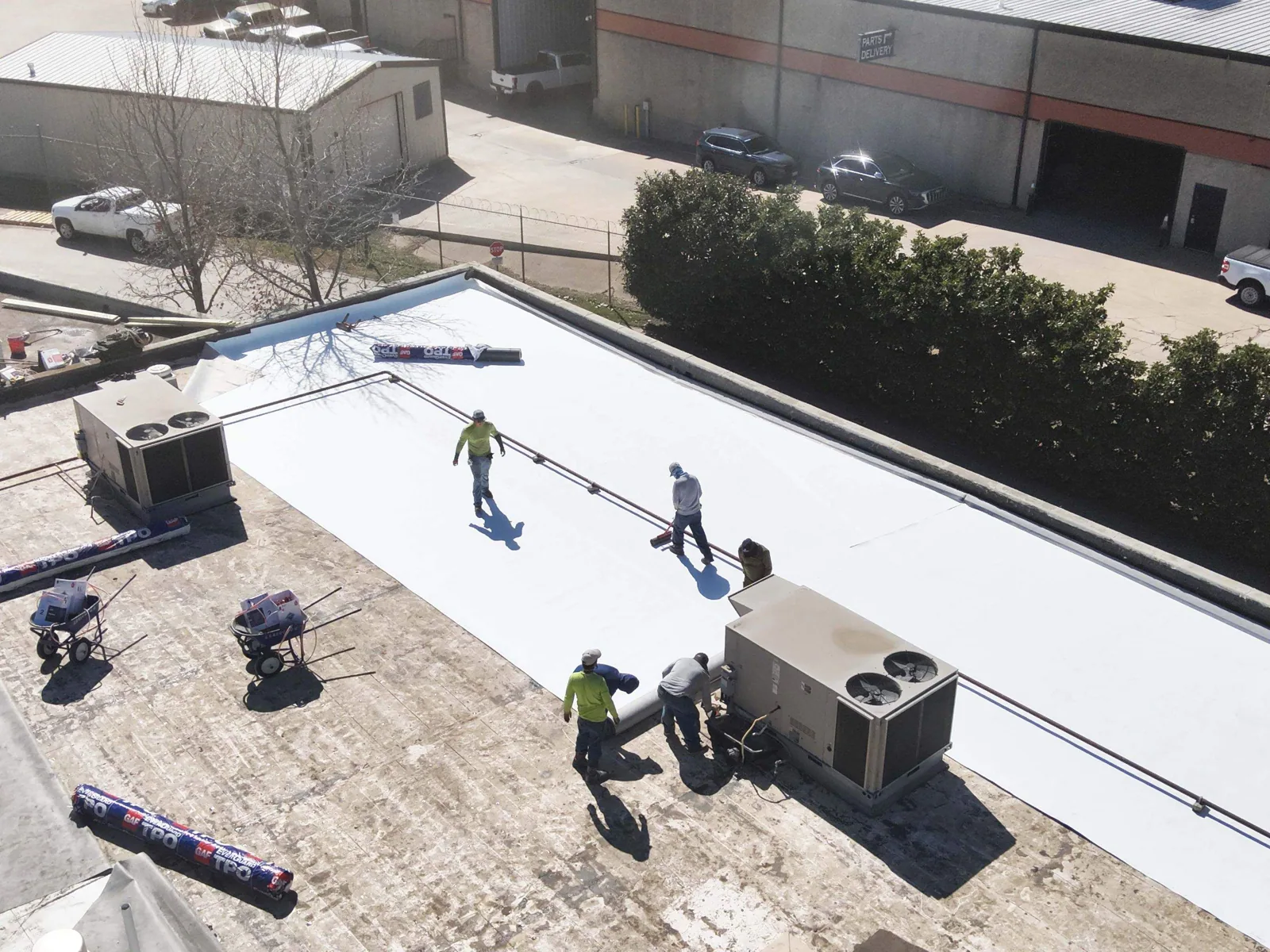
Membrane terminations at walls, curbs, drains, and equipment supports need a secure tie-in over the new assembly. Added thickness can change flashing height and perimeter metal position. We measure those conditions and list transitions that need rebuilding. A TPO assembly uses its own compatible membrane details, while other roof types may need different cover or attachment components.
Georgia's current mandatory energy code is the 2015 International Energy Conservation Code with Georgia Supplements and Amendments. We identify the applicable project requirements and coordinate the specified assembly with design and permitting needs. Roswell's Building Division administers local construction permitting. When insulation or roof replacement changes the assembly, we identify permitting questions before materials are ordered.
For a recover, the existing roof must be dry, attached, and suitable to remain. If testing or opening finds wet insulation or an unstable deck, a recover evaluation may shift to selective removal or replacement. Each option receives a separate work boundary. An allowance covers only approved concealed conditions, not unreviewed expansion of the scope.
Sequence removal and tie-ins
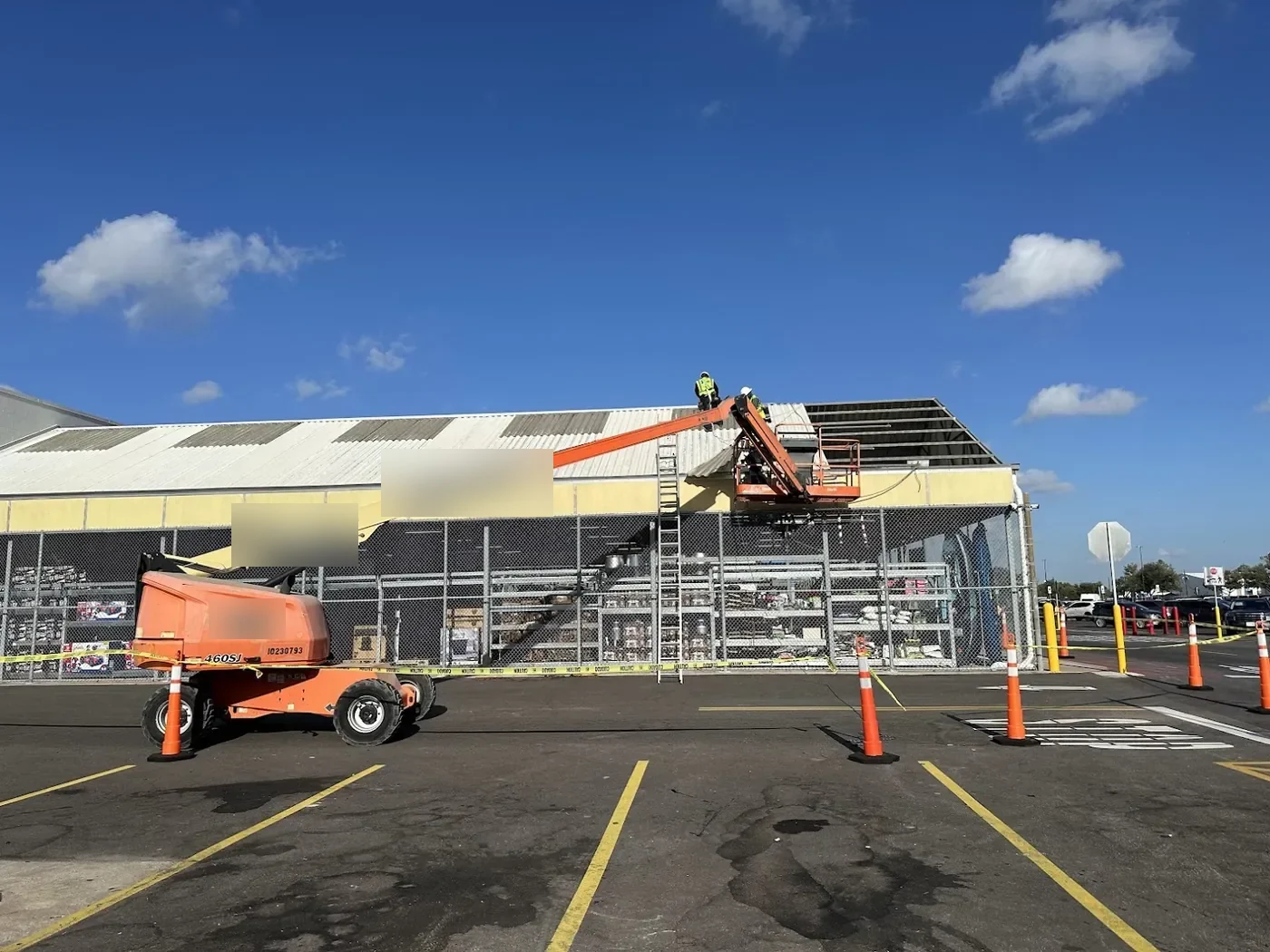
We divide removal and installation by roof zone. The crew removes the approved layers, inspects the exposed deck, replaces unsound insulation, and prepares the surface for cover board. Fasteners or adhesive follow the selected assembly. Board joints are staggered where the design requires it, and perimeter attachment receives specific attention. Before covering, we photograph substrate and attachment details, then complete a secure tie-in to retained roof.
Occupied offices, healthcare, schools, retail, and industrial properties need coordination below the work. We confirm delivery routes, roof hatch access, operating windows, equipment paths, and any room requiring protection. GA 400 and Holcomb Bridge Road connect commercial areas with different loading conditions. We ask for each property's restrictions before setting the sequence. Work near a Historic Roswell District property may also require review if visible roof edges or walls change.
Timing and cost depend on board type, insulation thickness, slope geometry, fasteners, wet material, deck repairs, access, and weather. A simple localized replacement and a full tapered layout need different design and labor. The estimate lists quantities and transitions by zone. If opening the roof finds more wet board than the tests showed, we photograph the added area and obtain approval before extending removal.
Record the covered assembly
The closeout record lists insulation and cover board installed, test locations, repaired roof zones, drainage transitions, and approved concealed work. Photos show the deck or substrate before new layers cover it. We note any retained area excluded from replacement. A roof replacement scope can include broad assembly work where the existing roof cannot remain.
Later inspections should revisit drain sumps, crickets, curbs, edge metal, and seams over the new board. A roof asset record can retain the layer details and tie them to future repairs. Each building keeps its own assembly information so another property's insulation or attachment pattern is not carried over as a default.
Request an insulation and cover board assessment for a named roof zone. Share roof plans, prior repair records, moisture tests, leak locations, access rules, and any existing assembly information. We will map the wet boundary, confirm drainage transitions, and separate planned work from concealed conditions.
Related Roofing Work
Map the roof assembly before ordering
Name the roof zone and share plans, moisture findings, leak history, access rules, and available assembly records. We will set test locations and identify the drainage and edge transitions in scope.
Questions About Commercial Roof Insulation and Cover Board
How do you decide how much insulation needs replacement?
We compare test openings, visible conditions, drainage, interior reports, and the roof's layers. Wet or unsound material is marked by location and removed to a stable boundary when approved. A test point does not establish the condition of the whole roof, so the scope identifies confirmed areas and any limit that needs more verification.
What does cover board add to the roof assembly?
Cover board provides a surface above insulation for the membrane and can add protection against impact or service traffic. Its type and attachment must fit the roof design and membrane. We check substrate, board joints, perimeter securement, and tie-ins before closing the zone, then record the installed layer for future repair reference.
Can tapered insulation fix ponding around a drain?
Taper can redirect water when outlet height, curb elevations, and available roof geometry support the layout. We map the high and low points and check for a blocked bowl or overflow first. If moisture or a soft deck is present, those conditions need repair before slope work closes the assembly.
Will added insulation change curb or edge details?
Added thickness can raise the roof surface relative to curbs, drains, walls, and perimeter metal. We measure each transition and state which flashing or edge components need adjustment. The proposal identifies tie-in heights and drain-sump requirements so insulation work does not leave an outlet or termination below the new roof plane.
Commercial Roofing Across Roswell and North Fulton
Roof Repair, Replacement and Maintenance for Every Kind of Commercial Building
From Historic Roswell and Canton Street to the Holcomb Bridge Road corridor, GA 400 and the North Point area, we inspect, repair and replace low-slope and metal roofs on offices, retail centers, medical buildings, schools and warehouses.