Shopping Center Roofing in Roswell, GA
An open seam above a shared storefront wall can send water into more than one tenant bay. We inspect the lap, parapet transition, rooftop curbs and drain path before deciding where a repair ends. Shopping centers often share roof areas across separate leases, so the property manager needs the affected zone and tenant impact identified. Roswell, GA sees warm, humid summers and recurring rain. A weak termination or blocked drain can hold water above an occupied shop.
Holcomb Bridge Road is Roswell's primary east-west route to GA 400, while the Buford Highway corridor is a broader north Atlanta commercial district with retail and dining uses. Those distinct retail settings make access and tenant coordination relevant to the roof plan. We check the actual building and assembly before assigning a repair. A shopping center roof review along Holcomb Bridge Road begins with a named building and roof zone.
Trace water without guessing at the lease line
A ceiling mark in one suite may sit below a roof defect several bays away. We note tenant, room, time and weather, then inspect above and upslope. Shared walls, parapets and internal drains can carry water across lease boundaries. Photographs tie the defect to a curb, seam or drain. The report names affected areas without treating every nearby suite as damaged.
Roof zones rarely follow demising walls. We map seams, expansion joints, penetrations, drains and patches against a roof plan. If moisture crosses the apparent tenant line, testing can clarify its extent. A leak investigation separates the entry point from the interior place where water appears. We identify tenant notice and access needs.
The Buford Highway corridor serves retail and dining across northern Atlanta suburbs. Shared storefronts make separate operating hours part of the staging plan. We confirm deliveries, customer entrances, patios and service routes before materials arrive.
Set work windows with each tenant
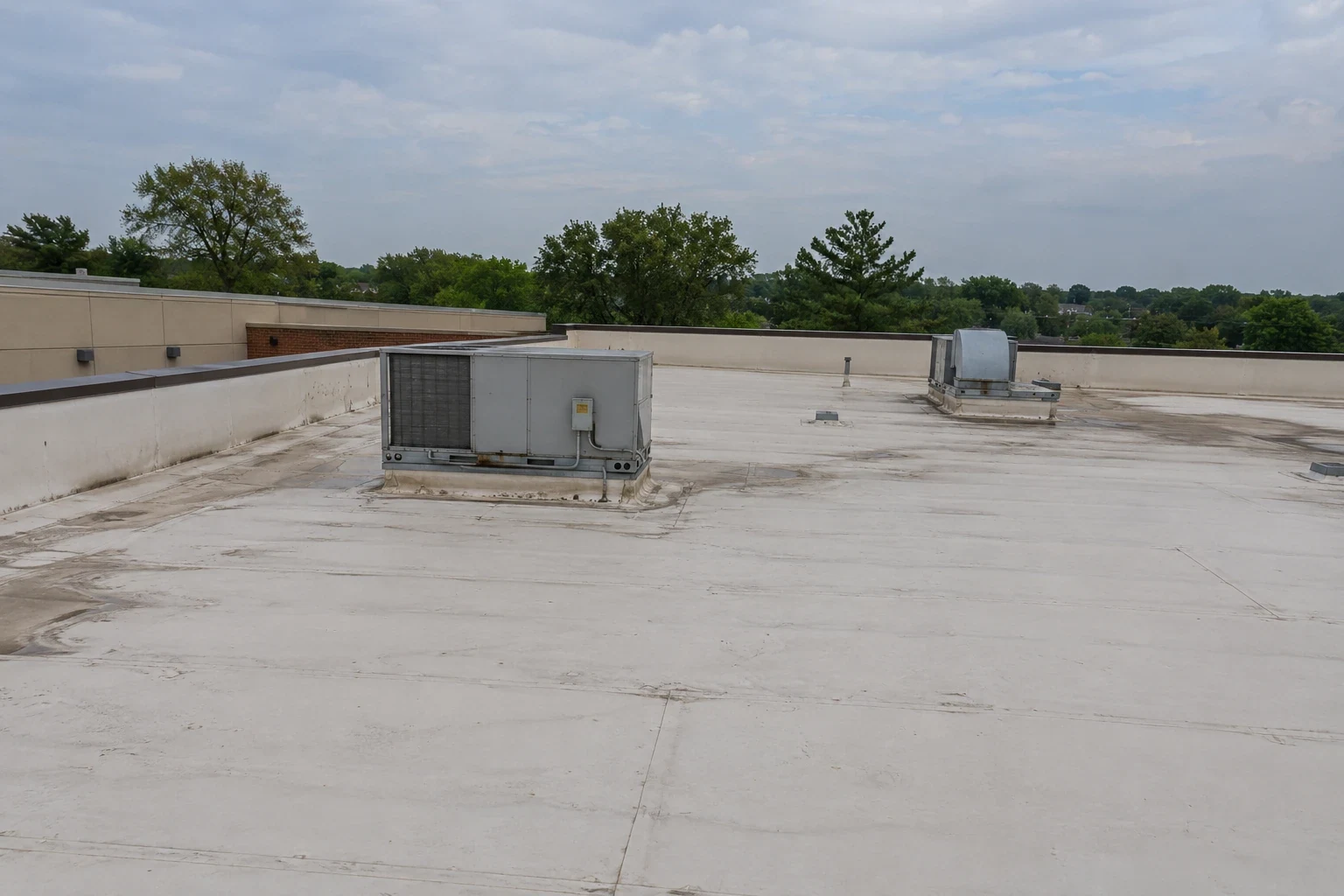
A repair above a restaurant patio may need a different work window than a quiet office suite. We ask the manager to list tenant hours, deliveries, exhaust equipment, restricted entrances, waste routes and contacts for emergency notices. Roof access, lift placement and material staging are recorded separately from customer access. The plan identifies noisy work, odors, shutdowns and any interior protection needed below.
For replacement, crews advance in zones that can be secured at shift end. The sequence includes dry-in, debris movement, drain protection and any equipment coordination. If tear-off exposes wet insulation or damaged deck, we photograph it, secure the opening and present the change to the authorized manager. Work extends only after the approved allowance or revised scope is accepted. Occupied retail reroofing can be phased to keep other parts of the center accessible.
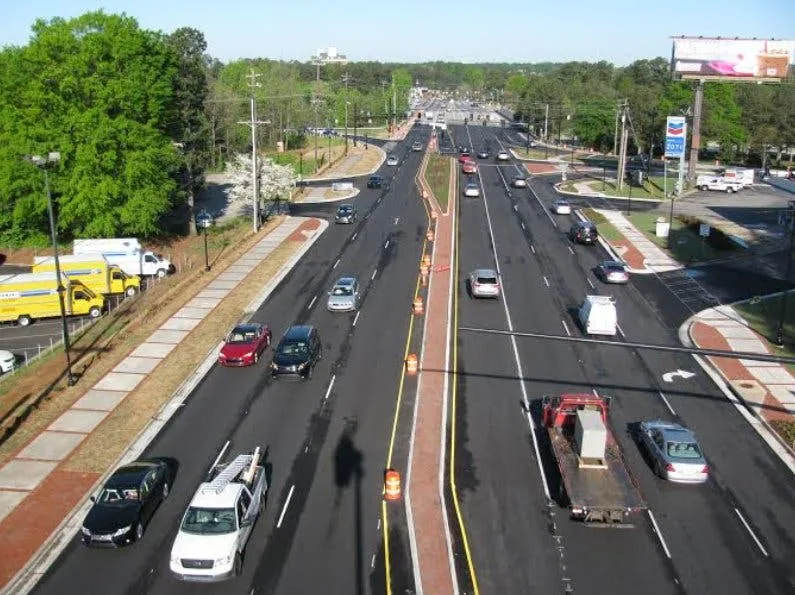
Holcomb Bridge Road carries heavy traffic near its GA 400 interchange and is a key service route into Roswell. Delivery timing and lift access may need coordination with current center rules and road conditions. We confirm loading areas and arrival windows with property staff rather than infer a staging route from the corridor. Tenant notices should identify which entrance or roof zone is affected and for how long.
Clear the shared drain path
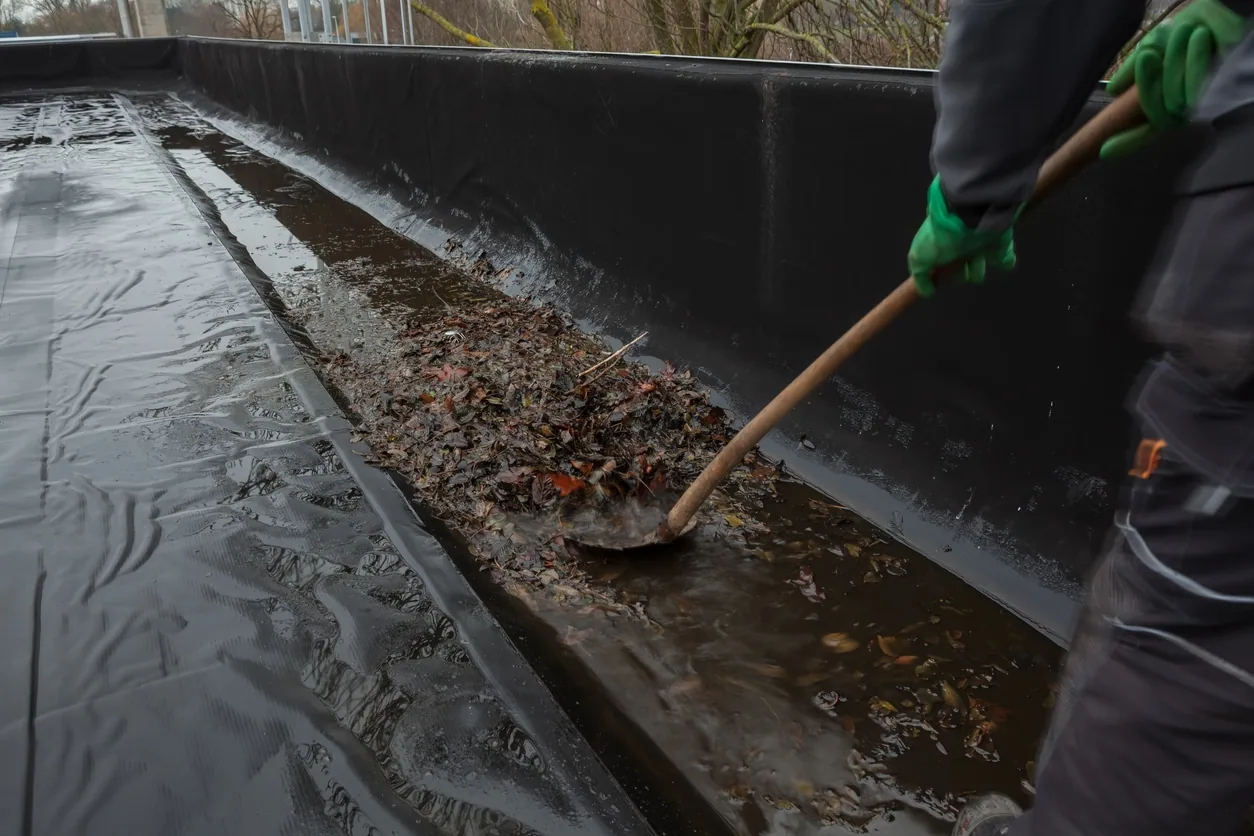
Water ponding near a scupper can indicate debris, a blocked outlet, inadequate slope or membrane distress. We inspect the strainer, bowl, overflow, flashing and adjacent seams. At a parapet, we also look for open coping joints and failed termination. A drain concern can affect several suites below, so the report locates the outlet and any nearby interior evidence. A drain and scupper assessment separates cleaning from repair work.
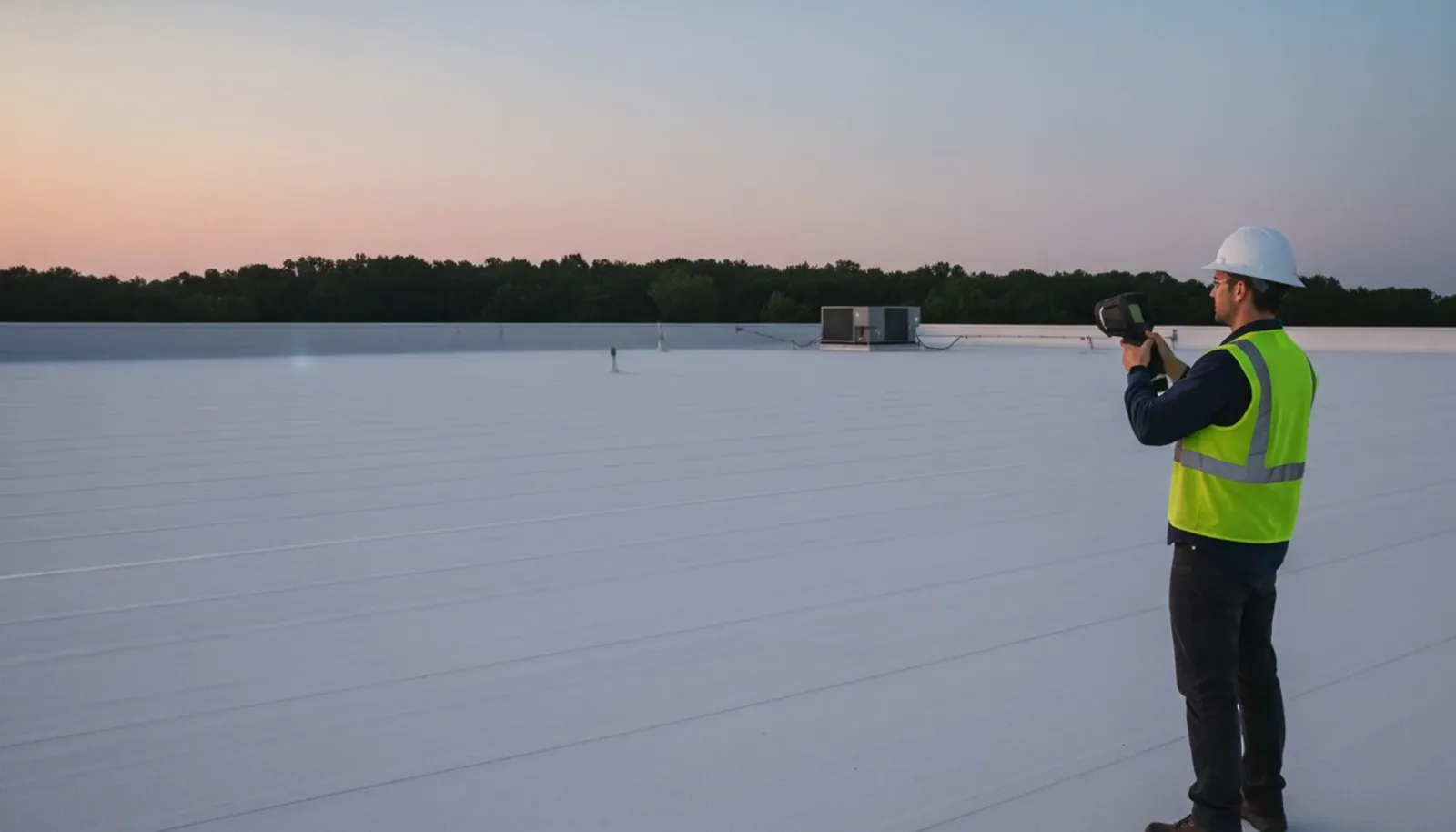
Roswell's frequent warm-season rain makes drainage capacity and overflow routes important. We check whether the primary outlet is open and whether water has reached insulation. A surface patch over a wet layer can leave the concealed condition active. Infrared scanning may identify patterns that warrant a test opening; the test cut confirms the material at a specific location. The moisture survey report states what is observed and what remains uncertain.
When adjacent tenants share a roof, an approved repair boundary should reflect the assembly, not simply one lease. If the substrate stays sound and dry, a local tie-in may be enough. If moisture extends beyond the visible defect or several details fail, we compare broader options and show which area each one covers. The manager can then review roof impact and tenant notice together.
Compare patch, recovery and replacement
A patch may suit an isolated split where surrounding membrane remains compatible and attached. Recovery can work when the assembly and deck support another layer. Replacement may be needed with wet insulation, repeated failures or poor tie-ins. We show which tenants and roof zones each option covers. A recover comparison should state retained layers and new tie-in details.
Retail use does not determine the roof system. A center could have single-ply, asphalt-based, metal or coated roofing. We inspect seams, attachment, insulation, slope, penetrations and curbs. A PVC system needs compatible thermoplastic seams. For larger-format stores, a big-box retail roof plan raises related staging questions, but its equipment and zones require separate findings. Grocery cooling equipment calls for its own grocery roof review.
Cost depends on repair count, access, staging, removal layers, drainage and confirmed deck or insulation repairs. Timing follows weather, deliveries, material readiness, tenant hours and zone size. The proposal lists buildings, lease areas, zones, exclusions and approval contacts. Each allowance names its concealed trigger and approver.
Keep tenant and roof records aligned
Closeout photos show repaired seams, terminations, drains, coping, curbs and tie-ins. We identify the roof zone and tenant areas below, then record materials, completed work, approvals and concealed conditions. The manager can attach the record to a maintenance log. Before handoff, we clear loose material and verify drains and overflows remain open.
Severe weather can bring damaging wind, hail or tornadoes to north Georgia. A regional alert does not establish damage at a center. We inspect reported areas for punctures, lifted edge metal, separated laps and displaced flashing. Emergency response is available any hour, holidays included, when an opening needs protection.
Send the roof plan with tenant leak reports, delivery restrictions and prior repair records. We will map affected roof zones to the tenant areas below, separate confirmed repairs from concealed-condition allowances, and identify any access coordination the property manager needs to arrange.
Related Roofing Work
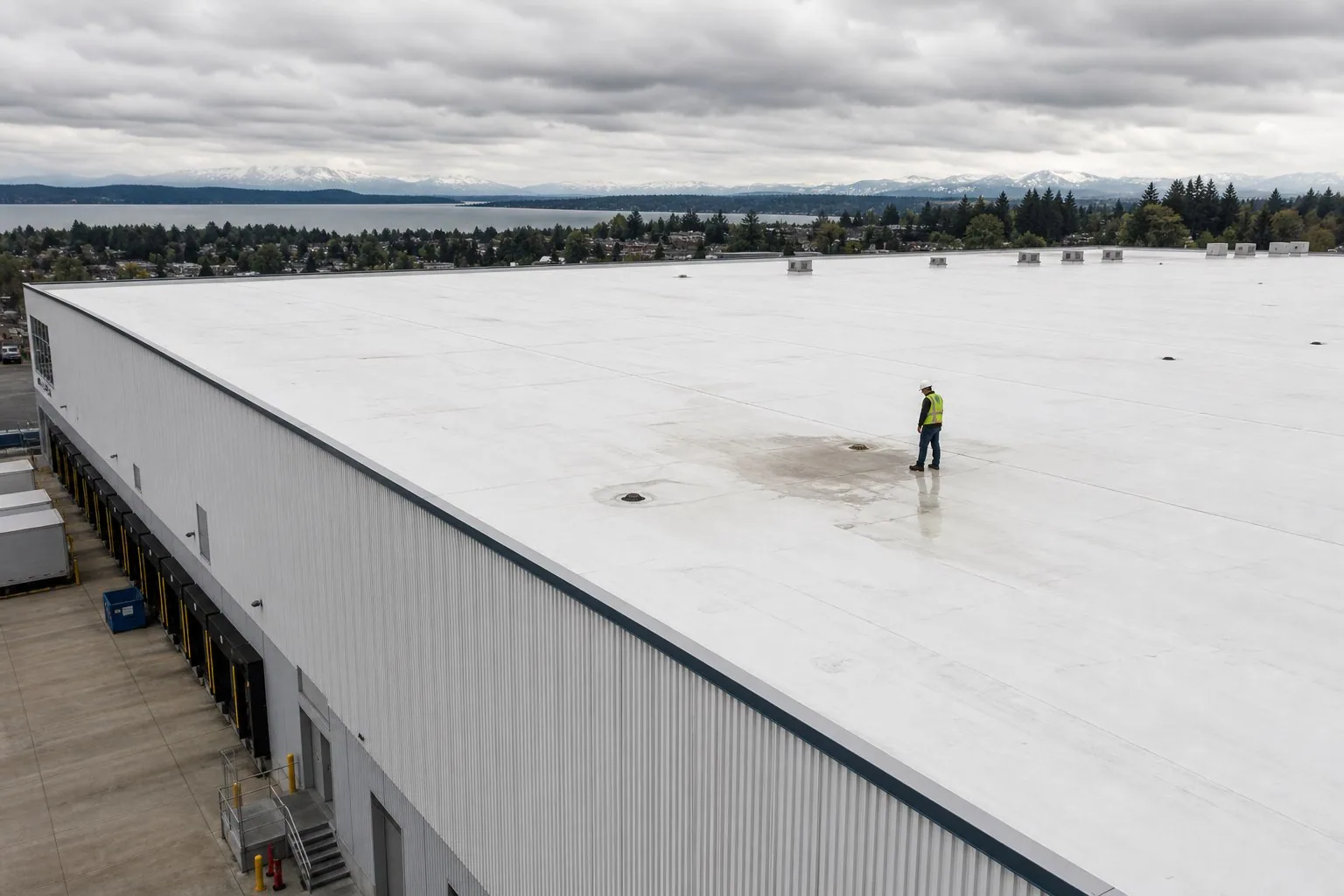
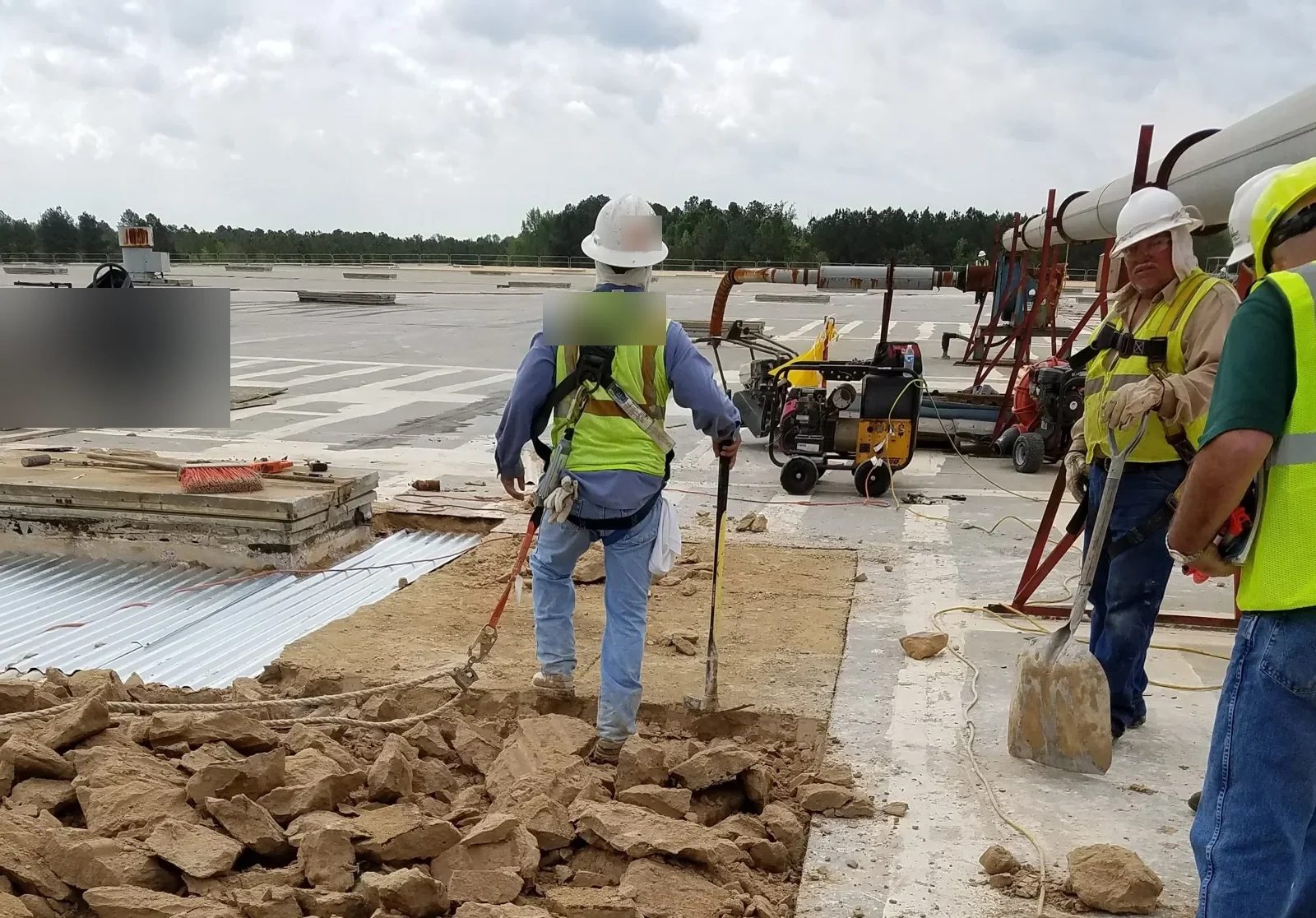
Scope a shopping center roof
Name the center, tenant area and roof zone. Send roof plans, tenant hours, access rules, leak records, delivery limits and prior repairs for review.
Questions About Shopping Center Roofing
How do you identify tenants affected by a leak above shared space?
We map the defect against the roof plan, interior report and lease layout. Water may travel along a deck or under insulation before appearing indoors, so the suite with a ceiling mark may not align with the entry point. We show the confirmed roof zone, note nearby tenant areas and identify any access or testing needed to refine the boundary.
Can a shopping center stay open during roof replacement?
The approved sequence sets which entrances and suites remain accessible. We coordinate tenant hours, deliveries, noise, odors, equipment shutdowns, staging and interior protection with the manager. Work proceeds in zones with a secure tie-in at shift end. If weather or a concealed condition changes the plan, the manager reviews the revised area before crews continue.
What should an allowance cover when tear-off begins?
It should define the concealed condition that may trigger added work, how the exposed area will be measured, and who can approve the price and extent. Wet insulation or deck damage cannot be confirmed from the surface. We photograph what removal exposes, secure the opening and submit a defined revision before expanding the repair boundary.
How do you compare proposals for a multi-tenant retail center?
Compare the same buildings, tenant areas and roof zones. Check drains, parapets, curbs, access, staging, temporary dry-in, tenant notices and closeout photographs. Proposals should separate confirmed quantities from allowances and list exclusions. We can map each bid to roof zones so ownership can see differences in both coverage and sequence.
Commercial Roofing Across Roswell and North Fulton
Roof Repair, Replacement and Maintenance for Every Kind of Commercial Building
From Historic Roswell and Canton Street to the Holcomb Bridge Road corridor, GA 400 and the North Point area, we inspect, repair and replace low-slope and metal roofs on offices, retail centers, medical buildings, schools and warehouses.