Aircraft Hangar Roofing in Roswell, GA
A separated panel lap beside a hangar door can admit wind-driven rain into the bay. We inspect the seam, fasteners, eave and wall transition before setting the repair boundary. Aircraft, ground equipment and door operation make staging a site decision, not a detail to leave until work starts. Roswell's hot, humid summers and north Georgia storm cycles stress exposed edges and penetrations. We record the roof condition and the operating limits tied to the work zone.
Roswell Town Center and the Atlanta Street Corridor form part of the city's commercial planning framework. Holcomb Bridge Road is the city's only GA 400 interchange route. These broad corridors shape regional access and delivery planning, while the hangar operator defines airside, landside and site-specific controls. A Roswell-area hangar roof inspection starts with the structure and its access rules.
Inspect the door edge and roof transitions
Large door openings create long edges where panels, closures and fasteners must remain secure through repeated operation. We check the eave, door track support, adjacent panel seams and wall flashing for movement or open joints. At a roof penetration, the curb, counterflashing and panel profile need to work together. We photograph the detail with a fixed bay or roof-zone reference.
A leak above aircraft storage may become visible far from its entry, especially where water follows a purlin or deck profile. We compare the interior report with roof seams, ridge details, drains and wall lines above it. A commercial roof inspection can identify visible defects and access limits. If insulation moisture is not clear, we describe whether scanning or a test opening would answer the question.
Daily traffic exceeds seventy thousand vehicles where Holcomb Bridge Road meets GA 400. We coordinate truck arrival and material delivery with the hangar operator's site plan.
Check metal movement and corrosion
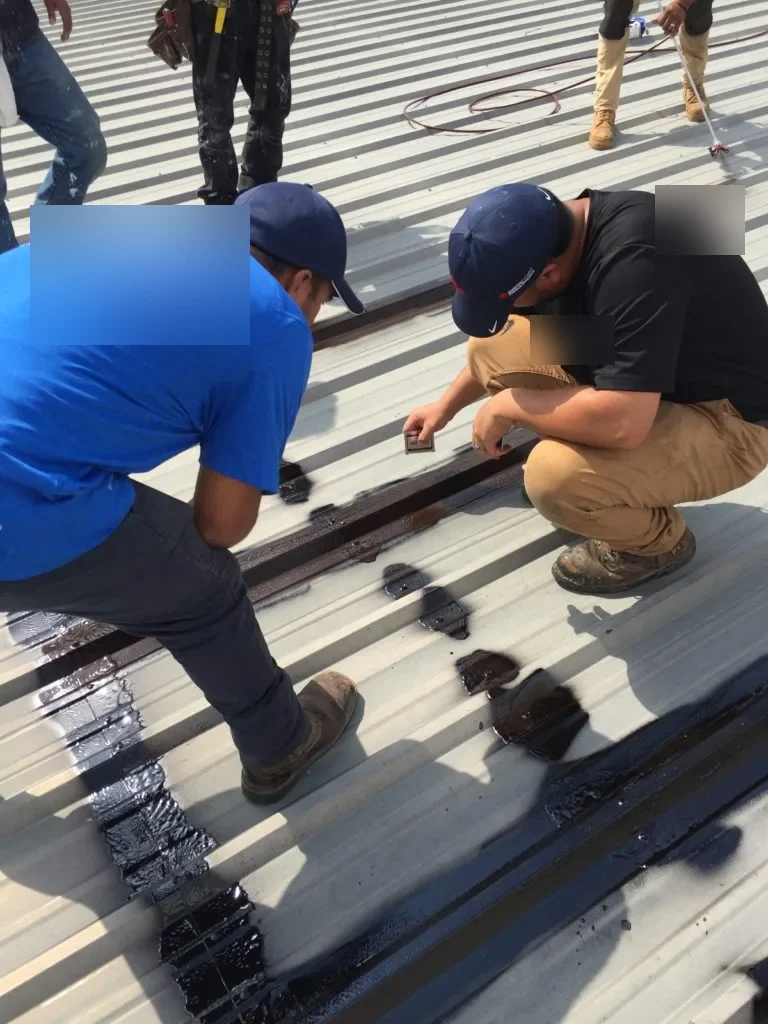
Metal panels expand and contract as temperatures change. Fasteners, laps, clips, sealant and trim all need to accommodate that movement. We look for loose or backed-out fasteners, distorted seams, coating loss and corrosion around cut edges. A surface treatment will not correct a loose panel or failed fastening pattern.
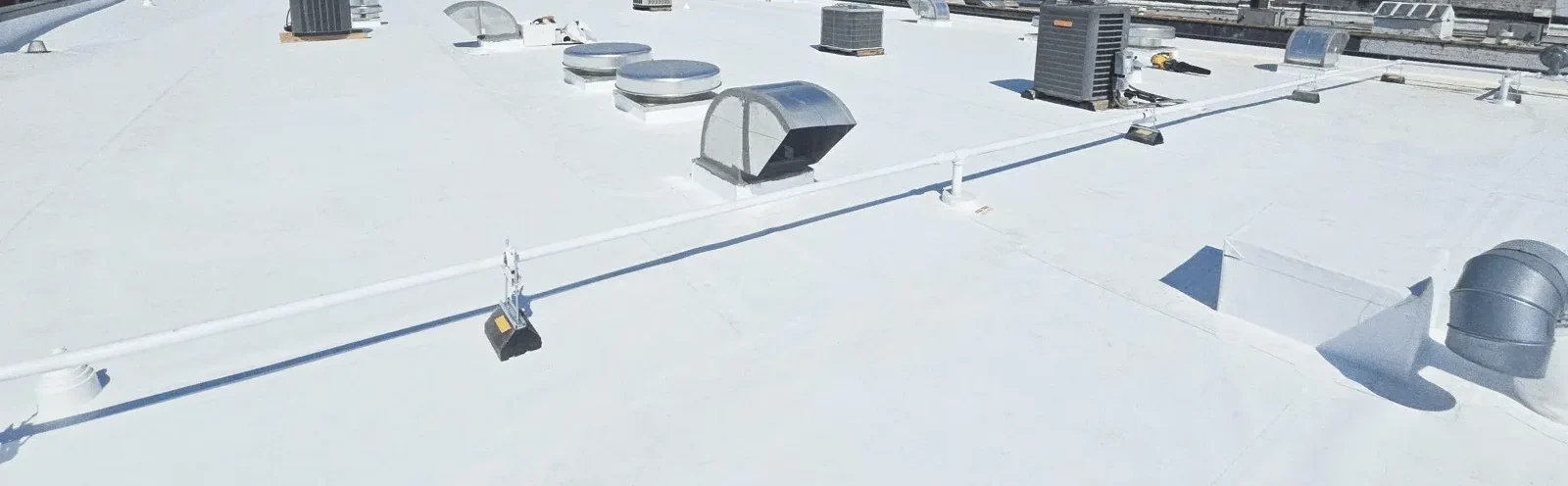
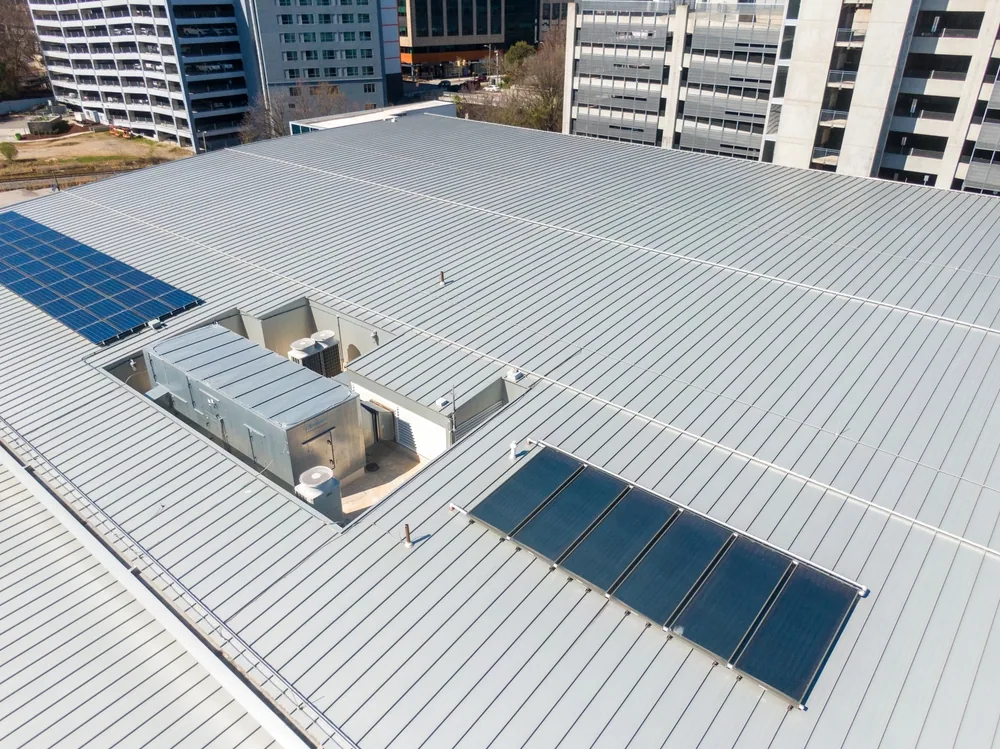
Some hangars use low-slope membrane sections along with sloped metal roof areas. We identify each assembly separately and test transitions between them. A standing seam roof review checks the panel seams and attachment visible at the building. If an existing assembly is no longer a sound base, a replacement assessment describes panel removal, underlayment, edge metal, ridge and wall details.
Coatings require preparation, sound attachment and suitable substrate. We check adhesion and corrosion before pricing a coating or restoration. The scope states which panels or roof zones are included and what areas cannot be accessed safely during inspection.
Control access around aircraft and equipment
The operator identifies aircraft positions, door schedules, ground equipment, fueling or maintenance restrictions, restricted paths and the person who can clear a work area. We map staging, lifts, removed panels and overhead work against those rules. Where an aircraft must be moved, the site contact controls that decision. The roof proposal states whether hangar operations need a planned pause.
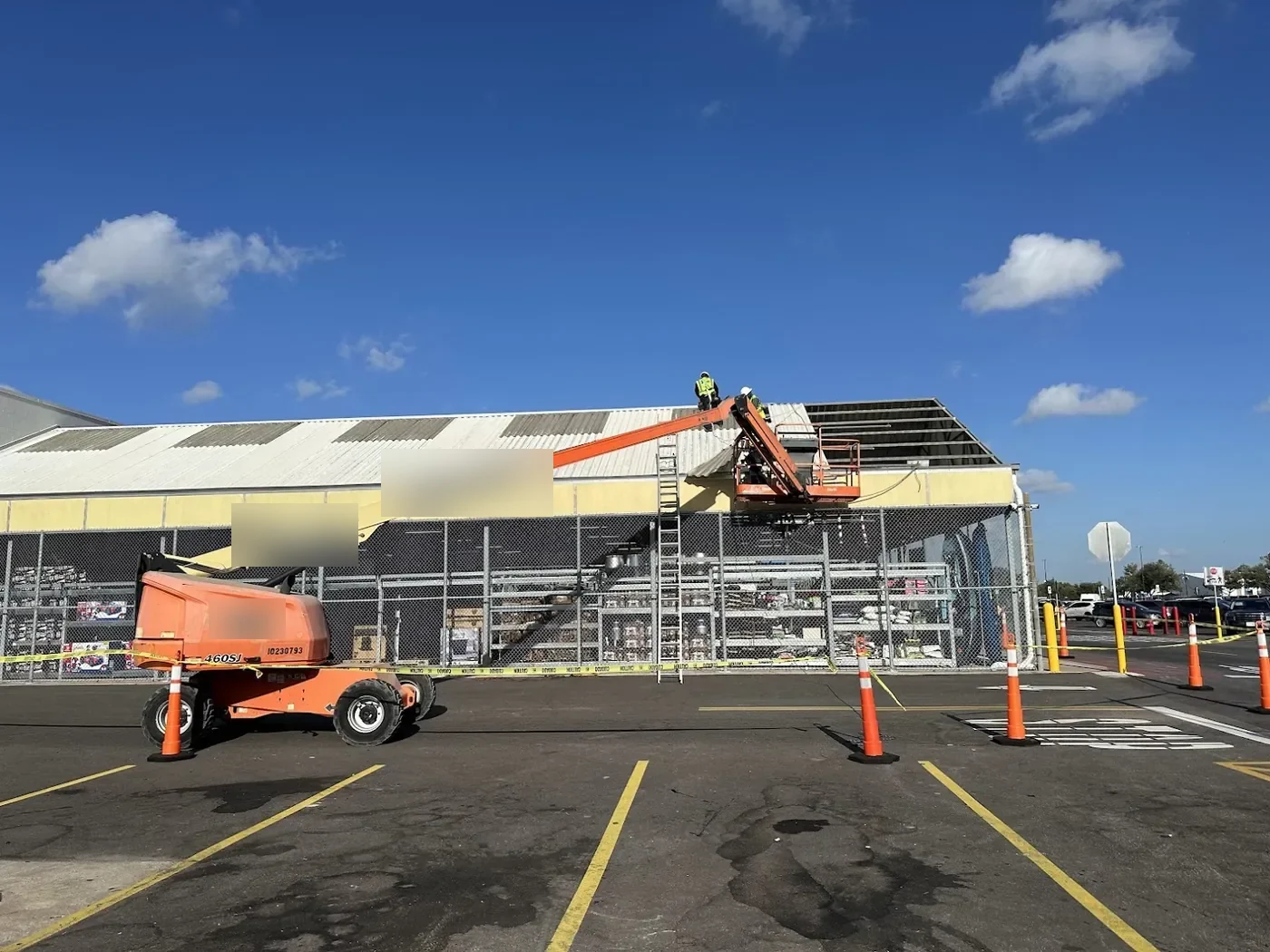
For a larger repair, we work by roof zones that can be secured before the door or bay returns to use. Panel removal exposes the building to weather, so each shift needs a defined stopping point and temporary closure detail. If a purlin, insulation or deck condition changes the scope, we send photos and wait for approval before moving past the agreed limit. Phased occupied-building roofing can help sequence work while other areas remain in service.
Aircraft maintenance facilities and private hangars can have different inspection, operating and access rules. We use the operator's current instructions rather than assuming one facility's plan fits another. Public security or aviation procedures remain under the owner and operator's authority.
Secure the roof before changing conditions
Strong gusts or sudden rain can affect both panel handling and an open roof section. We monitor weather during exposed work, secure removed materials and stop at a stable seam or temporary closure. The operator receives notice of any bay or access restriction that remains in place. Drain paths and interior protection are checked before the crew leaves.
Storm tracking for Atlanta and north-central Georgia includes severe cells, large hail, damaging gusts and possible tornadoes. Those regional reports do not show what happened at one hangar. After an operator reports impact, we inspect accessible panels, fasteners, closures, penetrations and edges. Crews can cover an open roof at any hour of the day, holidays included.
Define panel work and concealed limits
Cost depends on panel profile, fastening, corrosion treatment, access equipment, staging, insulation and deck condition. Roof height and door operation can affect lift placement and sequence. The scope lists affected bays, panel runs, eaves, ridges, gutters, wall transitions and interior protection. It separates measured work from any allowance for concealed framing or substrate conditions.
Timing depends on weather, panel availability, operator access windows and the amount of exposed roof. A change in the work area may require aircraft relocation or a scheduled door pause. We identify who approves that change and where work can continue safely. A roof condition report can separate urgent water entry from longer-term panel or coating work.
For a wider portfolio, warehouse roof findings may share metal or membrane questions. A military hangar and maintenance facility can have distinct security and procurement controls. Each hangar receives its own access plan and roof condition record.
Record the repaired bay and panel run
Closeout photos show fasteners, laps, closures, ridge, eave and repaired transitions. The record names the hangar, bay or roof zone, materials, completed work, approvals and any inaccessible area. We remove loose debris and check that the temporary limits and door area are clear before handoff.
Staff can use the photos to compare panel movement or a recurring leak at the next review. The closeout record separates repaired details from coating or replacement work that remains under consideration. A second building is inspected independently even when its frame or panel profile appears similar.
Request an inspection or scope comparison for a named hangar and roof zone. Send roof drawings, panel records, leak locations, access rules, aircraft movement limits and any lift or door schedule. We will document the assembly, mark the repair boundary and identify concealed conditions requiring approval.

Related Roofing Work
Inspect a hangar roof zone
Name the hangar and affected bay. Send roof drawings, panel records, access rules, aircraft movement limits, leak reports and door schedules so we can document conditions and coordinate the inspection.
Questions About Aircraft Hangar Roofing
Can roof repairs proceed while aircraft remain in a hangar?
That depends on the work zone, overhead protection, lift path and operator's access rules. The operator identifies aircraft positions and whether equipment or aircraft need relocation before work begins. We set a marked boundary, plan debris handling and close the roof section at an agreed stopping point. The proposal notes when the bay must be cleared or access paused.
What causes recurring leaks near a hangar door?
Door movement, panel laps, closures, fasteners and wall transitions can all contribute. We inspect the moving edge and adjacent roof details, then compare them with the interior report. Water may follow the panel profile or framing before it reaches the floor. Photos show the defect and tie-in point; any concealed insulation or substrate question is stated separately.
Can a coating stop corrosion on hangar panels?
Only when the panels are structurally sound, suitably attached and prepared for adhesion. We inspect corrosion, fasteners, seams and drainage before considering a coating. Loose panels or deteriorated metal need a different scope. The report identifies areas that can be treated and the repairs needed before coating work begins.
What information helps plan hangar roof work?
Roof drawings, panel specifications, access procedures, door schedules, aircraft locations and lift restrictions help set the work sequence. Include any current leak reports and previous repair details. We use those records to mark the inspection zone and identify who can approve relocation, access changes or concealed-condition work.
Commercial Roofing Across Roswell and North Fulton
Roof Repair, Replacement and Maintenance for Every Kind of Commercial Building
From Historic Roswell and Canton Street to the Holcomb Bridge Road corridor, GA 400 and the North Point area, we inspect, repair and replace low-slope and metal roofs on offices, retail centers, medical buildings, schools and warehouses.