Rooftop Equipment Curbs and Supports in Roswell, GA
A split curb corner can move water past the unit base. We inspect the flashing, fasteners, membrane and nearby drain path. Then we mark the repair boundary against sound material. Roswell's hot summers and frequent rain work every lap and termination. A small opening can admit water, while wet insulation may extend beyond the visible stain. We document each confirmed condition before setting the scope.
Our work covers rooftop unit curbs, equipment supports and pipe supports. We repair compatible details or install new curbs and supports where the assembly requires them. Holcomb Bridge Road connects a mix of offices, healthcare, retail, schools and light industrial property. Equipment layouts differ at every building. We use roof plans, service clearances and field measurements to locate each detail. The recommendation stays with the inspected zone, not a guessed roof type.
Find the opening at the base
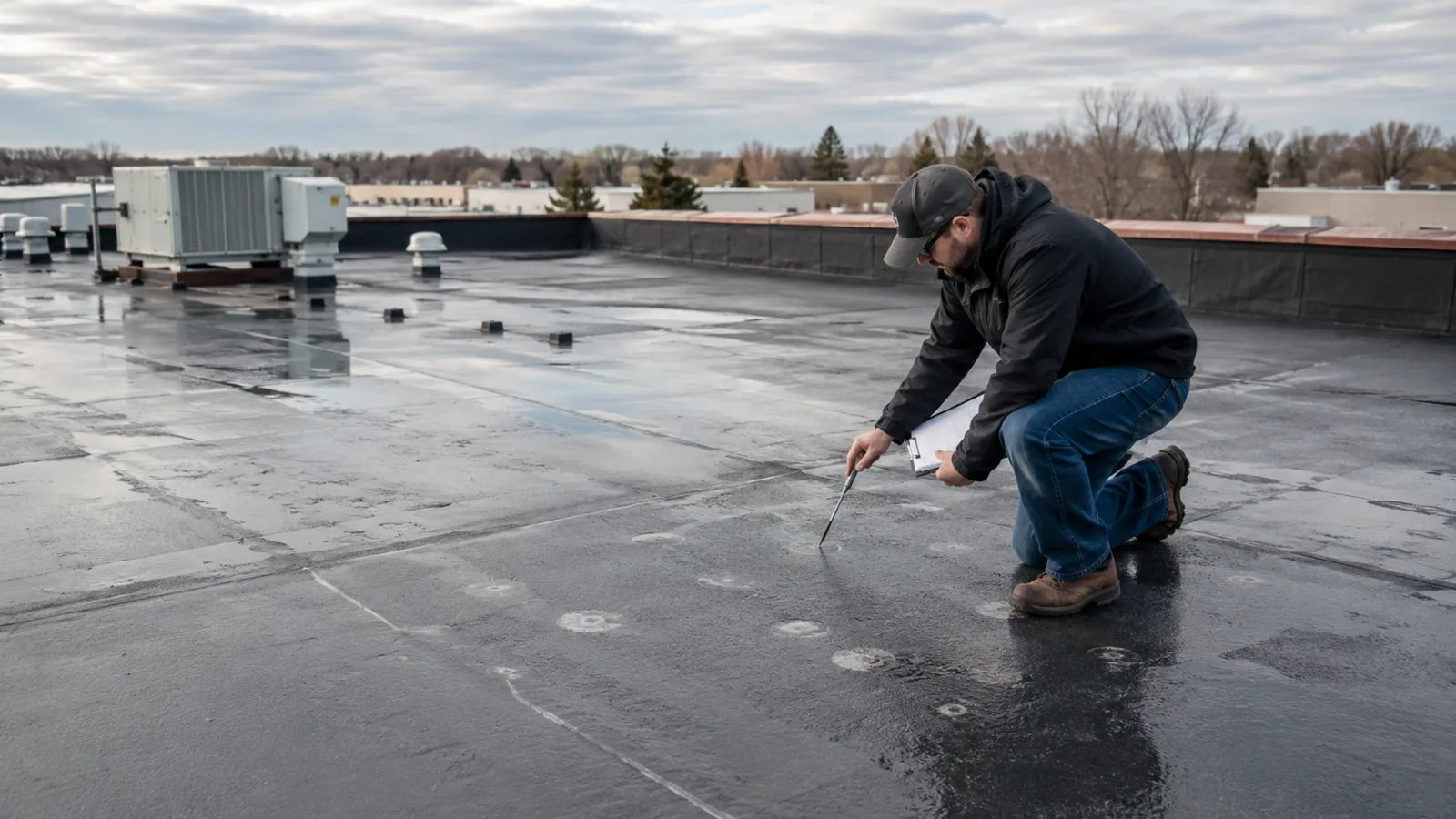
Water often enters where flashing turns up a curb or pipe support. We check open corners, loose counterflashing, cracked sealant and membrane pulling away from the base. On a welded roof, the lap needs clean, compatible material and a continuous seam. A coated or bonded assembly needs its own preparation and cure conditions. We identify the existing system before choosing a repair method.
Movement can widen a gap over time. HVAC service, vibration, thermal movement and foot traffic can strain a curb or support. We look for loose fasteners, bent metal, unsupported pipe runs and contact between equipment and flashing. Roswell's warm-season rainfall can reveal weak transitions when water moves across the roof. We compare the detail with nearby seams and the slope toward drains. A stain below tells us where to trace, not where to stop.
Set the support and flashing limits
A curb replacement begins with dimensions, equipment loads and service clearances. We review available drawings and confirm field conditions before ordering materials. A new curb must fit the unit interface and leave a suitable roof transition. Supports need a stable bearing surface and a detail that does not trap water. Pipe supports should carry the line without crushing insulation or abrading the membrane. We note the work limit around each item.
Where a curb is sound, local flashing repair may preserve it. We remove failed material to a sound substrate, prepare the transition and tie in compatible membrane. If insulation is wet or the deck is soft, we extend work only to the confirmed boundary. Concealed deck or insulation conditions remain separate from the approved base scope. The asset manager can review evidence and approve an allowance before the work expands.
Equipment access can constrain the sequence. We coordinate shutdowns, mechanical contractor access, lifts, roof hatch controls and clear service paths. The roof inspection record can map each curb and support by zone. For a larger repair list, condition reporting keeps photographs and open decisions tied to locations. Each added detail gets a separate repair limit and closeout photograph.
Match the detail to the roof
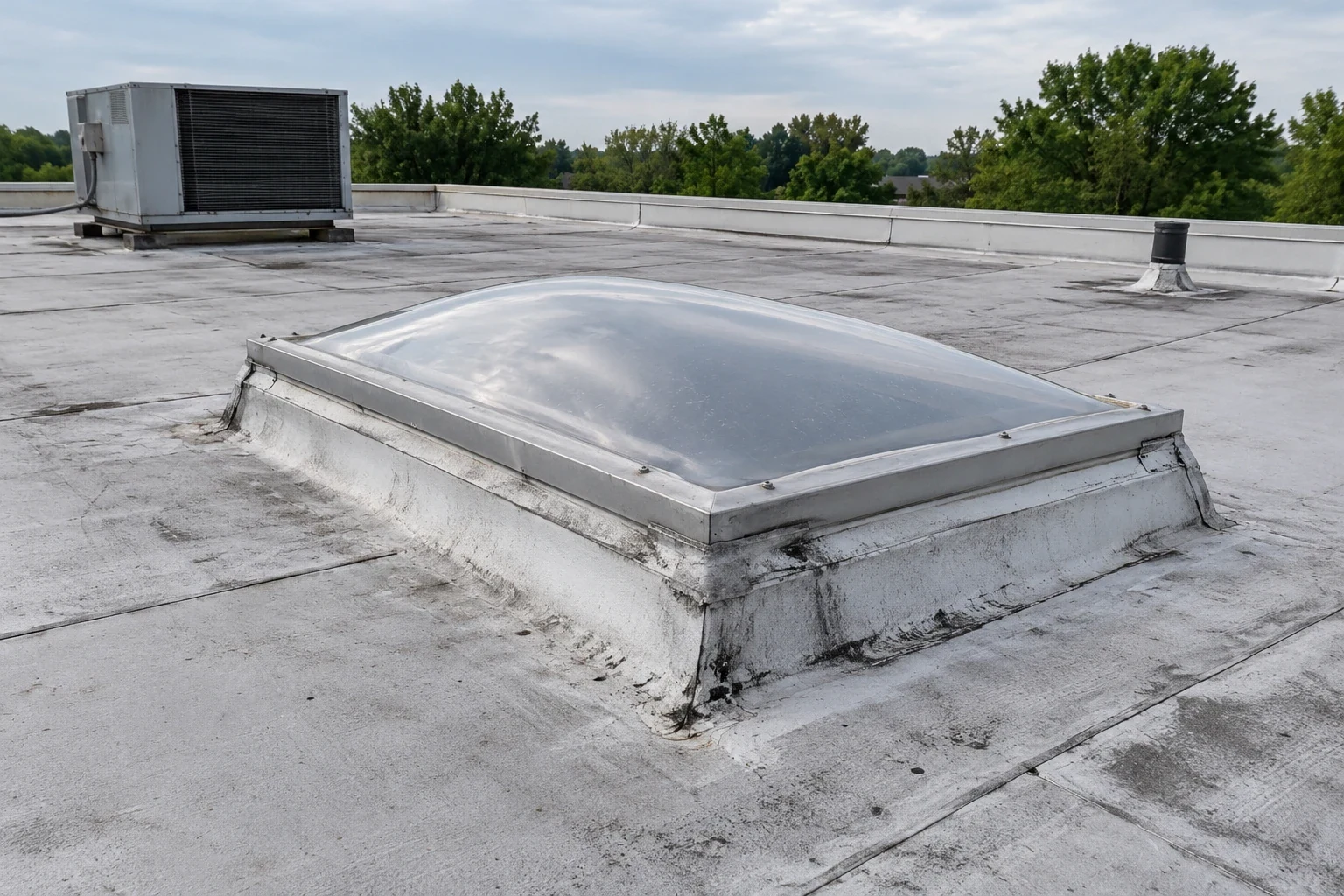
A curb is part of the roof assembly. Its height, attachment and flashing must work with the membrane, insulation and deck. We check the upstand, corners, termination bar, counterflashing and nearby walkway or service path. A low curb can leave little room for a proper membrane turn-up. The proposed detail must respect equipment access while keeping water away from the opening.
Roswell's commercial building base includes medical offices, schools, civic facilities and light industrial spaces. Use alone does not tell us what membrane is installed. We verify what is visible and consult drawings when available. Compatible TPO roof details differ from EPDM, PVC, metal or coating transitions. At a roof replacement, the new assembly should address equipment interfaces before membrane work reaches those zones.
Pipe supports deserve the same review. A support that sits directly on a membrane can abrade it as the line moves. We check bearing pads, spacing, corrosion, attachment and the condition beneath each base. The pipe route should remain stable without blocking drainage or service access. If a new penetration is proposed, we coordinate its location and flashing before cutting. The penetration flashing scope can include related roof openings when those details are part of the same project.
Choose a workable installation window
Surface preparation sets the bond or weld quality. Rain, dew, trapped moisture and low temperatures can keep materials from sealing as specified. Roswell's humid summers bring frequent warm-season rainfall, so we review forecast conditions and protect open details. If a wet substrate prevents a secure tie-in, the crew pauses and restores temporary protection. Drains and overflows stay clear during the work.
Timing depends on curb count, equipment access, mechanical coordination, membrane type and any deck repairs. A simple flashing repair can follow a different sequence than lifting a unit and rebuilding its curb. We identify who will disconnect and reconnect equipment, who controls the shutdown, and which paths stay open. The plan names the decision contact for concealed conditions and any return visit.
Severe thunderstorms, damaging wind and hail occur across north and central Georgia. After a storm, we inspect for visible impact around the unit and support bases. A weather report alone does not establish roof damage. Photographs show observed displacement, punctures or fractured material by roof zone. When the evidence supports a broader survey, an impact assessment can connect affected details with the rest of the roof.
Leave a traceable equipment record
The closeout record identifies each repaired curb, pipe support and equipment base. It includes before-and-after photographs, materials used, tie-in locations and any approved change. We mark areas that could not be opened and note why. If a concealed condition remains, the record separates it from completed work. This gives the next inspection a clear reference without treating an unverified area as resolved.
For property teams managing several buildings, roof asset records can carry those details forward with repair history and future inspection dates. In North Fulton, a connected portfolio may include separate offices, clinics or industrial buildings. Each roof still needs its own assembly and condition record. Share available plans, unit schedules, leak notes, access rules and mechanical contacts before we visit.
Request an inspection or scoped comparison for a named roof zone. We can assess the curb, supports, flashing and adjacent drainage, then price confirmed repairs separately from concealed-condition allowances. If unit shutdown or escort procedures apply, send those requirements with the access contact. That information helps set a useful visit window and keeps equipment service paths in view.
Related Roofing Work
Scope the curb or support repair
Name the roof zone and send equipment schedules, roof plans, leak notes, access procedures and mechanical contacts. We will document each base, define confirmed repairs and identify any concealed-condition allowance.
Questions About Rooftop Equipment Curbs and Supports
Can a leaking curb be repaired without replacing the unit?
Often, the roof detail can be repaired while equipment stays in place. We inspect curb height, metal condition, membrane attachment and the surrounding substrate first. A sound curb may only need compatible flashing work. Corrosion, movement or a damaged base can change the scope. We coordinate with the mechanical contact before any work that could affect unit access or operation.
How do you handle a pipe support that rests on the membrane?
The support needs a stable bearing point that protects the roof surface. We check the pad, line movement, spacing and membrane condition underneath. If lifting the line is required, the responsible mechanical contact must coordinate that work. We then repair any confirmed abrasion and install a suitable support detail. The record shows what was accessible and what remains concealed.
What information helps price several rooftop curbs?
Send roof plans, equipment schedules, photographs, leak locations and access limits. Include unit shutdown rules and the mechanical contact for each building. We group the visit by roof zone, then inspect curb corners, terminations, nearby seams and drainage. Pricing separates confirmed repairs from allowance items that depend on opening the assembly.
Will a new support create another roof penetration?
Not every support requires a deck penetration. The selected design depends on the pipe or equipment load, roof assembly and attachment requirements. We review the proposed connection and coordinate it before installation. Any opening through the roof needs a compatible flashing and documented termination. Existing penetrations are not reused unless their condition and location suit the detail.
Commercial Roofing Across Roswell and North Fulton
Roof Repair, Replacement and Maintenance for Every Kind of Commercial Building
From Historic Roswell and Canton Street to the Holcomb Bridge Road corridor, GA 400 and the North Point area, we inspect, repair and replace low-slope and metal roofs on offices, retail centers, medical buildings, schools and warehouses.