Commercial Tornado Roof Damage Repair in Roswell, GA
A roof after a tornado report needs a controlled first look. Crews should approach only after the property contact confirms access and surrounding conditions are safe. From an approved route, we record visible displacement, torn membrane, missing edge components and debris impacts. A roof inspection does not replace emergency management or structural assessment. We document roofing conditions within the limits established for the site.
Roswell's business properties span the central district and commercial corridors along GA 400 and Holcomb Bridge Road. The roof type and building use change from one address to another. A Roswell commercial roof assessment begins with the affected building, storm timeline and access instructions rather than assuming damage from a regional report.
Set a safe boundary before entering
After severe wind, loose sheet metal, fallen branches, displaced equipment or damaged parapets may remain hazardous. The owner or designated responder controls entry. We wait for authorization, confirm the roof route and identify overhead hazards, unstable areas and sections that must remain closed. If a qualified structural review is required, it comes before roofing crews cross the affected zone.
At ground level, we can note visible debris and water entry reports without treating either as a roof diagnosis. The site contact identifies shut-down areas, loading restrictions, occupied rooms and emergency routes. We agree on staging and debris placement before inspection begins. No material is moved if doing so would conflict with an investigation or create additional risk.
Roswell properties differ in how tenants, staff and deliveries use the site. A warehouse may need clear access to loading doors; a medical property may limit rooftop work above active care areas. A warehouse access plan shows how those operational details can shape staging, while the damage record remains tied to the specific roof.
Trace displacement across the assembly
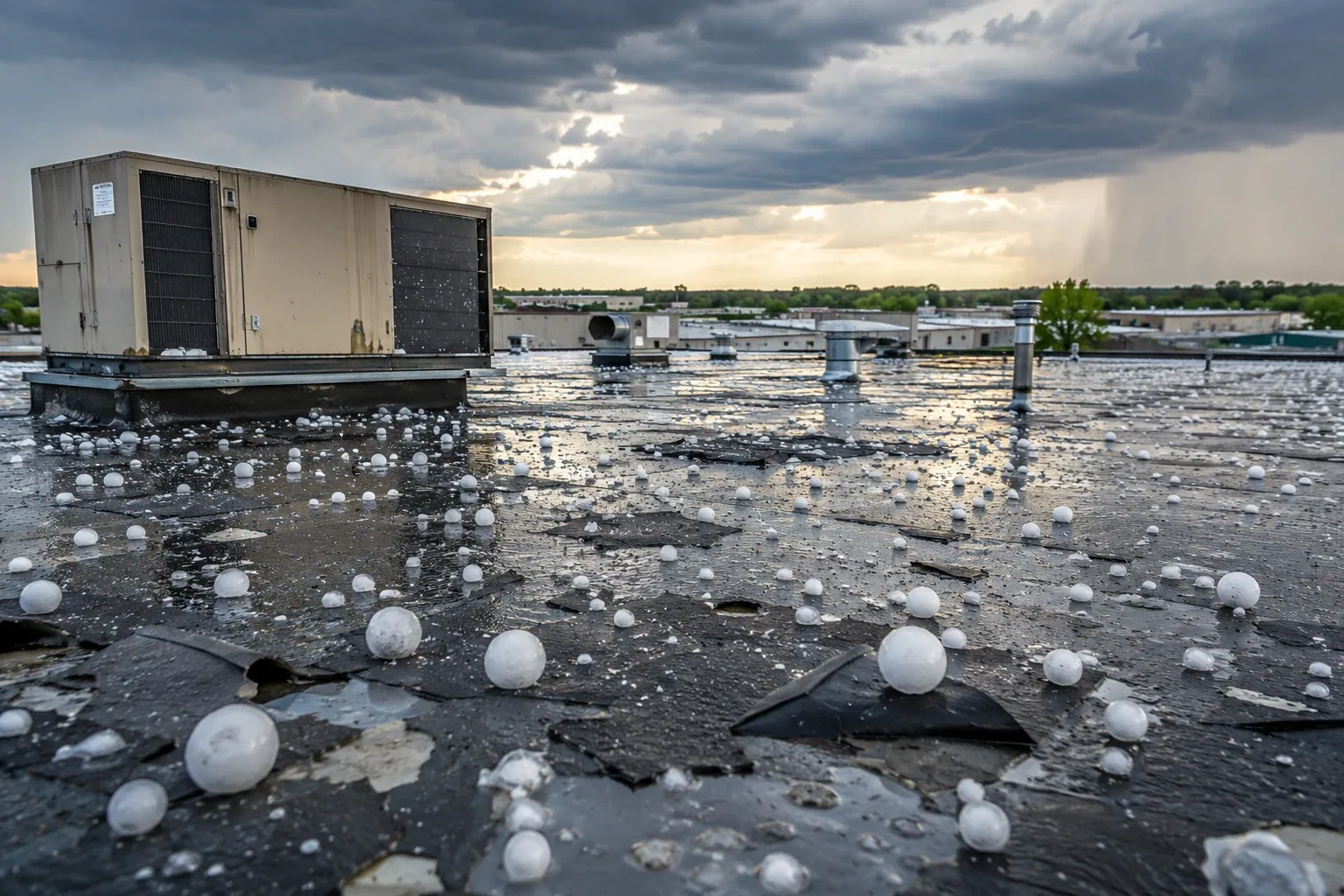
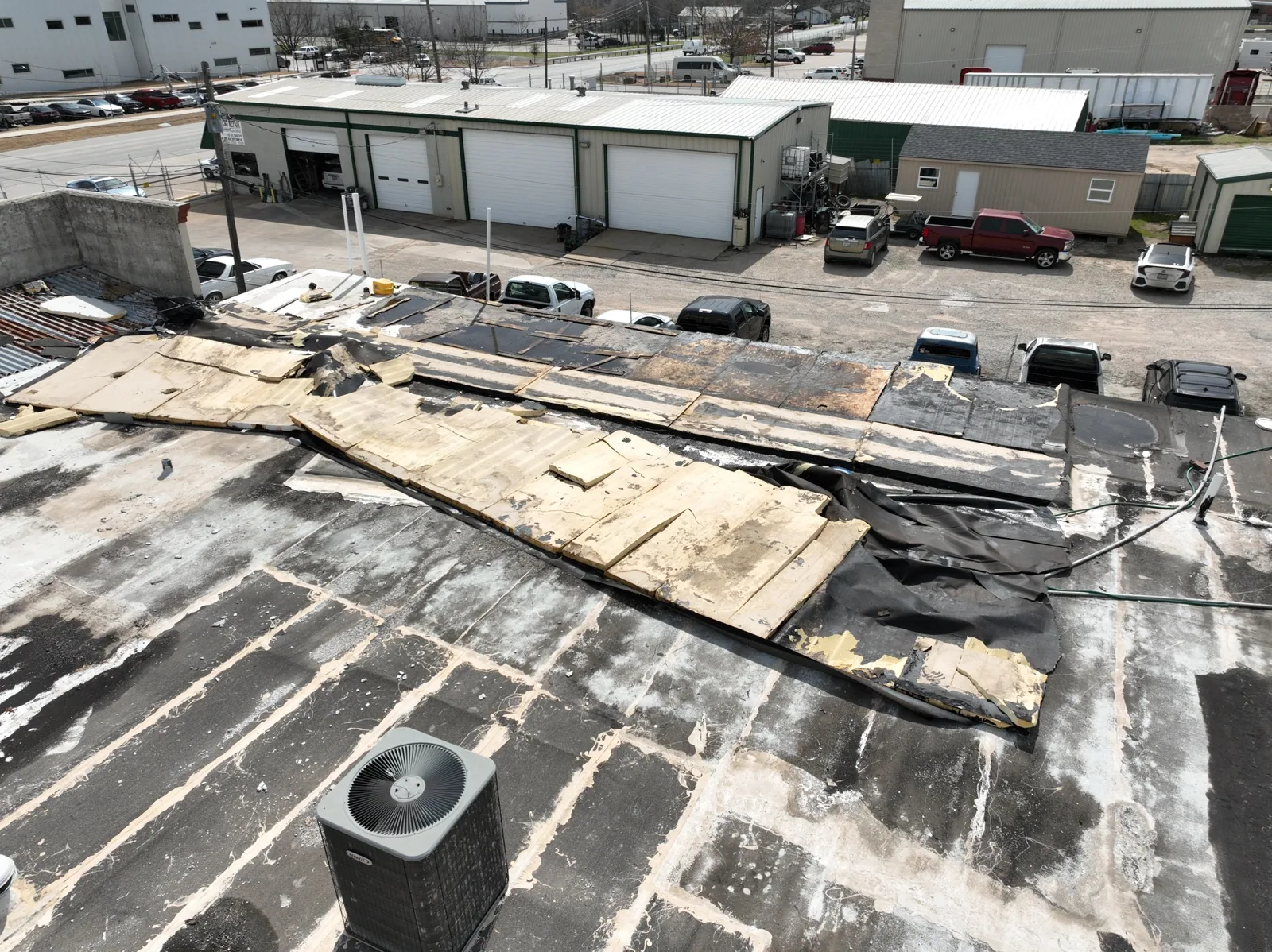
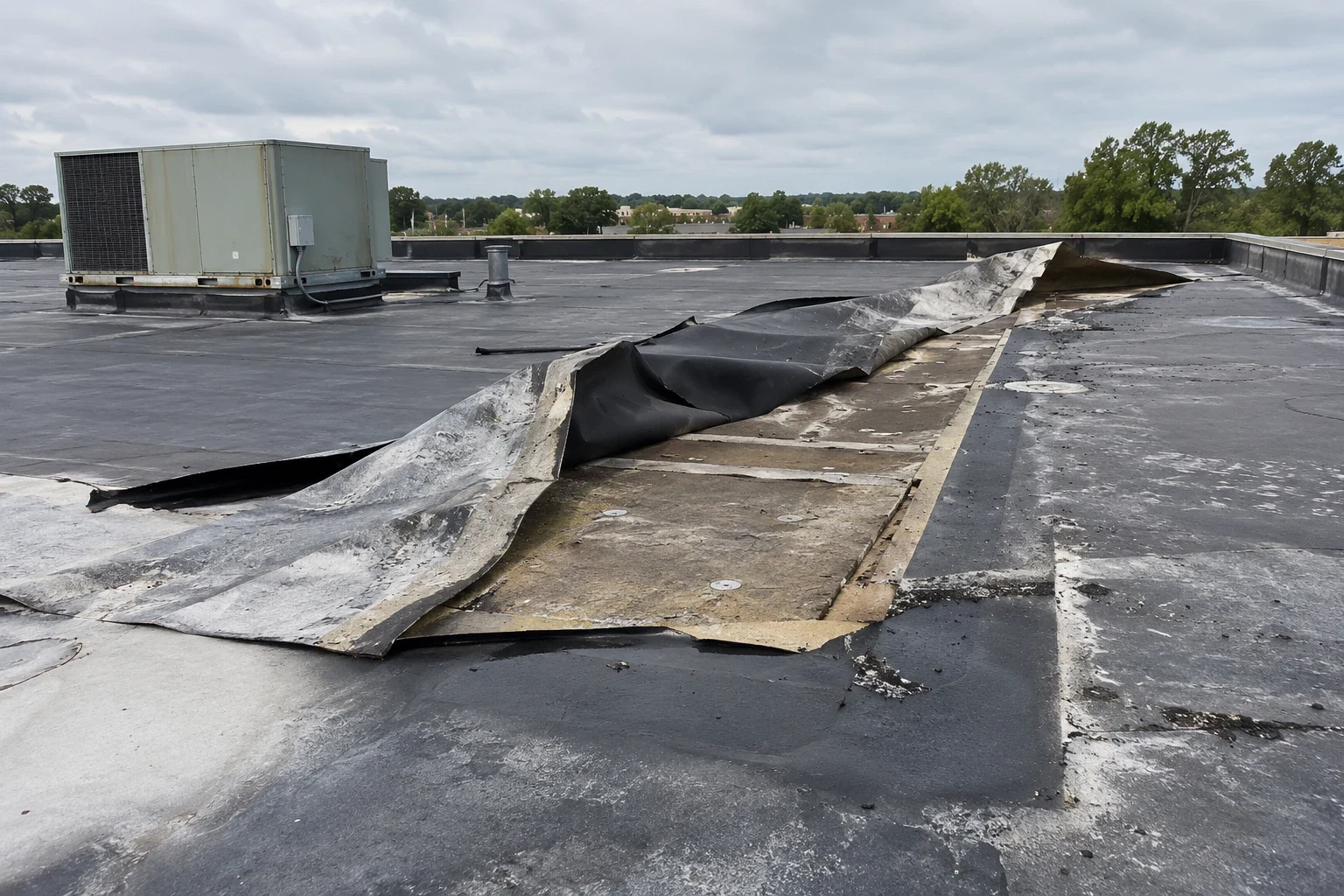
Once released for inspection, we document the roof by zones: field membrane or panels, edges, corners, curbs, penetrations and rooftop equipment. Wind can lift a termination, pull fasteners, crease a panel or break a seal at a transition. We record the direction and extent of visible movement when conditions make that observation possible. Photos identify location and scale so repair proposals can refer to the same areas.
On membrane roofs, look for peeled seams, stretched material, punctures from debris and open transitions around curbs. On metal assemblies, check panel alignment, clips, exposed fasteners, ridge details and perimeter attachment. A TPO roof review can describe welds and membrane details after system type is confirmed. We do not infer attachment or concealed conditions from surface appearance alone.
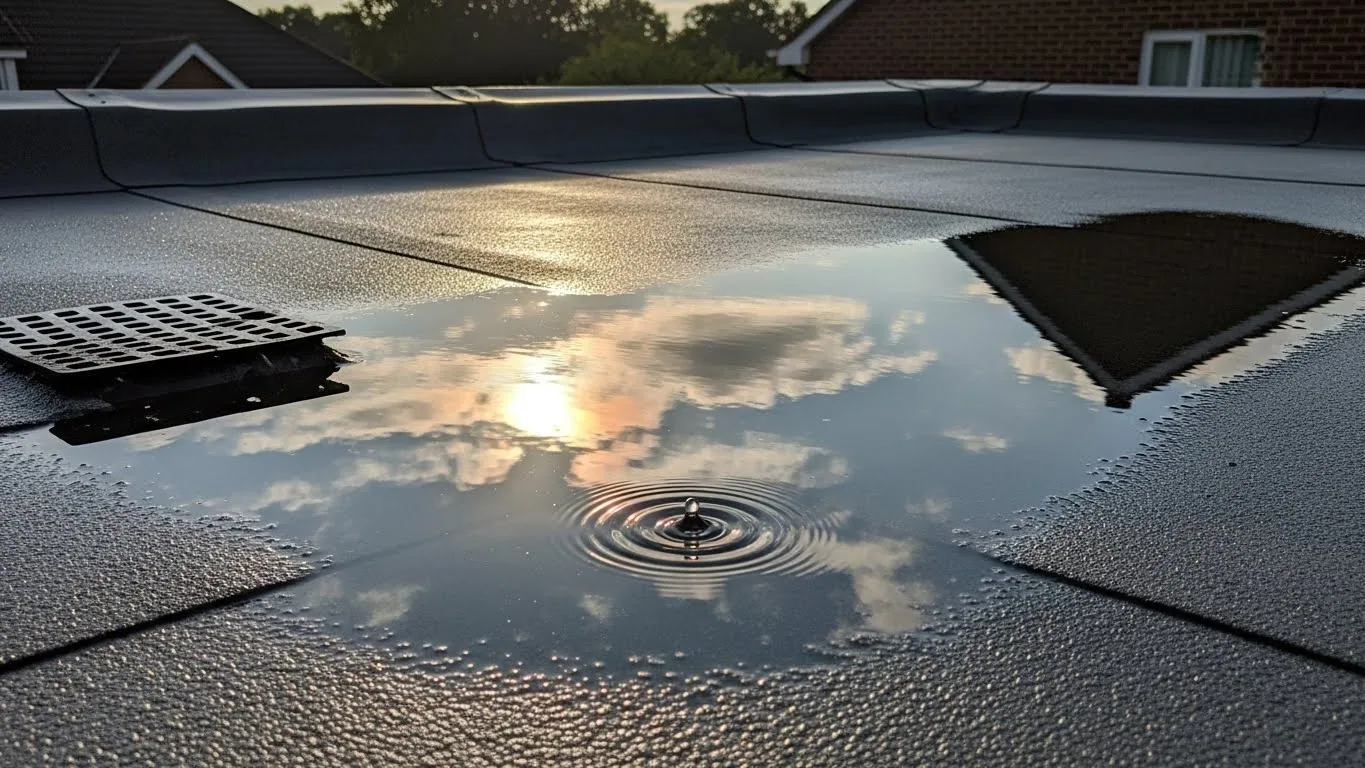
Interior water marks may begin away from the roof opening because water travels along deck flutes, framing or insulation. We compare reported leak points with exterior conditions, drain paths and penetrations. A separate leak investigation can trace active water entry; tornado-related displacement is recorded as its own observation.
Secure openings without hiding evidence
An exposed roof area may need a temporary cover before permanent repair is authorized. The protection should attach to material that can hold it, shed water and remain clear of drains, overflow points, vents and equipment intakes. We document the opening and nearby conditions before covering when access permits. The job record identifies what was protected and which conditions still need investigation.
Roswell's frequent warm-season rainfall makes a secure temporary termination important while decisions are pending. Water can enter at a small lifted edge and travel beyond the visible opening. We note wet insulation, deck staining or interior reports, but do not call concealed material sound until it can be examined. A wind-damage assessment can document a separate opening from another event. For a lifted membrane lap, a seam-failure inspection checks whether the material can accept a repair.
If the roof remains under review, each work zone has a release contact. We keep untouched material intact where requested and separate emergency stabilization from permanent reconstruction. Photos, date and location are logged before temporary work and after it is secured. That record gives the owner a clear reference if the scope changes.
Repair what the inspection can confirm
Small, isolated damage can sometimes be repaired when adjacent material remains attached, clean and compatible. The written scope identifies the location, removal limits, fastening or welding method and water-shedding tie-in. If damage crosses several roof zones or compromises widespread attachment, broader replacement may be the more reliable option. We state the field evidence supporting that recommendation.
Opening the assembly can reveal wet insulation, damaged cover board, loose deck fasteners or a compromised substrate. We photograph each exposed layer and ask the owner to approve added work before expanding the boundary. A roof replacement proposal should state the removal depth, deck allowance, insulation design, perimeter work and temporary dry-in. Any allowance names the unknown and the process for confirming it.
Cost depends on roof height, extent of displaced material, access, debris handling, protection below, system compatibility and concealed repairs. Schedule depends on safe release, material availability, weather and any continuing investigation. Structural, electrical, tree removal and interior restoration work should be scoped by the qualified trades responsible for those conditions.
Coordinate work with the property contact
Commercial repairs may affect parking, entrances, rooftop units and occupied rooms. Before work, the facility contact identifies critical operations and any temporary shutdown window. We agree on crew arrival, material delivery, restricted areas and daily cleanup. A work plan can stage roof zones so only the released area is active while the rest remains protected.
Buildings inside Roswell's 640-acre historic district may face additional review for visible exterior changes. Replacement details, edge profiles or rooftop screening can differ from a concealed membrane patch. The owner should confirm whether design review applies before ordering materials. We can document existing and proposed roof features for that discussion, without representing that approval has been granted.
An occupied-building sequence lists zone boundaries, daily closeout checks and communication points for tenants. It also notes when a drain, entrance or mechanical unit must remain available. The facility contact approves operational changes; the roofing plan records how the crew will honor them.
Keep observations and decisions traceable
The final report names the property, date, inspected zones, access limits, photographs and visible defects. It distinguishes temporary protection from permanent repairs and marks materials that were not opened. If a structural engineer or another specialist reviews the building, their conclusions remain separate from roofing observations. The owner can then match each approved work item to the condition that prompted it.
Roswell's commercial building base includes civic, healthcare, office and light industrial properties connected by local corridors. A roof condition report provides a durable location-based record, especially when multiple buildings or roof sections are involved. Keep plans, prior repair invoices, warranty information and the event timeline with that record.
Request a roof survey for a named Roswell commercial property after a tornado-related event. Share the storm date, current access status, visible opening locations, roof plans and investigation restrictions. We will document accessible conditions, recommend stabilization or repair steps and identify decisions that require another qualified reviewer.
Related Roofing Work
Document tornado-related roof damage
Share the building address, roof plan, access status, event timeline and restricted areas. We will document released roof zones and identify stabilization or repair decisions.
Questions About Commercial Tornado Roof Damage Repair
Can a roofing crew inspect a building immediately after a tornado?
Only after the property contact or incident lead releases access and hazards are addressed. A roof visit does not determine structural safety. We follow the authorized route and stop if loose materials, unstable framing or other hazards make entry unsafe.
Should we remove debris before the inspection?
Do not move material if the area is restricted or under investigation. Once authorized, we can document debris and its location before removal. Fallen trees, electrical hazards and structural debris may require other qualified responders before roofing work begins.
How do you decide between a patch and broader replacement?
We compare the extent of visible damage with the condition of surrounding material, attachment, drainage and exposed layers. The report explains the evidence and any testing needed. Broader replacement is considered when confirmed damage or assembly condition makes localized work unreliable.
Can temporary protection be installed while an investigation continues?
Often, when the owner or incident lead approves the location and method. We document conditions before covering where access allows, keep protected areas identifiable and avoid disturbing zones held for review. The record shows who released each work area.
Commercial Roofing Across Roswell and North Fulton
Roof Repair, Replacement and Maintenance for Every Kind of Commercial Building
From Historic Roswell and Canton Street to the Holcomb Bridge Road corridor, GA 400 and the North Point area, we inspect, repair and replace low-slope and metal roofs on offices, retail centers, medical buildings, schools and warehouses.