
Commercial Roof Membrane Puncture Repair in Roswell, GA
A small puncture beside a rooftop service path can admit water long before the surrounding membrane looks worn. We mark the opening, check for a cut or compression around it and inspect the layers below. Roswell's hot, humid summers and frequent rainfall can move water through a puncture into insulation or along the deck. The repair limit depends on the material around the hole and the substrate beneath it, not the diameter visible from above.
GA 400 and Holcomb Bridge Road serve Roswell's commercial districts, where service access and delivery timing can affect an inspection. Neither corridor identifies a roof assembly or damage condition. A Roswell roof puncture assessment records the actual membrane, affected zone and route used to reach it.
Find the object and the damaged layer
A puncture may come from a dropped fastener, sharp debris, tool contact, a damaged walkway or another impact. We look for the cut, indentation, scuff or displaced cover board that identifies the affected area. The object may be gone by inspection time. We document the evidence without guessing at a cause. Photos include nearby equipment, paths and fixed roof features for later comparison.
Foot traffic can concentrate near hatches, ladders, drains and service equipment. We inspect the travel route for repeated wear, loose walk pads and damage at equipment supports. A puncture near a curb may also involve a flashing corner or seam. A seam review can distinguish a split lap from a hole in the field membrane.
Building use does not tell us whether the roof is TPO, PVC, EPDM, KEE, modified bitumen or another system. We identify the membrane and attachment before selecting a patch. A repair for one polymer or asphalt surface may not bond to another. The inspection record names the material when confirmed and notes any uncertain layer.
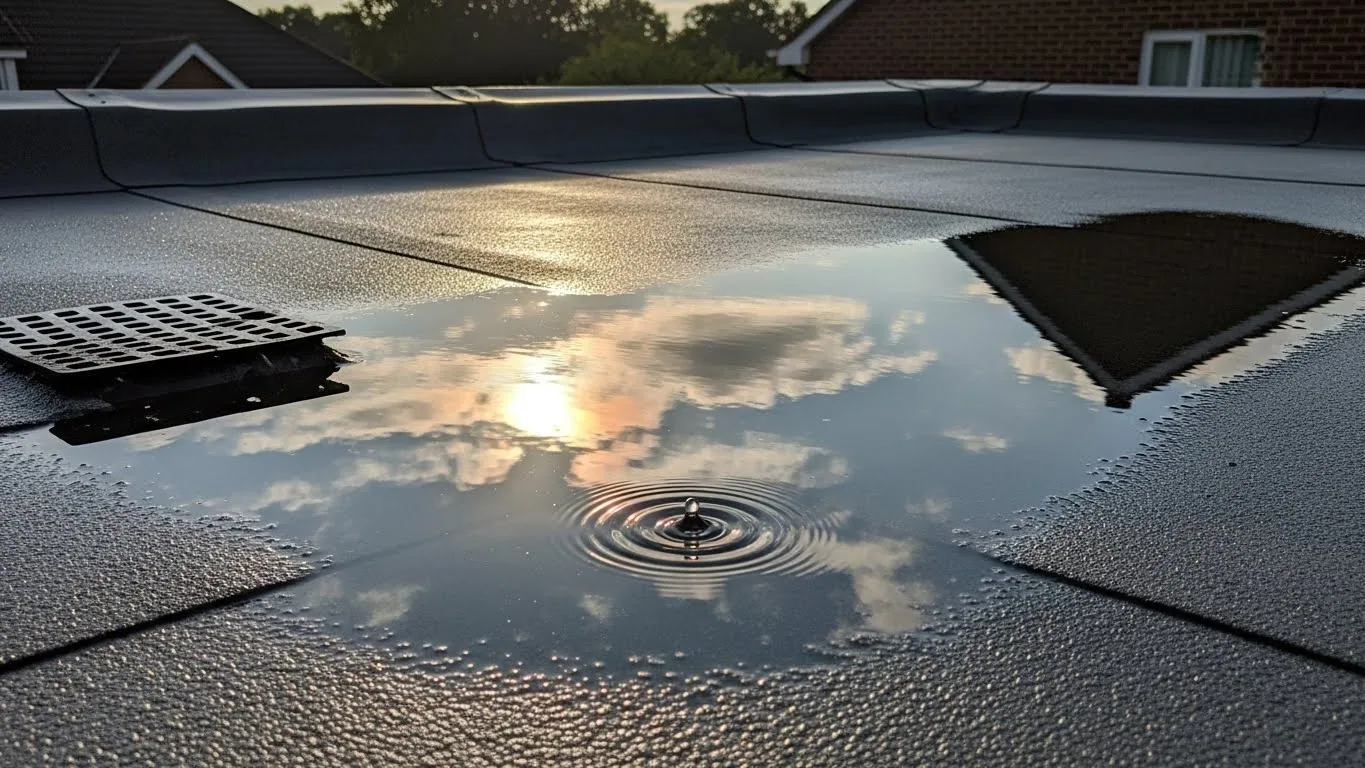
Check whether moisture spread below
Water entering a puncture can spread beneath the sheet and appear indoors away from its entry. We compare the reported room with membrane seams, insulation joints, deck slope and nearby drains. A dry surface does not confirm dry insulation. We inspect the puncture perimeter and use infrared scanning or a test cut when the result can set the removal limit. The report states the test area and what it can confirm.
At a drain or scupper, we check for debris and standing water that could keep wetting the damaged zone. Roswell's warm-season rainfall can expose a weak outlet or low area alongside a puncture. A ponding-water review can map the drainage condition separately. The two findings should not be collapsed into one cause unless the evidence connects them.
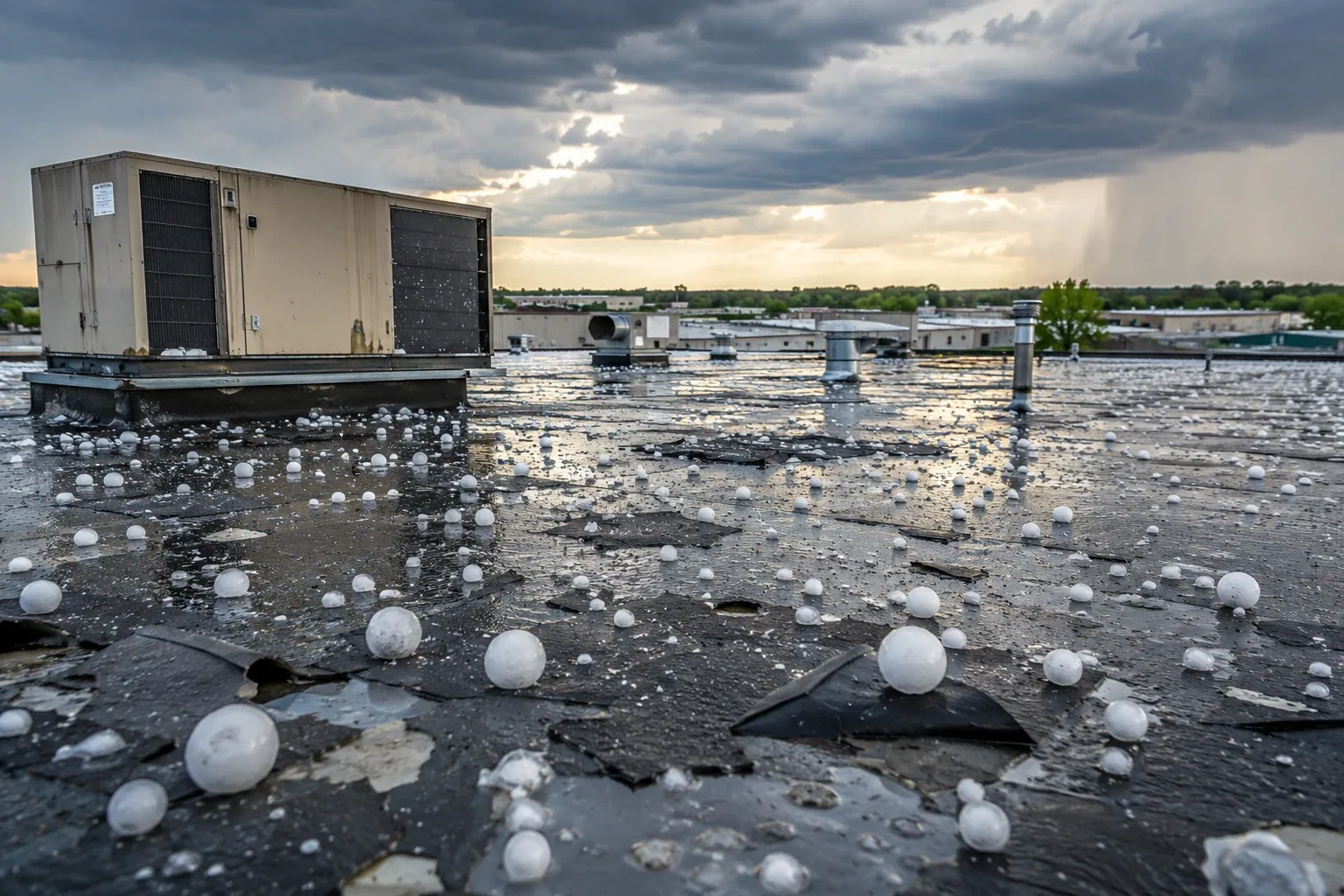
The National Weather Service tracks hail, severe thunderstorms, damaging wind and tornadoes across north and central Georgia. A storm report does not tell us that a roof membrane was punctured. After an event, we inspect accessible roof zones for impact marks, cuts and displaced details. The record separates observed damage from age, wear or conditions that existed earlier.
Patch past the damaged membrane
A patch needs clean, compatible material around the puncture and enough sound substrate to hold the tie-in. We prepare the surface and extend the repair beyond torn or delaminated edges. If insulation is wet or cover board is crushed, the area may need to open to dry, stable material. The proposal identifies confirmed removal and an allowance for any concealed damage not yet visible.
Fasteners or walking pads may need correction so the puncture does not repeat at the same point. We identify access routes and equipment clearances before placing protection. If foot traffic caused wear, a path or protection detail may be included in the scope. A cover board review can show whether the layer below requires repair or replacement.
Cost depends on membrane type, puncture count, patch size, access, testing and insulation or deck work. Schedule depends on dry substrate, weather and material availability. A localized repair scope lists each puncture, repair material and zone, then sets the approval point for hidden conditions. We do not price a roof-wide replacement from one opening alone.
Control traffic near the repair
Repairs can be damaged if roof traffic crosses uncured material or an open area. We identify the hatch, service path and equipment route, then agree on a detour with the facility contact. Tools stay clear of drains. If equipment must remain accessible, the sequence preserves a safe route or calls out the needed shutdown.
Roswell's commercial base includes office, healthcare, civic and light industrial properties. We confirm who can authorize entry, where materials may be staged and whether people below need notice or protection. The report notes unreachable areas and any needed follow-up.
Holcomb Bridge Road is Roswell's only GA 400 interchange. It may inform delivery windows, while the property contact sets roof access and staging.
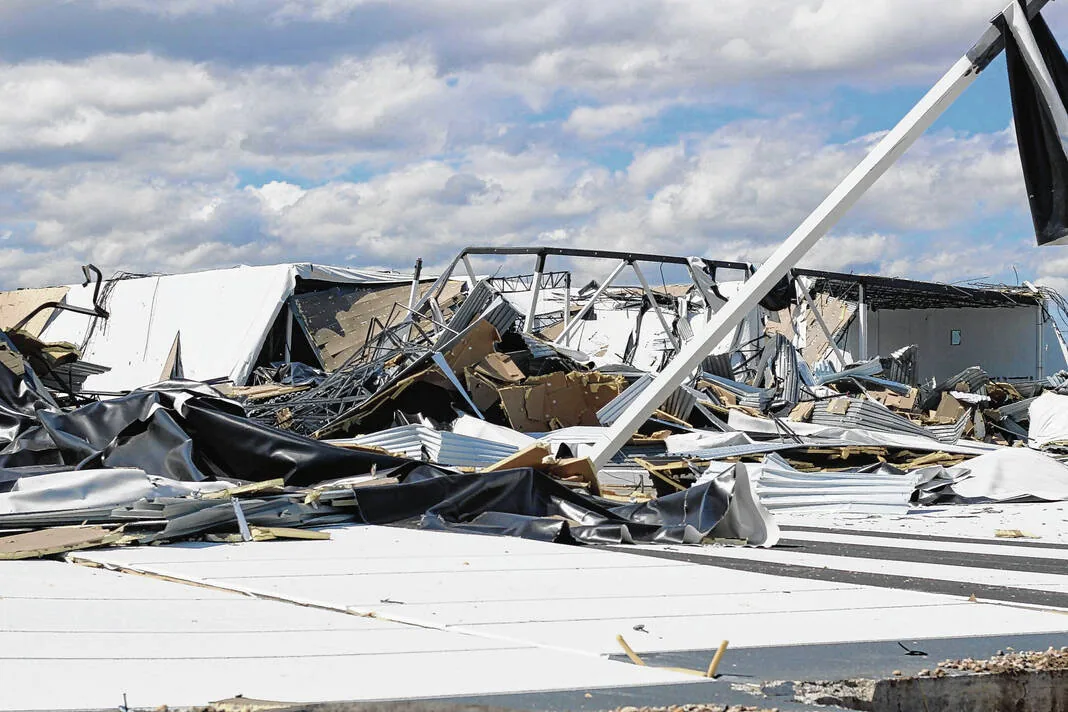
Keep the substrate dry before sealing
Adhesive and welded repairs need suitable surface conditions. We remove moisture and debris, then confirm the membrane can accept the selected method. If rain threatens, temporary cover protects an opened layer and keeps water away from the puncture. Work ends at a secure boundary with drains clear.
Roswell's humid summers can slow drying in insulation or cover board. We verify the layer before closing it. If it needs more time, the crew records the condition and return requirement. Emergency response is available any hour, weekends and holidays, for an active puncture.
After a severe-weather report, we document visible changes and compare prior records if available. North Georgia tracks thunderstorms, hail, damaging wind and tornadoes. Regional conditions do not establish a puncture or its cause. The repair boundary follows damaged material.
Record the patch and the traffic route
Closeout photos show the puncture, prepared surface, finished patch and any repaired cover board. The record identifies the roof system, building, zone, materials, test results and approvals. It notes concealed conditions and the walkway or service route that should be checked on a future visit. This helps facilities staff find the same spot without relying on a ceiling stain.
A hail damage assessment may be needed if a separate event produced multiple observed impacts. Each mark is inspected and recorded on its own evidence. A roof condition report connects the photos to the roof plan and keeps puncture repairs distinct from unrelated maintenance.
Request an inspection for a named building and roof area. Send roof plans, system details, leak reports, access rules, service-path locations, prior repairs and safe photographs. We will identify the puncture, check adjacent layers and document the repair boundary and any approval needed.
Related Roofing Work
Scope a membrane puncture
Name the building and roof zone. Send membrane details, leak history, service-path locations, access rules, previous repairs and safe photos for a documented inspection and repair limit.
Questions About Commercial Roof Membrane Puncture Repair
Can you patch a membrane puncture from the roof surface?
A surface patch may be suitable if the surrounding membrane bonds well and the substrate is sound and dry. We inspect the perimeter, identify the roof system and check for moisture or compression below. If those layers are affected, the repair scope needs to include them rather than cover the opening alone.
Does a small hole always require a test cut?
No. We recommend a test only when it can answer a specific question about concealed moisture or damaged layers. The report states where the cut would go, what it can establish and how the opening will be repaired. If surface evidence already defines a sound boundary, further testing may not change the work.
How do you prevent foot traffic from damaging the patch again?
We identify the service path, hatch and equipment access, then review walkway protection with the facility contact. A damaged pad or repeated route may require correction alongside the membrane patch. The closeout record shows the repair location and access route that should be checked during maintenance.
Should a puncture lead to a full roof replacement?
One puncture is not enough to make that decision. We check the nearby membrane, seams, attachment, insulation and deck. A localized repair may be appropriate when adjacent material remains sound. Broader work is compared only when inspection evidence shows that the assembly has wider problems.
Commercial Roofing Across Roswell and North Fulton
Roof Repair, Replacement and Maintenance for Every Kind of Commercial Building
From Historic Roswell and Canton Street to the Holcomb Bridge Road corridor, GA 400 and the North Point area, we inspect, repair and replace low-slope and metal roofs on offices, retail centers, medical buildings, schools and warehouses.