
Commercial Roofing in Technology Park, Johns Creek, GA
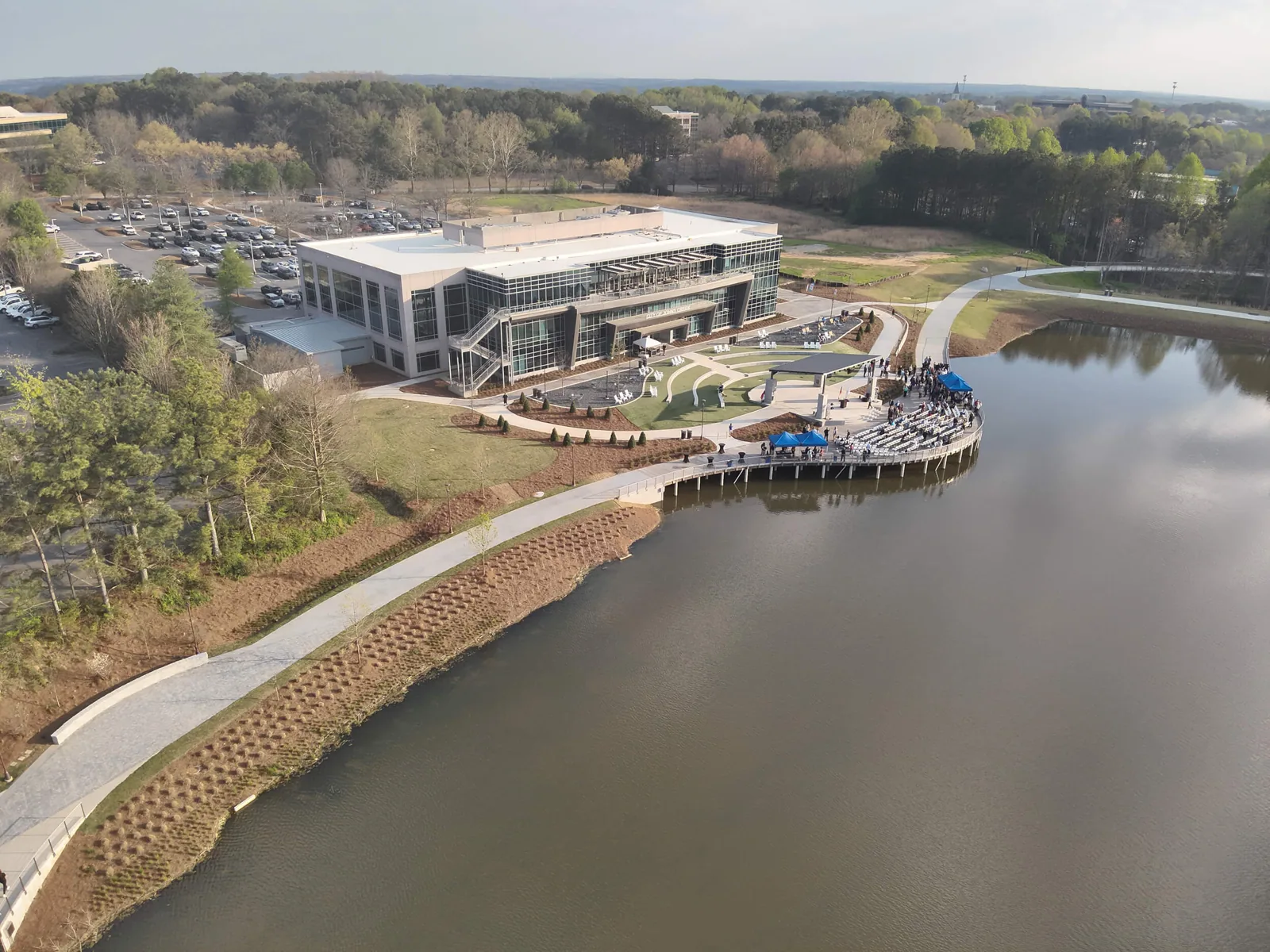
A lifted roof seam beside a rooftop unit can release water into insulation before the ceiling below changes. We inspect the lap, curb, and nearby drain path, then set a repair edge against sound material. Technology Park is a major Johns Creek employment node containing most of the city's office and industrial stock. The core includes office buildings and broad surface parking areas, while city planning is focused on mixed-use redevelopment and a Town Center.
Several office and industrial buildings sit within the district. Each roof needs its own assembly record, access route, and approval contact. For owners with other Johns Creek properties, a Johns Creek roof review can coordinate visits while each building keeps its own system and repair record.
Follow the seam past the equipment curb
A seam near mechanical equipment has several connected details. We inspect weld or lap condition, curb corners, flashing termination, fasteners, and the surface that supports them. A prior equipment change may leave extra patches or a disturbed membrane, but we use field evidence to decide what belongs in scope. If the adjacent sheet has lifted beyond the curb, the opening may need to extend until a stable tie-in is found.
Office and industrial buildings make up most of Johns Creek's Technology Park stock. Those use categories do not reveal whether a specific roof is TPO, metal, EPDM, or another assembly. We review roof plans, repair records, and visible surfaces before selecting a material. If the system remains uncertain, a small opening can confirm the layers and restoration approach before permanent work begins.
Atlanta's hot, humid summer conditions and recurring rainfall can work on laps and curb flashings. The regional climate normal for July is a high near 90 degrees Fahrenheit. We inspect for loose edges, weak welds, softened insulation, and water retention after a storm. A seasonal average is planning context, not a diagnosis of a roof at any one address.
Keep roof phases aligned with redevelopment
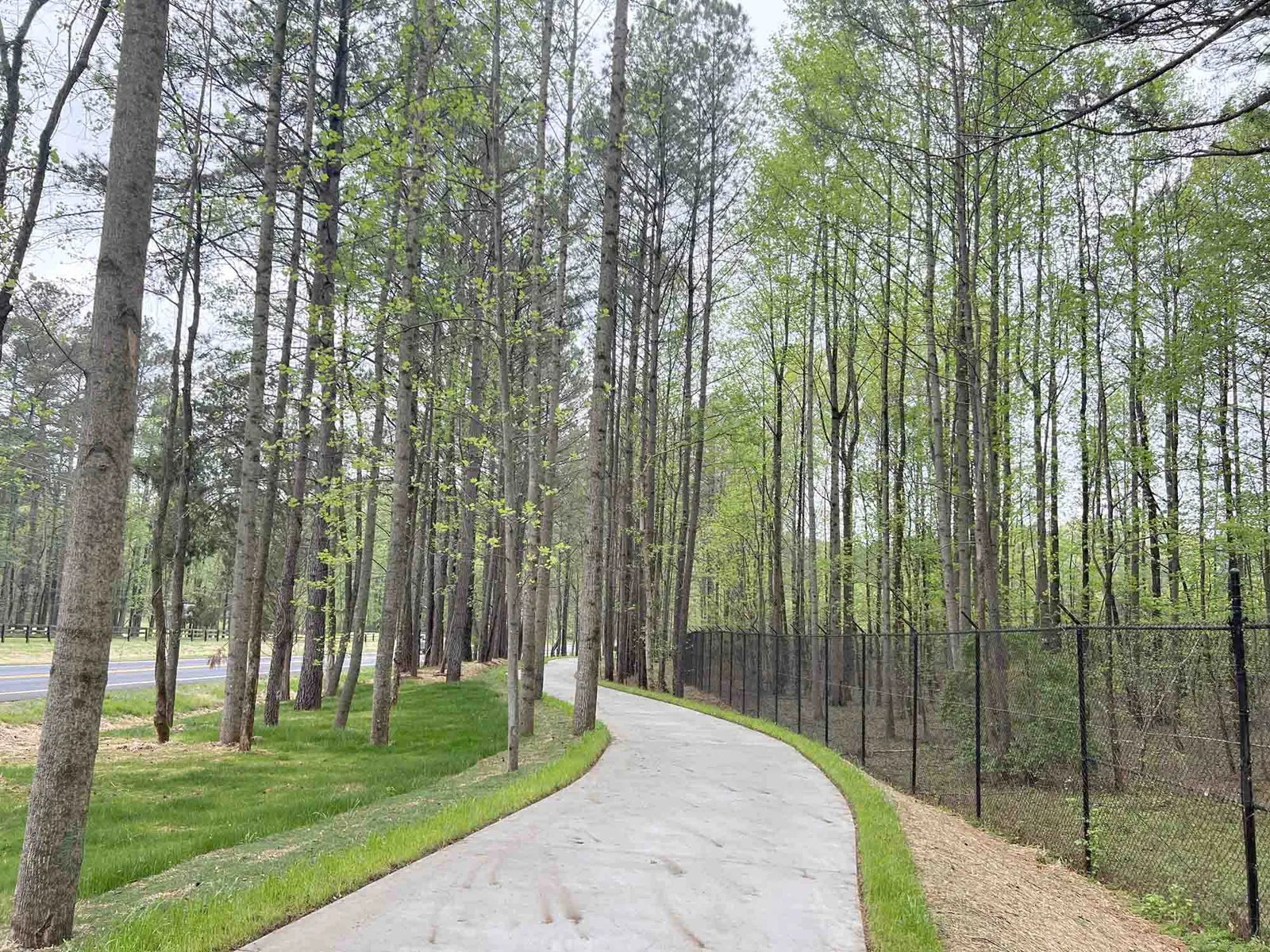
Johns Creek's Technology Park planning focuses on mixed-use redevelopment and a Town Center. A multi-building park can have property work at different stages, so roof phasing should be tied to the specific asset and its project schedule. We identify which roof zones need attention now, which can be coordinated with planned work, and which need more evidence before approval.
Large surface parking areas shape the park's site context, but material staging still depends on the owner's access rules and any work in progress. We confirm delivery points, lift areas, fire lanes, visitor routes, and the path from staging to roof entry. If redevelopment changes those conditions, the property manager can supply the current plan. A North Fulton portfolio review can compare dates across neighboring cities without merging their roof records.
The district's target business mix includes health, wellness, education, technology, and innovation. That list describes a broad employment focus, not the operations of each building. We ask the local contact about equipment, work hours, sensitive rooms below, and required shutdowns. A phased occupied-roof plan can set daily work limits and protection steps where operations continue underneath.
Select materials after identifying the roof
Repair material follows the existing assembly. Heat-welded sheet membranes need a clean, prepared surface. Rubber, asphalt-based, coated, and metal systems require different lap and flashing details. We inspect nearby patches for compatibility and check whether the membrane remains flexible and attached. A repair that bridges over a loose seam may simply move the opening to its edge.
If moisture reaches insulation or deck, we mark where it appears and what must be removed to reach sound substrate. The proposal distinguishes visible work from an allowance for concealed damage. We restore any test opening and photograph the layers before covering them. A seam and curb repair scope should name each building and roof zone, with separate quantities and access assumptions.
When defects repeat across several roofs or zones, compare repair with recovery or replacement. We check deck support, drainage, roof height, existing layers, equipment curbs, and planned alterations. A roof plan for one building should not be copied onto another without inspection. A replacement comparison can identify removal, new insulation, curb tie-ins, and temporary weather control by asset.
Set a dry-in point for each work area
Humid air and warm-season showers can interrupt surface preparation or installation. We define a daily stopping point that leaves no uncertain opening, then note how temporary protection will be secured if weather changes. If a phase ends before permanent work, the owner receives a record of the protected zone and conditions needed before returning.
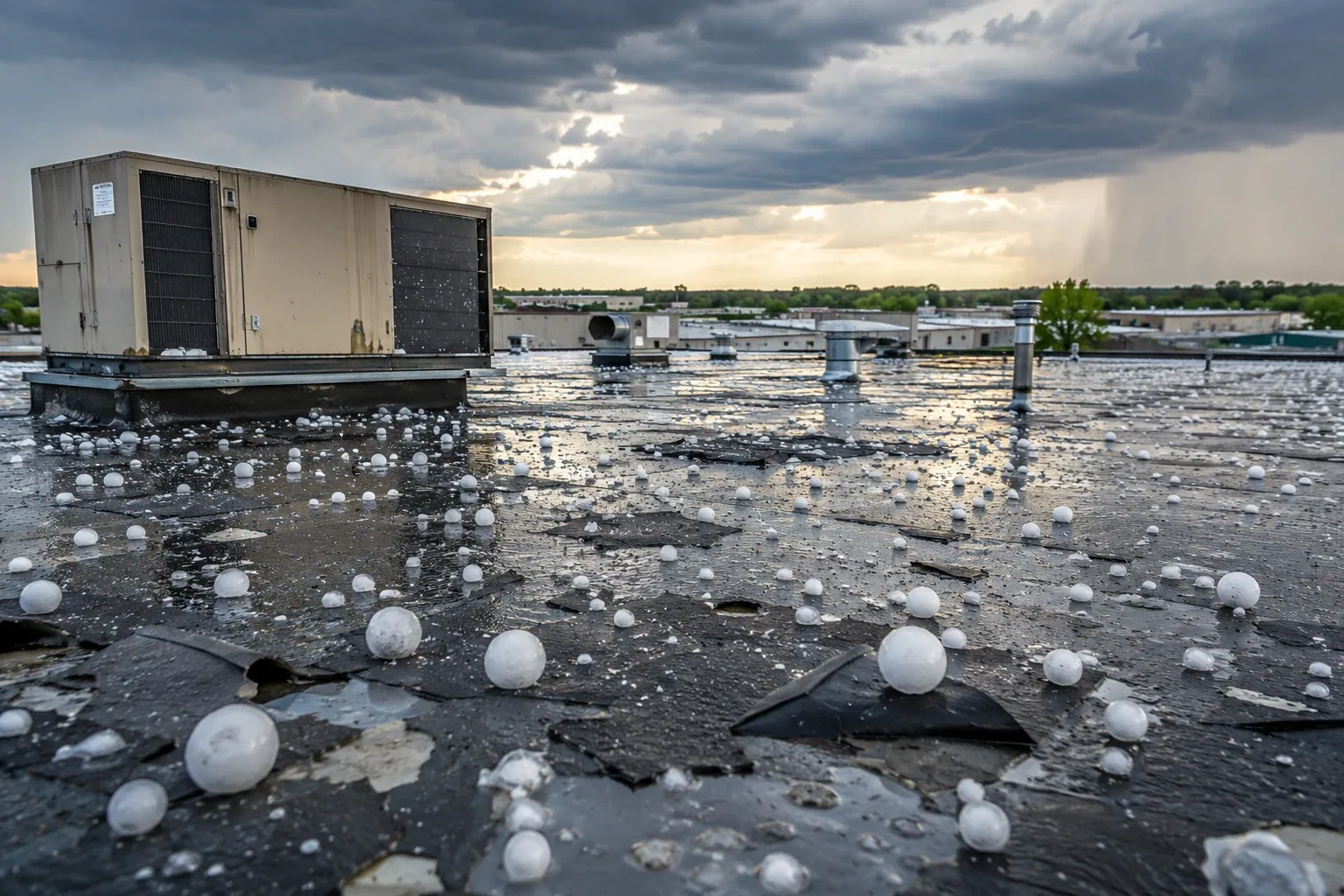
North and central Georgia can see damaging wind, hail, and tornadoes. A storm report does not show whether a given property was affected. When a manager reports a concern, we inspect the named roof zones for punctures, displaced metal, open seams, or no visible change. A hail impact inspection can document physical evidence separately from routine deterioration.
Cost and timing reflect roof access, system type, curb count, material handling, number of work zones, wet insulation, and coordination with redevelopment. Parking area availability does not automatically establish a place for lifts or deliveries; the site contact approves that setup. We state schedule assumptions and concealed-condition allowances before mobilizing. For active water entry, leak tracing and repair can address the immediate opening while the park's longer project sequence is considered.
Maintain a separate history for each building
Closeout documentation records the building, roof zone, repair material, tie-in length, and any concealed layers exposed. Photos show the repaired seam beside its curb and surrounding membrane. Any area left outside the approved work stays on the open-item list. This makes it possible to compare later changes without carrying one building's result across the park.
As redevelopment planning advances, access routes and project boundaries may change. Keep current plans, roof drawings, equipment records, and staging notes in the property's file. A dated condition report can give the next inspector the last observed state and any follow-up trigger.
Request an inspection for a named Technology Park building or group of properties. Send roof drawings, repair records, mechanical schedules, access contacts, and redevelopment timing. We will inspect the named zones, identify confirmed repairs, and compare broader renewal options without treating the employment district as one roof.
Related Roofing Work
Assess a Technology Park roof zone
Send the property and roof plans, equipment list, prior repairs, access rules, and redevelopment schedule. We will record findings by building and identify confirmed work separately from allowances.
Questions About Technology Park, Johns Creek
Does Technology Park's office and industrial mix establish roof types?
No. Those facts describe the district's building stock, not the membrane on a particular building. We review records and inspect visible details, then propose a test opening if concealed layers affect the repair choice. Material selection follows the confirmed assembly and substrate condition.
Can roofing be scheduled alongside mixed-use redevelopment?
It can be coordinated when the owner confirms construction phases, staging, and roof access. We identify tie-ins to planned equipment or other work and set a daily dry-in point. A roof scope remains specific to the building and the condition observed there.
How should a manager compare several Technology Park roofs?
Use separate building and zone records with dated photos, system details, access restrictions, and open items. We can summarize priority across the group, but each recommendation stays tied to its own evidence. That avoids applying one building's repair or replacement decision to the rest of the park.
What changes the repair limit around a rooftop unit?
Loose flashing, a moving curb, wet insulation, or a lifted seam can extend removal beyond the visible opening. We inspect the curb and adjacent membrane, then identify the material needed for a sound tie-in. Concealed layers are photographed and priced for approval before the scope expands.
Commercial Roofing Across Roswell and North Fulton
Roof Repair, Replacement and Maintenance for Every Kind of Commercial Building
From Historic Roswell and Canton Street to the Holcomb Bridge Road corridor, GA 400 and the North Point area, we inspect, repair and replace low-slope and metal roofs on offices, retail centers, medical buildings, schools and warehouses.