Commercial Roofing Support for General Contractors in Roswell, GA
An open roof tie-in can stop a schedule even when the rest of the building is ready. We identify the membrane, substrate, termination and adjoining work before setting the boundary. Roswell's warm-season rain can interrupt exposed assemblies, so a roofing scope needs a dry-in plan and a clear return condition. The general contractor needs to know what is included, what is concealed and who approves a change.
We coordinate commercial repairs, replacements, recoveries and roof details with the project team. The roof scope can sit beside mechanical, electrical, façade or tenant work, but each trade's boundary needs to remain clear. We document existing conditions, installation sequence, protection and closeout by roof zone. That gives the superintendent a field reference and keeps the roof tie-in connected to the current drawings and approved work.
Resolve roof conditions before mobilization
Review roof plans, specifications, prior repairs, equipment schedules, penetrations and known leaks before pricing. We compare those records with a field inspection and identify missing details that could change installation. A curb dimension, substrate condition or existing membrane can affect the tie-in. If a test cut is needed, it should be scoped before the bid becomes a fixed commitment rather than discovered after demolition starts.
Roswell's commercial stock spans offices, healthcare, retail, civic buildings, schools and light industrial properties along GA 400 and Holcomb Bridge Road. Nearby Technology Park Johns Creek contains office buildings and large parking areas within an employment district planned for mixed-use evolution. Such surroundings can affect staging and active-occupancy coordination, but do not establish the roof assembly at the project site. We verify actual building conditions before finalizing roof details.

Keep submittals tied to roof details
Product data and shop details should match the roof assembly and the drawn termination. We review membrane, insulation, cover board, fasteners, edge metal and flashing details for the work being proposed. Substitutions can affect compatibility, sequencing and interfaces with equipment or wall work. The submittal record should identify the detail being replaced and the approval before material reaches the roof.
For production sites, we coordinate manufacturing roof work around process restrictions and approved installation windows. For insurer-directed restoration, the commercial restoration record keeps observed conditions separate from cause assumptions. These are different approval paths, but both benefit from dated photos, defined roof zones and a closeout package that follows the approved scope.
Include the roof manufacturer's published installation requirements in the submittal review, then confirm field conditions before the crew closes an assembly. A detail can be technically correct on paper and still conflict with existing deck, parapet height or equipment placement. Resolve those interfaces while they remain visible and record the accepted revision in the closeout set.
Draw a clear trade boundary
A roofing scope should name membrane removal, substrate preparation, insulation, cover board, flashing, edge metal, penetrations and temporary protection where applicable. We identify what terminates at a curb, wall or parapet and how the new work ties into existing material. Exclusions should be visible. If another trade supplies curbs or equipment supports, dimensions and readiness dates need coordination before the roof opening is exposed.
For replacement or recover work, the existing assembly and moisture condition influence what can remain. We mark confirmed areas and state where concealed deck or insulation may change the quantity. A replacement scope can include phased tear-off and dry-in sequencing. A recover assessment determines whether the existing roof can remain under the proposed assembly after inspection and any needed testing.
Sequence the roof with adjacent trades
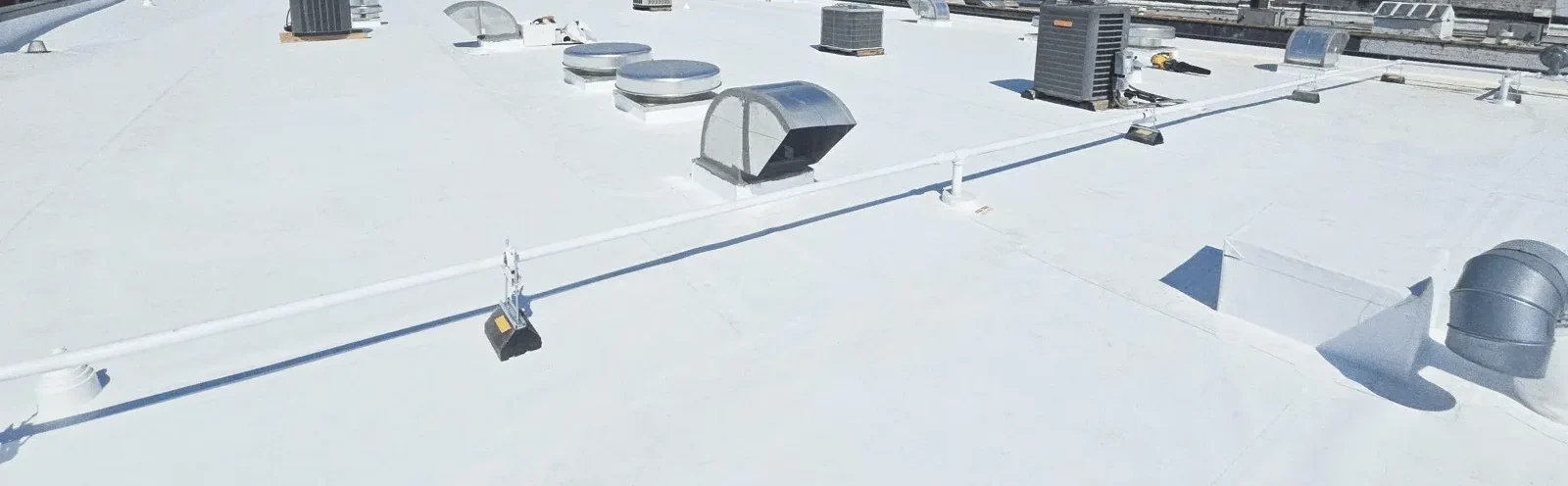
Mechanical curbs, conduit supports, lightning protection, parapet coping and access ladders can affect the roof sequence. We coordinate when penetrations will be installed, who provides blocking and how weather protection will be maintained. The scope identifies the condition required before flashing begins. If equipment or curbs shift after membrane work, the affected transition and responsibility for correction should be resolved before closeout.
Occupied buildings require safe separation below roof work and reliable access for occupants. We coordinate staging, hoisting, debris paths, alarms, escorts and restricted hours with the superintendent and facility contact. For work above clinics, schools or active offices, the plan may phase the roof by zone. An occupied-building reroof sequence can define daily boundaries, protection and inspections before crews move to the next area.
Protect exposed work
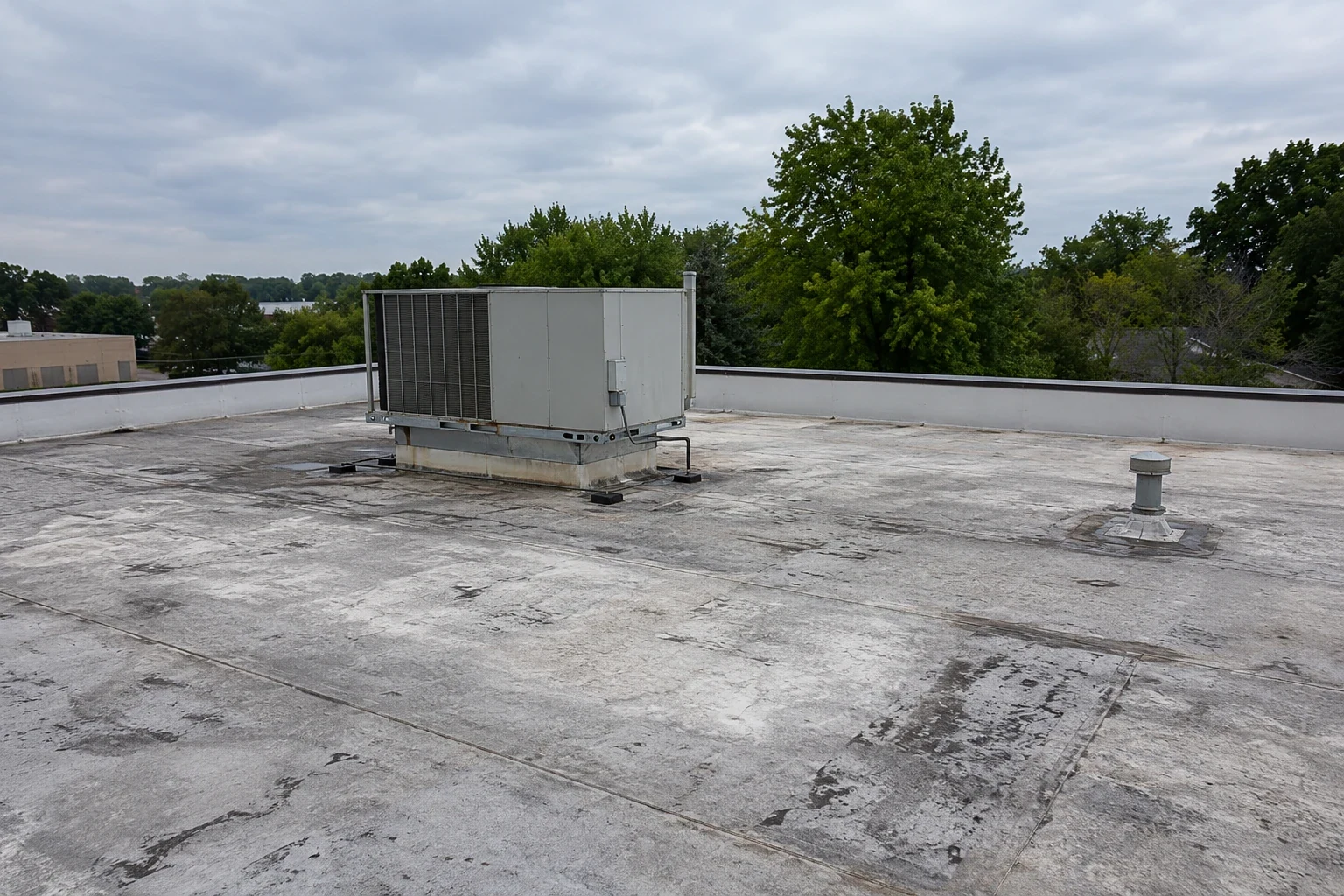
Roswell projects can face abrupt schedule changes when severe weather brings damaging gusts, hail or tornado activity across the region. For construction, the practical issue is the roof condition left at the end of each shift. We plan tear-off limits, temporary dry-in, material securement and forecast checks with the superintendent. The work area should not extend farther than the crew can protect before weather arrives.
For permit planning, the state currently applies the 2024 IBC with Georgia amendments and the 2015 IECC with its Georgia supplements. Roswell's Building Division handles local permit administration. The project team should confirm applicable submittals and fastening requirements for the specific assembly before procurement. We provide roof assembly details and field documentation needed for coordination. The design team and contractor confirm applicable approvals, fastening criteria and submittals for the specific project.
Resolve changes with evidence
When demolition reveals wet insulation, an unsound deck or an unexpected prior repair, we photograph the condition, identify the affected quantity and submit a defined change for approval. The crew continues only within authorized limits. A record ties the change to the roof plan, relevant detail and schedule effect. That gives the project team an auditable basis for cost and sequence decisions.
Closeout includes material information, completed roof zones, tie-in photographs, inspection notes and remaining items. We identify what was inaccessible and any future work that was excluded. Share drawings, specification sections, schedule, site logistics plan, equipment submittals and change-control process before mobilization. Request a preconstruction roof review or scoped repair package for the Roswell project, then include Technology Park Johns Creek or the Holcomb Bridge corridor only when those are actual project areas.
Related Roofing Work
Coordinate a commercial roof scope
Send roof plans, specifications, schedule, equipment submittals, logistics plan and change-control process. We will identify roof boundaries, trade interfaces and weather protection needs.
Questions About Commercial Roofing Support for General Contractors
Can you review a roof scope before the general contractor bids?
We can inspect the existing roof, compare available records with field conditions and identify missing details that affect work boundaries. A review can distinguish known quantities from concealed conditions and flag trade interfaces. Final design, contract terms and bid rules remain with the project team and owner.
How should a roofing change order be documented?
Identify the discovered condition, location, photographs, added quantity, proposed work and schedule effect. We state why the original scope did not include it and what approval is required. That record gives the superintendent and owner a defined decision instead of an open-ended field allowance.
Who flashes a curb installed by another trade?
The contract documents should assign curb supply, placement and roofing tie-in clearly. We verify curb dimensions, substrate support and readiness before flashing. If the details or responsibilities conflict, the project team should resolve them before the opening is exposed or the new roof is tied in.
How do you manage roof work during rainy weather?
We limit tear-off to an area that can be protected, secure materials and define the temporary dry-in method before work begins. A weather hold may change the sequence. The superintendent receives the affected zone and return condition so adjacent trades do not cover or disturb an incomplete tie-in.
What belongs in the roofing closeout package?
Include completed zones, material information, tie-in photographs, approved changes, inspection records and remaining work. Note inaccessible areas and any condition excluded from the contract. Keep the records connected to the final roof plan and closeout date for later maintenance and warranty review.
Commercial Roofing Across Roswell and North Fulton
Roof Repair, Replacement and Maintenance for Every Kind of Commercial Building
From Historic Roswell and Canton Street to the Holcomb Bridge Road corridor, GA 400 and the North Point area, we inspect, repair and replace low-slope and metal roofs on offices, retail centers, medical buildings, schools and warehouses.