Commercial Roofing in GA 400 and Holcomb Bridge Activity Area, Roswell, GA
A loose curb flashing can funnel water toward a seam that still appears closed. We check the curb base, adjacent lap, and path to a drain before setting the repair boundary. Roswell has one GA 400 interchange, at Holcomb Bridge Road. The junction serves as a primary east-west gateway and is included in express-lane related planning, while Big Creek Parkway extensions are intended to improve nearby connections.
The activity area is a broad transportation context, not a single property address. Each roof assessment still depends on its own membrane, access, and operations. We confirm where the crew can stage and how to reach each zone. Along the Holcomb Bridge Road corridor, we confirm access and roof details property by property.
Start at the curb and work outward
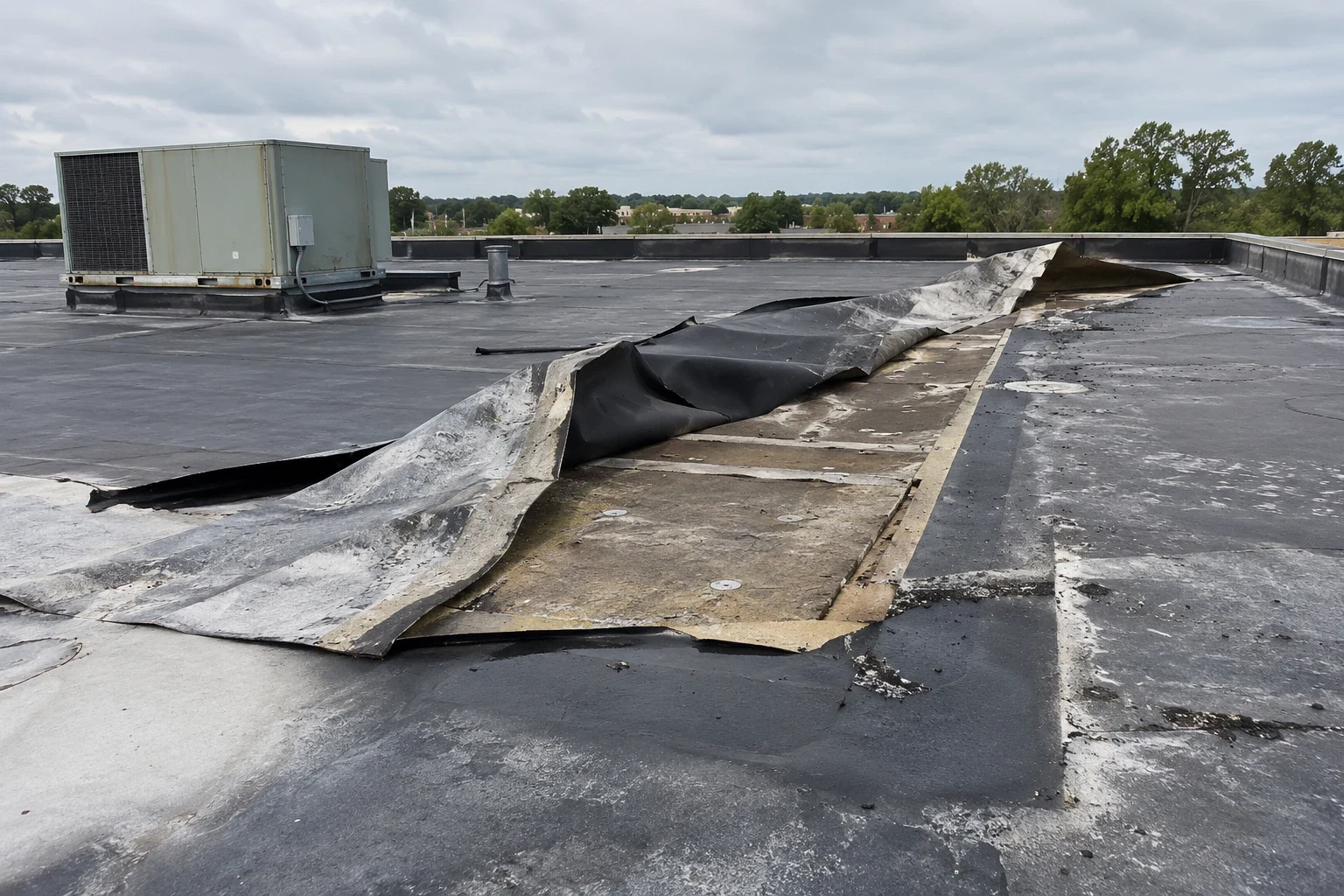
At a curb, we inspect vertical flashing, corners, fasteners, sealant lines, and the membrane at the base. Then we follow adjoining seams toward the nearest drain or wall. A failure can sit under the flashing while the field membrane remains intact. We note loosened attachment, cracked material, prior patches, and any moisture clues. The repair scope identifies the detail that failed and the surrounding material needed for a stable tie-in.
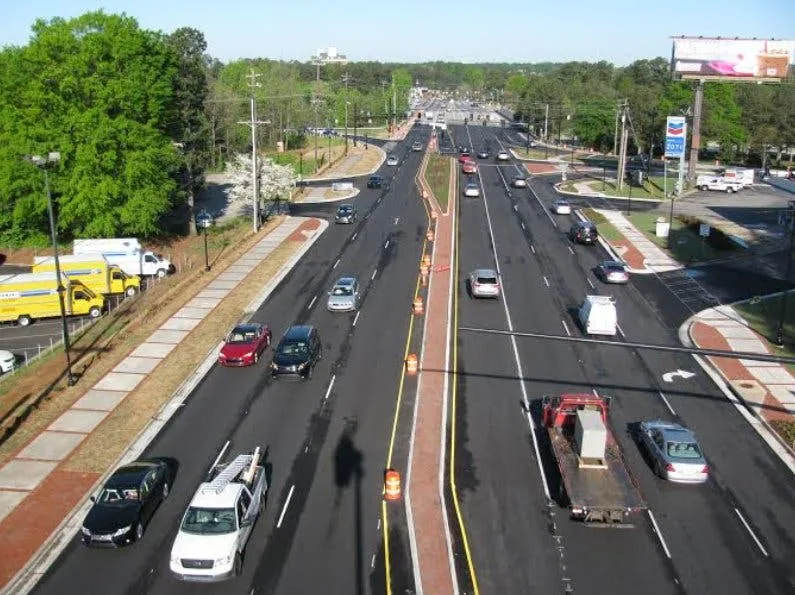
Roswell's only GA 400 interchange is at Holcomb Bridge Road, making the area a key east-west connection. The transportation fact helps plan a visit but does not identify access at an individual building. We confirm loading rules, lift placement, roof hatch access, and any work-hour limits with the property representative. A East Roswell roofing visit can address related east-side access separately.
Atlanta's climate normals show warm, humid summers, frequent rainfall, and a July normal high near 90 degrees Fahrenheit. Repeated heat and wetting can stress curb flashing and laps. We inspect surface adhesion and trapped moisture rather than assuming the material has failed because of seasonal conditions. Photographs connect the visible detail to the inspection decision.
Keep planned roadway work in the schedule
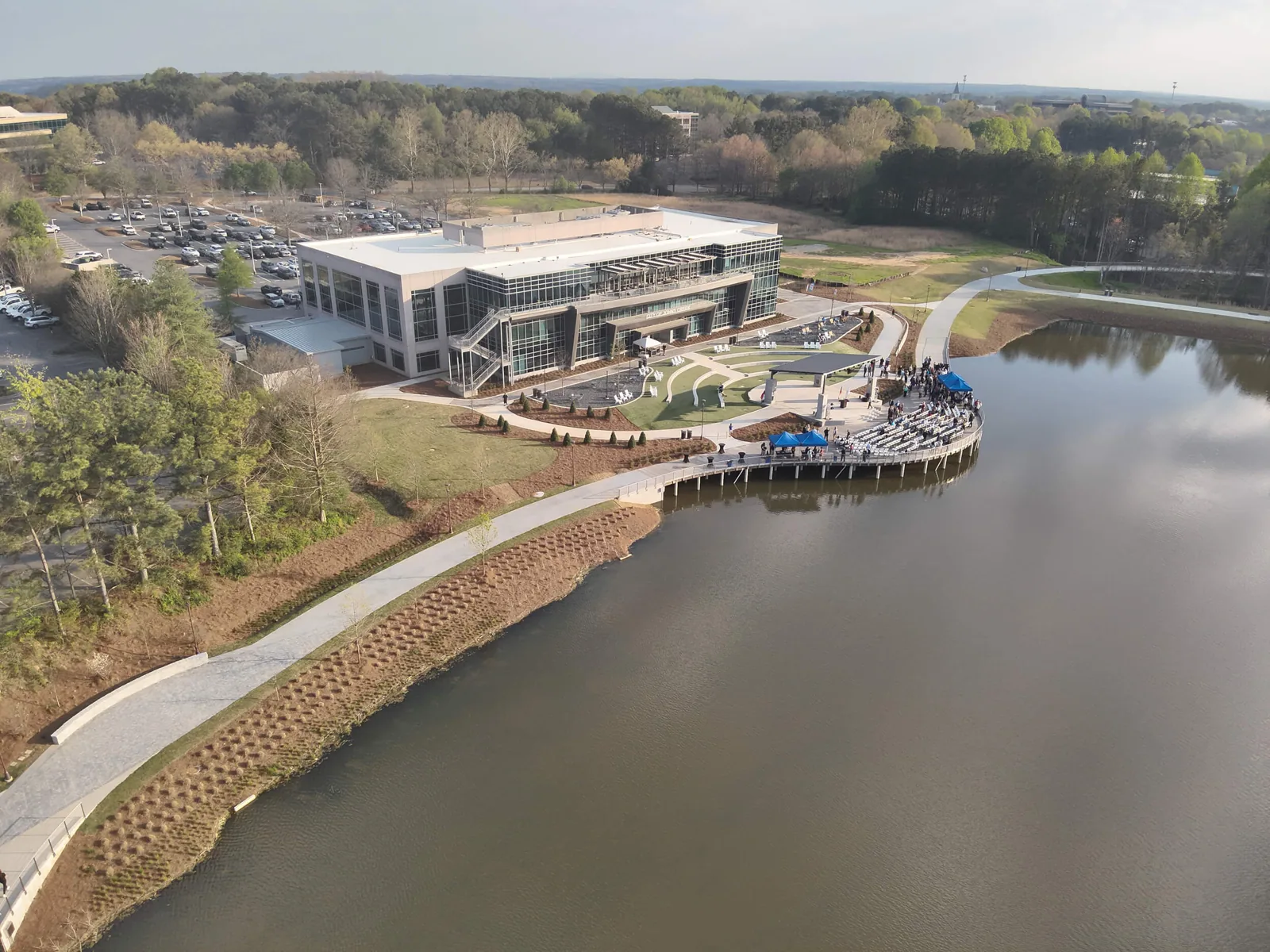
The Holcomb Bridge interchange is a focus of planned express-lane related improvements. Big Creek Parkway extensions are intended to improve connections around the same GA 400 area. These projects can matter when owners plan deliveries or share access updates, but the current project calendar must come from the responsible contact. We do not schedule a roof crew against an assumed closure or construction date.
Before mobilizing, we identify the building's own staging area, roof entry, material route, visitor paths, and restricted hours. A lift may require a different setup than pallet delivery. If work occurs near an active public or tenant route, we define barriers and spotter responsibilities. The roof plan should also state how material is protected if work pauses during rain.
For multi-property owners, consistent records can simplify work across the activity area without merging conditions. We use building identifiers, roof zones, photographs, and approval status for each site. A multi-property roofing plan can coordinate inspections and reporting while keeping each location's repair boundary and system history separate.
Choose an assembly-compatible repair
Membrane identification controls the curb detail. TPO and PVC can often be welded after proper preparation. EPDM, modified bitumen, built-up, coated, and metal roofs require other methods. We verify the surface from records or field evidence and inspect any previous repair before choosing material. If the base flashing is loose because the curb itself moves, surface patching alone may not correct the cause.
When moisture extends into insulation, a repair may require opening the assembly and restoring layers to dry, sound material. We document the exposed condition before covering it. If a hidden deck issue or wet area changes the amount of work, the owner receives a separate approval request. A curb repair scope should identify the flashing, adjacent membrane, and exact zone included.
Repeated curb and seam failures can call for a broader comparison. We review deck support, roof height, drainage, existing layers, penetrations, and access. Recovery can work only when those conditions and applicable code requirements support it. Replacement may be more suitable when failures span multiple zones. A commercial roof replacement plan should show how equipment stays protected and how new curbs tie into the roof membrane.
Hold the opening until the detail is ready
Rain can interrupt removal, cleaning, welding, adhesive placement, or flashing work. We set the day’s work area around what can be dried in safely. If a curb is opened, the proposal states how the area will be covered and what surface condition is needed before permanent work resumes. A weather hold may move the schedule but should not leave an unclear temporary repair.
North Georgia storm systems may bring hail, strong wind, and tornado conditions. A regional alert is context, not property evidence. After an owner reports a roof concern, we inspect the named zone for physical impacts and document what is visible. A wind-related roof inspection can separate lifted edge metal or torn flashing from an older maintenance issue.
Timing and cost vary with membrane compatibility, curb count, height, access equipment, staging, preparation, and concealed material. Some properties may need a limited work window because of operations or transportation constraints. We list the assumptions and the approvals needed before work begins. For active water entry, a leak repair visit can address immediate exposure while the permanent system choice is reviewed.
Tie the closeout to a roof-zone map
Final photographs should show the curb corners, membrane termination, neighboring seams, and any equipment interface that affected the scope. We record the material, repair length, opened layers, and any condition left outside the approved allowance. If a test opening was used, its location and restoration belong in the record. That gives the owner evidence of what was done at each roof zone.
Future access may change as express-lane or Big Creek Parkway work progresses. Keep property directions and staging notes current. The roof record should preserve the date, contact, and access method used for each inspection. A planned maintenance review can revisit repaired curbs and seams after rain or mechanical service.
Request a roof assessment for a named building near the GA 400 and Holcomb Bridge activity area. Share site access details, roof plans, curb locations, prior repairs, and any known project timing. We will inspect the assembly, set a repair boundary, and identify the evidence needed for broader renewal decisions.
Related Roofing Work
Assess a roof zone near GA 400
Share the building plan, roof access method, curb locations, prior repair records, and any known roadway timing. We will document the detail and compare the repair with broader options where needed.
Questions About GA 400 and Holcomb Bridge Activity Area
Does planned express-lane work mean a roof site will have restricted access?
Not automatically. Roswell identifies the interchange as a focus of planned express-lane related improvements, but current access conditions must be confirmed for the property. We ask about deliveries, staging, closures, and roof entry before setting the visit sequence.
Why inspect seams around a curb if the flashing is the visible problem?
Water can move from the curb base into a nearby lap, or a seam opening can make the flashing appear responsible. We inspect both details and follow the drain path. The repair plan then shows whether one component failed or whether connected material also needs removal.
Can we repair a curb without shutting down rooftop equipment?
The need for shutdown depends on the equipment, clearance, and repair method. We identify operating limits and service contacts before scheduling. If a unit needs temporary shutdown or protection, the work plan names the coordination step and keeps flashing work clear of active service activity.
What changes the cost of a curb repair?
Curb count, height, membrane type, access equipment, flashing condition, substrate, and whether insulation or deck must be opened all affect scope. We identify confirmed work and list concealed-condition allowances separately. Photos and roof-zone labels show why the repair boundary reaches beyond the visible corner, if it does.
Commercial Roofing Across Roswell and North Fulton
Roof Repair, Replacement and Maintenance for Every Kind of Commercial Building
From Historic Roswell and Canton Street to the Holcomb Bridge Road corridor, GA 400 and the North Point area, we inspect, repair and replace low-slope and metal roofs on offices, retail centers, medical buildings, schools and warehouses.