Commercial Metal Roof Retrofit in Roswell, GA
A rusted exposed-fastener washer leaves a path through the panel. Water can enter at the fastener, travel along a seam, and wet the roof below. We inspect fasteners, panel laps, supports, edges, and interior evidence before considering a retrofit. Roswell's summer rain and humid air test roof joints repeatedly. The existing metal and its attachment must support any new assembly.
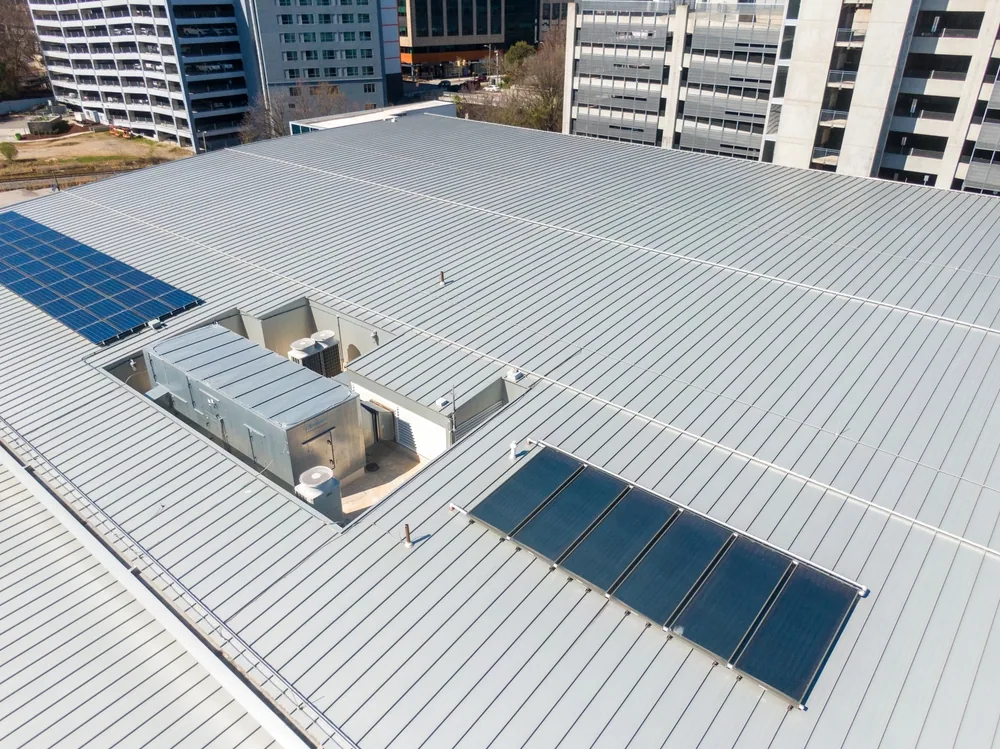
A metal roof retrofit can restore a suitable roof or add a new system over the existing panels. The right path depends on panel condition, attachment, substrate, drainage, and project requirements. We inspect rather than assume the building can carry another layer. A standing-seam metal roof has different joints and movement details than an exposed-fastener assembly. We confirm which system is present before planning work.
Check the panels and support
We inspect exposed fasteners for backed-out screws, failed washers, corrosion, and enlarged holes. Panel side laps and end laps receive a separate review. We look for loose ribs, cracked sealant, dents, rust-through, and movement near eaves or ridges. The roof record identifies which defects are local and which repeat across multiple panels. If a fastener pulls without holding, we inspect the supporting purlin or deck before selecting a replacement method.
Water stains inside help set the route, but they do not locate the metal opening by themselves. We compare the ceiling report with panel slope, lap direction, roof penetrations, and the nearest edge. A test opening may reveal insulation condition and support framing. We photograph each location and describe what was visible before removal. A hands-on roof inspection can map the existing assembly before a retrofit scope is prepared.
North and central Georgia see damaging wind and severe thunderstorms. We check for displaced panels, lifted edges, loose ridge caps, and wind-driven debris marks. The event does not establish damage by itself. A wind damage review can identify confirmed panel and perimeter conditions. We keep that repair boundary separate from broader deterioration or an upgrade decision.
Choose repair, recovery or replacement
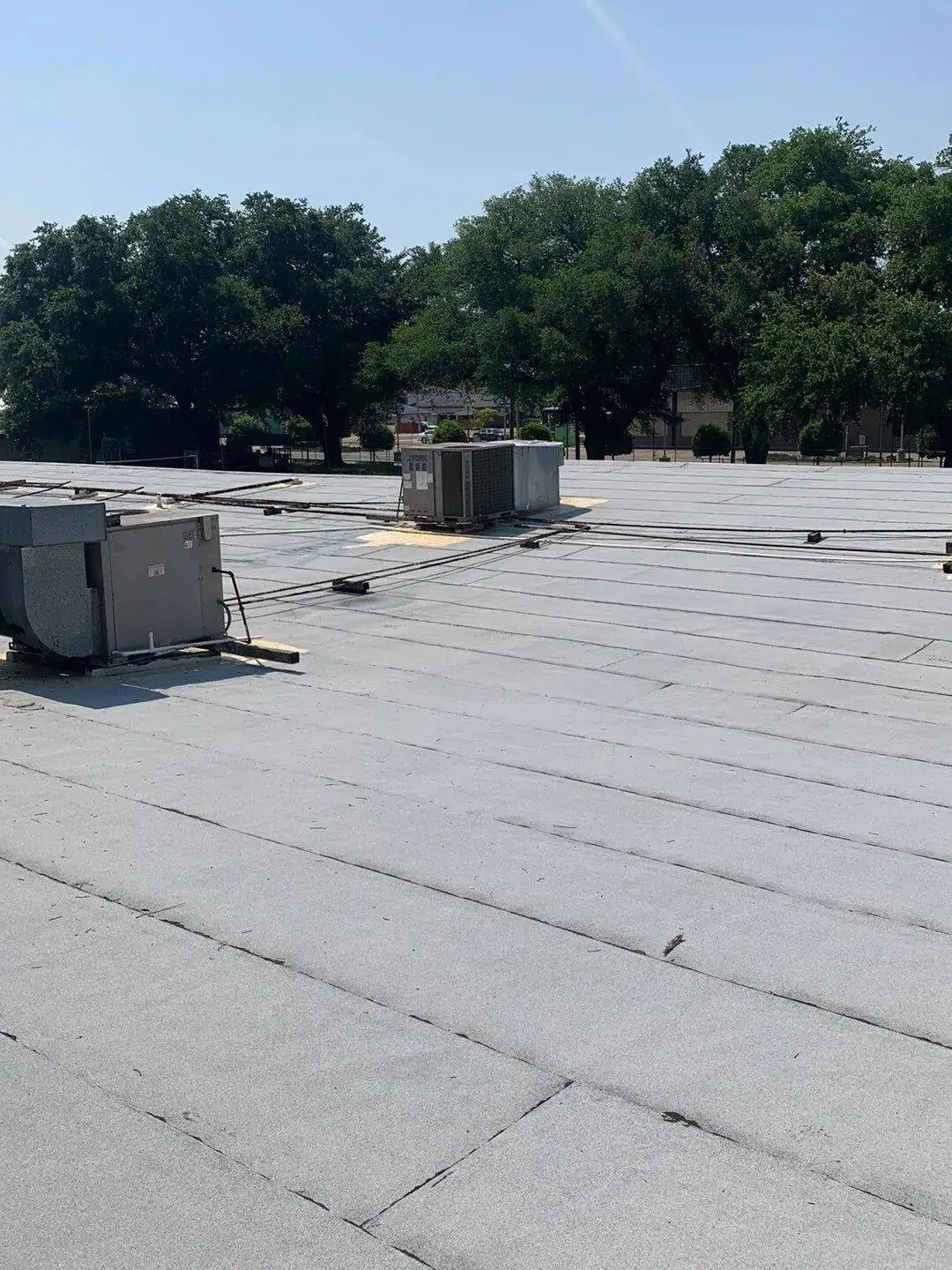
A retrofit begins with whether existing panels and supports can remain. We review attachment, corrosion, panel profile, leaks, deck or purlin condition, and drainage. If the metal is sound and the fastener pattern can support the design, a retrofit assembly may be considered. Widespread corrosion, failed supports, or repeated water entry can require removal. The proposal states which findings support each option.
Over-roof systems change height at curbs, gutters, walls, and parapets. We measure clearances, check water discharge, and plan termination at each edge. New framing or spacer components must follow the selected system design. A low-slope section beside the metal may need a separate transition. A TPO roof assembly cannot share an edge detail by default; we specify the connection based on both systems.
If the existing roof needs repair before a retrofit, we identify fastener replacements, panel work, and penetrations as separate tasks. Loose sheets and wet insulation are not concealed by a new cover. A perimeter metal repair can include fascia, gutters, coping, or edge transitions when those components need work. We note any concealed support conditions that require approval after opening.
Preserve drainage and ventilation
Metal panels shed water toward eaves, valleys, or gutters. We check the flow path, laps, closures, ridge details, and downspout connections. A retrofit may raise the roof and change how water reaches the existing gutter. We identify outlets, overflow points, and low areas before setting the new edge height. Blocked gutters or discharge against a wall receive separate notes.
Ventilation details must remain compatible with the roof design. We inspect ridge vents, eave openings, closures, and any equipment that penetrates the panel. We do not close an opening or add a vent without understanding its role in the assembly. If condensation is reported, we review interior and roof conditions and avoid treating it as a confirmed leak until the evidence supports that conclusion.
East Roswell connects with Old Alabama Road and the Holcomb Bridge network. Where a property sits along those routes, staging and delivery timing can affect installation. We request current access rules and loading limits from the facility contact. The location informs logistics; panel condition and roof geometry determine the retrofit design.
Set the approval and staging limits
Planning covers lift access, panel length, material staging, roof safety, occupied entrances, and the work sequence. We confirm whether equipment must remain in service and where crews can move materials. A weather hold requires secure closure at the open edge. We divide the roof into zones and identify the daily boundary so the building stays protected between shifts.
Roswell's commercial stock runs from the historic central district to light-industrial sites along GA 400. A metal retrofit must account for panel spans, roof supports, and where new edges meet the existing eaves. We coordinate roof hatches, escort rules, delivery windows, and areas where overhead work could affect occupants. If the work changes visible metal at a property within the Historic District, we flag exterior review questions before fabrication.
Cost and timing depend on panel condition, fastener replacement, support repairs, retrofit components, edge changes, access, and weather. The proposal separates confirmed work from concealed framing or deck conditions. It also identifies what must be verified before material release. If opening a panel reveals damage beyond the defined zone, we photograph it and seek approval before changing the scope.
Record the retrofit transitions
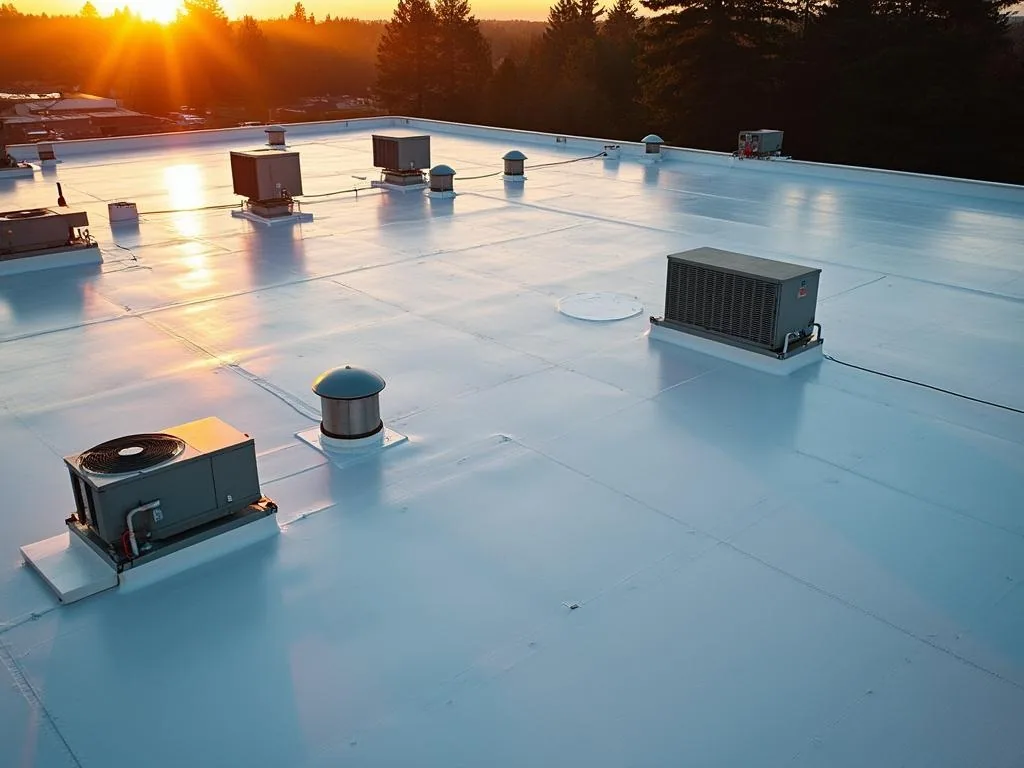
Closeout photos show repaired fasteners, panel laps, closures, ridge and eave details, and new transitions. The record lists roof zones, materials, and any support condition discovered during work. We identify areas left in place and items needing later review. This creates a usable baseline for the next inspection instead of leaving only a general note that the roof was retrofitted.
Later checks should revisit fasteners, exposed edges, penetrations, gutters, and sealant at transitions. A maintenance visit can compare those points with the closeout record. If the property includes an adjacent low-slope area, we track it separately from metal panels. The roof assemblies may connect at the edge but need distinct inspection criteria.
Request a metal roof retrofit assessment for a named building and roof zone. Send panel plans, repair history, leak locations, access instructions, and any structural or assembly records. We will inspect supports and drainage, then compare repair, recovery, and replacement based on confirmed conditions.
Related Roofing Work
Review the existing metal roof
Name the building and roof zone. Share panel plans, fastener and leak history, repair records, access rules, and support information so we can assess retrofit options.
Questions About Commercial Metal Roof Retrofit
Can a new roof system go over exposed-fastener panels?
It may be possible when the existing panels, attachment, supports, and drainage suit the proposed assembly. We inspect those conditions and review transitions at eaves, curbs, walls, and gutters. Corrosion, loose framing, or concealed moisture can change the recommendation. The scope identifies what stays and what needs repair before covering.
What happens when old fasteners no longer hold?
We check the fastener hole, washer, panel, and supporting member. A larger screw or new washer alone may not correct a damaged purlin or enlarged opening. We document the support condition and specify a repair that fits the existing metal. Any concealed framing work is separated for approval before the roof is closed.
Will a retrofit change the gutter or roof edge?
Added height can alter gutter alignment, fascia, coping, and water discharge. We measure the new plane against outlets and wall terminations before finalizing the edge detail. The proposal lists metal changes and drainage adjustments so runoff continues to the intended route after the retrofit.
How do you compare repair with a metal retrofit?
We compare the extent of rust, fastener failure, panel movement, support condition, leaks, and edge details. Local defects may support repair. Repeated failures or broad deterioration can justify an assembly change. The recommendation maps confirmed roof zones and identifies any test or opening needed before a final decision.
Commercial Roofing Across Roswell and North Fulton
Roof Repair, Replacement and Maintenance for Every Kind of Commercial Building
From Historic Roswell and Canton Street to the Holcomb Bridge Road corridor, GA 400 and the North Point area, we inspect, repair and replace low-slope and metal roofs on offices, retail centers, medical buildings, schools and warehouses.